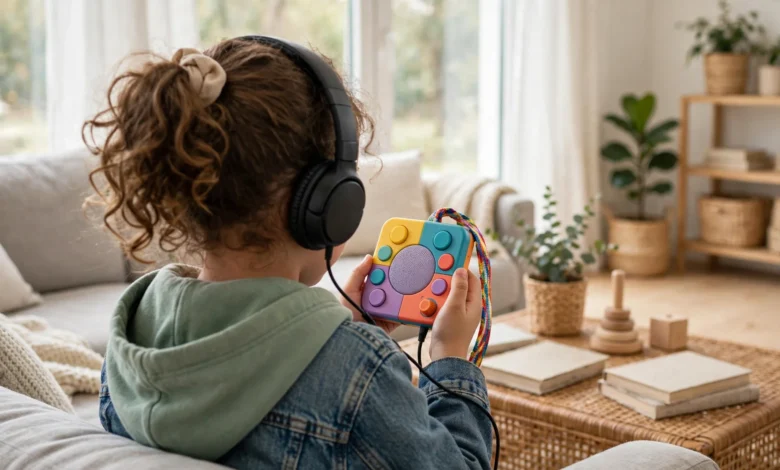
Yoto is a screen-free audio player for children aged three to twelve and beyond, and it has become one of the most recommended buys for UK parents who want stories, music, and calm without handing a child a tablet or a phone. The idea is beautifully simple: a child inserts a physical card into the player, and the story or album plays, with no screen to stare at, no adverts interrupting, no camera watching, and no microphone listening in. That simplicity is the whole point, because it gives children independence — they can choose what to listen to, turn the dial, and press play themselves — while giving parents control through a companion app that sets volume limits, routines, and bedtime rules. This guide picks the best options for different families, from the full-size home player to the pocket-sized travel companion, and it explains exactly what to buy first so you do not waste money on cards nobody will play.


The shortlist below is organised the way families actually shop, which means by where and how the player will be used, rather than by a single league table that pretends one model suits everyone. A family that wants a bedroom speaker for stories at bedtime needs something different from a family that wants a rugged companion for car journeys, holidays, and grandparents’ houses, and a family buying a first player for a three-year-old needs different advice from one buying a second device for a ten-year-old who already owns a shelf of cards. Prices are given as approximate UK figures checked in October 2026, and they move with retailer offers, so always check the live price before ordering, including whether a starter bundle or a card pack is included in the price you see.
Best for Home: The Full-Size Player
The Yoto Player in its fourth generation, at around £119.99, is the best pick for home use, because it is the fuller, louder, more capable machine, designed to sit on a shelf or a bedside table and fill a room with stories, music, and sleep sounds. It has a clock display that children can read, a nightlight function that makes it genuinely useful at bedtime, and controls that are big and simple enough for a young child to use without help, which matters enormously when the whole point of the device is independence. The full-size player is also the better choice for shared family listening, because its speaker is built for a room rather than a pocket, and it handles everything from a long bedtime story to a morning playlist without sounding thin or strained. For a first player that will live in one place and be used every day, this is the model to buy.
The case for the home player gets stronger when you consider how it fits into daily routines, because the companion app lets parents set a morning wake-up time, a bedtime wind-down, and volume limits that cannot be overridden by an enthusiastic child turning the dial to maximum. That combination of a room-filling speaker, a visible clock, and proper parental controls makes it more than just a story player, since it becomes part of the rhythm of the day, waking children gently, marking the end of screen-free play, and settling them at night with sleep sounds or a familiar tale. You can compare the current range at the official UK store before buying. The price is higher than the smaller model, but for a device that will be used daily for years, in the room where a child spends most of their listening time, the extra cost is easy to justify, and it is the pick most families should start with.
Best for Travel: The Pocket-Sized Mini
For car journeys, holidays, and days out, the smaller model is the obvious winner, because it is genuinely pocket-sized, light enough for a child to carry, and tough enough to survive a school bag, a car footwell, and the general chaos of family travel. The Yoto Mini in its fourth generation, at around £89.99, packs a remarkable amount into a small case, with up to sixteen hours of battery life, sixty-four gigabytes of storage holding more than a thousand hours of audio offline, and a Green Button that saves up to forty favourite cards, split into twenty for daytime and twenty for night-time listening. That offline capacity matters more than it first sounds, because it means a child can listen on a plane, in a car with no signal, or at a grandparent’s house with no Wi-Fi, without a parent having to download anything at the last minute. Add Wi-Fi 6, Bluetooth, USB-C charging, and water and dust resistance rated at IP67 on this generation, and you have a travel device that is genuinely built for real family life.
The travel case is about more than specifications, because the smaller player changes how children use audio on the move, turning a long car journey from a negotiation about tablets into a quiet stretch of independent listening. A child can carry their own cards in a small case, choose their own story, and listen through headphones or the built-in speaker, which gives parents a break and gives children a sense of ownership that a shared family tablet never does. The smaller speaker will not fill a large room the way the full-size model does, and the display is simpler, but those are fair trade-offs for a device that fits in a coat pocket and lasts all day on a single charge. If your main use is travel, or if you are buying a second player for a child who already has a home model, this is the pick to choose.
Best Value: The Older Edition on Offer
Families shopping on a tighter budget should keep an eye out for older editions of the smaller player, because they offer most of the same magic at a noticeably lower price when they appear on offer. Older editions of the smaller player have been available at around £64.99, with up to fourteen hours of battery life and thirty-two gigabytes of storage, which is still plenty for a young child’s library and more than enough for a first player. The differences from the newest generation are real but not decisive for most families, since the core experience — inserting a card and hearing a story, with no screen, no adverts, and no microphone — is identical, and a younger child will not notice the newer wireless standard or the extra storage. What matters is that the cards themselves work across generations, so a library built on an older player is not wasted if the family upgrades later.
The value calculation here is simple, because saving around twenty-five pounds on the player leaves room in the budget for the cards that actually make the device useful, and a player with no cards is just a handsome box. If you find an older edition on offer from a reputable retailer, and the price difference is meaningful for your budget, it is a sensible buy, especially for a first player for a younger child who may drop it, lose it, or simply outgrow it. If the price gap is small, however, the newest generation is worth the extra money for its longer battery life, larger storage, and tougher water and dust resistance, which will pay off over years of daily use. Either way, buy from a retailer with a clear returns policy, because a children’s device should be allowed to be tried and rejected if the size or the sound feels wrong.
Cards and Bundles to Start With
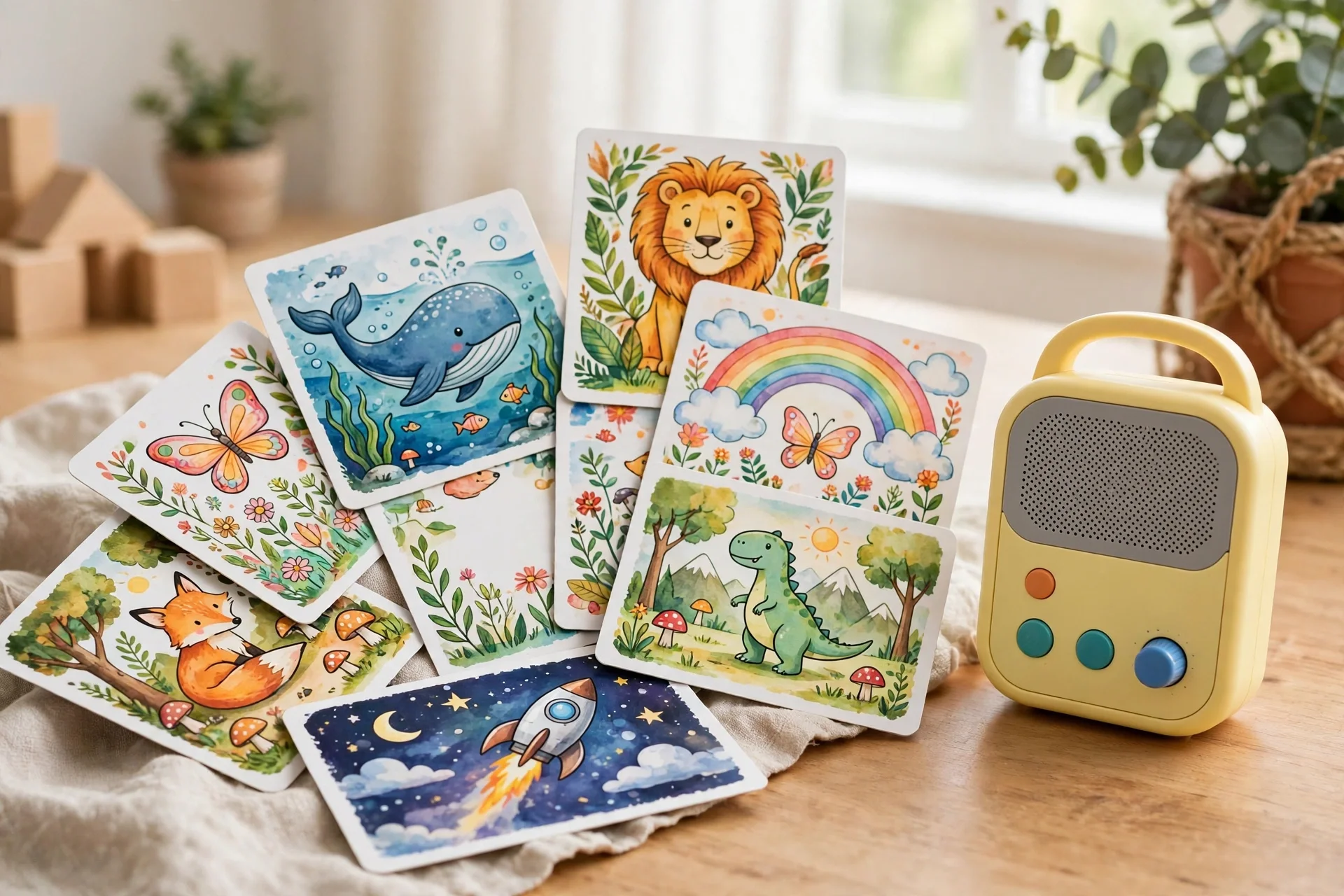
The cards are where the system comes alive, because each physical card unlocks a story, an album, a podcast, or an activity, and building a small, well-chosen library matters far more than buying the most expensive player. Yoto cards range from classic children’s stories and beloved picture-book adaptations to music albums, educational content, and sleep sounds, and the best starter approach is to buy a small bundle that covers the basics: one or two favourite stories the child already loves, one music card for dancing and singing, and one sleep or calming card for bedtime. That trio gives a child choice without overwhelming them, and it lets parents see what the child actually returns to before spending more, which is a far better strategy than buying a large box set on day one and discovering that half of it never gets played.
Families can also record their own audio on Make Your Own cards, which is one of the most charming features of the whole system, because a grandparent can record a bedtime story, a parent can record a message for a child going on a school trip, or a family can record their own songs and jokes. Those personal cards often become the most treasured items in a child’s collection, precisely because they cannot be bought, and they turn the player from a shop-bought gadget into a family keepsake. When buying bundles, check whether the retailer includes a card case or a starter pack, because cards are small and easily lost, and a simple case that keeps them together will save a great deal of searching under car seats. Start small, watch what gets played, and build the library around the child’s actual tastes rather than a retailer’s bestseller list.
Free Audio, Controls and Running Costs
One of the most pleasant surprises for new owners is how much audio costs nothing at all, because the free daily show and the free radio service give children fresh content every day without any subscription, and they are genuinely good rather than token extras. The free daily show offers a short, age-appropriate mix of stories, facts, and activities that changes each day, which gives children a reason to press play in the morning, while the free radio service provides music and shows that can run in the background during play. Those free options mean a family can enjoy the player for weeks before buying a single extra card, and they also mean the device remains useful even when the card budget runs out, which is an important consideration for families watching their spending. No subscription is required to enjoy the core experience, and that absence of a monthly fee is a real advantage over many children’s devices.
Parental controls, managed through the companion app, are the other running-cost story, because they cost nothing extra and they are what make the player safe to hand to a child. Parents can set maximum volume levels to protect young ears, create routines that control when the player can be used, set alarms, and use an OK-to-wake clock that shows a child when it is time to get up, all from their own phone. Those controls are straightforward rather than buried in menus, which means parents actually use them, and they turn the player from a simple speaker into a tool for establishing healthy listening habits. The only real ongoing costs are the cards themselves and, eventually, a replacement card case or a set of headphones, so the total cost of ownership is refreshingly predictable compared with subscription-based children’s gadgets.
How to Choose in Five Minutes
A fast, reliable choice comes from three questions, and the answers will point to one of the picks above without hours of comparison. First, where will the player mainly be used, because a home bedroom or living room points to the full-size model, while car journeys, holidays, and school bags point to the smaller travel model. Second, how old is the child and how much independence do they need, because a younger child benefits from the simplest possible controls and the toughest possible case, while an older child will appreciate the larger offline library and the ability to save favourite cards for day and night. Third, what is your real budget including cards, because a cheaper player with a good starter bundle is a better buy than an expensive player with no cards to play, and the older edition on offer can free up money for the library that makes the device worthwhile.
Once those answers are clear, check the live retailer price, confirm exactly what is in the box, and buy from a retailer with a clear returns policy, since a children’s device is one of the few purchases where a child should be allowed to try it and reject it if the size or the sound feels wrong. Keep the box for the first few weeks, set up the parental controls together with your child so the limits feel agreed rather than imposed, and agree the charging and bedtime rules on day one, because a player with clear boundaries from the start causes far fewer arguments than one where the rules are invented after the first late-night listening session. Done that way, the right choice becomes a genuinely useful part of family life rather than another gadget gathering dust.
Conclusion
The best player for a UK family in 2026 is the one that matches where it will be used, how old the child is, and how much you want to spend on cards, rather than the one with the longest specification list. For most families that means the full-size model for home, for travel it means the smaller pocket model, and for tight budgets it means watching for an older edition on offer and spending the saving on a starter bundle of cards. Whichever pick you choose, the formula is the same: prioritise the free audio and the parental controls, start with a small card library built around what your child actually loves, and check the live retailer price including everything in the box before you commit. Yoto has earned its popularity by doing one thing exceptionally well, which is giving children independent, screen-free listening, and any of the picks in this guide will deliver that.
A good children’s audio player can open up stories, music, and calm in ways that genuinely enrich a child’s life, and the models in this guide have earned their places by balancing fun with safety in a way that parents can feel confident about. Choose by use first, budget second, and specifications last, and you will end up with a device that gets used happily rather than argued over. That is the real test of a children’s gadget purchase, and it is one that the picks in this guide are designed to pass, whether the player lives on a bedside table, in a school bag, or in the back of a car on a long summer journey.
FAQs
Which player is best for a child’s bedroom? The full-size player is the best choice for a bedroom, because it has a larger speaker that fills a room comfortably, a clock display that children can read, and a nightlight function that makes it genuinely useful as part of a bedtime routine. It sits neatly on a bedside table, it can play sleep sounds or a familiar story at a parent-controlled volume, and its controls are large and simple enough for a young child to operate in the dark without waking a parent. The smaller travel model will also work in a bedroom, but its speaker is designed for close listening rather than room-filling sound, so for a device that will live in one room and be used every night, the full-size model is the more satisfying choice.
How long does the battery last on the smaller player? The newest generation of the smaller player offers up to sixteen hours of battery life, which is enough for a full day of listening on a journey, a weekend away, or several bedtime stories without needing a charge, while older editions offer up to fourteen hours, which is still generous for most family use. Battery life in practice depends on volume, on whether headphones or the speaker are used, and on how often the device connects to Wi-Fi, but even at higher volumes a full charge will comfortably cover a long car journey. Charging is via USB-C, which means most families already own a suitable cable, and a quick top-up before a trip is usually all that is needed to keep the player going for another day.
Do I need Wi-Fi to use the player? You need Wi-Fi for the first setup and for downloading new audio, because the player fetches content from the internet when a card is first played or when free shows are updated, but after that content is stored on the device and can be played offline without any connection. That offline ability is one of the system’s greatest strengths, because it means a child can listen on a plane, in a car, or at a house with no internet, as long as the audio has been downloaded in advance. The practical lesson is to download a child’s favourite cards before a journey rather than assuming hotel or car Wi-Fi will cooperate, and to check that the player is charged and synced the night before travelling.
What age is the player suitable for? The player is designed for children aged three to twelve and beyond, with the youngest children benefiting from simple card-based play, a tough case, and parental controls that limit volume and listening times, while older children appreciate the larger library, the ability to save favourite cards, and the independence of choosing their own stories and music. A three-year-old will need help at first with choosing cards and understanding the controls, but will quickly learn to press play independently, while a ten-year-old may use the device for longer stories, music, and educational content, and may also enjoy recording their own audio on blank cards. The wide age range is possible precisely because there is no screen to outgrow and no social feed to worry about, so the same device can grow with a child for years.
Are there any ongoing subscription costs? No subscription is required to enjoy the core experience, because the free daily show and the free radio service provide fresh audio every day at no cost, and the physical cards themselves are one-off purchases that can be played as many times as a child likes. That makes the total cost of ownership refreshingly simple compared with many children’s devices, since the only regular spending is on new cards when a family wants them, plus occasional accessories such as a card case or headphones. Families should still budget for cards over time, because a growing library is part of the fun, but there is no monthly fee ticking away in the background, and a player with a small starter bundle remains enjoyable for months without any further spending at all.
If you found this guide helpful, you may also enjoy our other home and family buying guides on this site.
You can find more top UK family picks in our related articles here on the site.