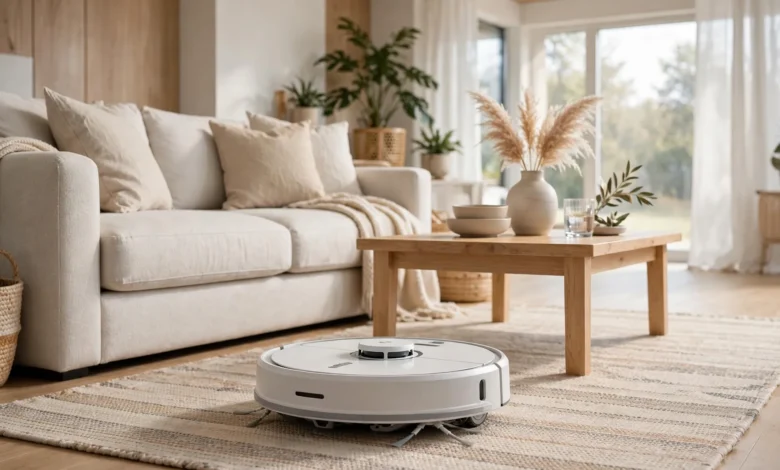
A robot vacuum is no longer a novelty gadget for early adopters, because the best models of 2026 genuinely keep a home cleaner with almost no effort from you, handling daily dust, pet hair, and crumbs while you get on with something better. The shortlist below is organised the way real buyers actually shop: a best overall model for most homes, a strong budget buy that still maps properly, and a specialist pick for hard floors, followed by the honest advice on mapping, mops, and running costs that separates a good purchase from an expensive mistake. The key shift in recent years is navigation, because a machine that genuinely understands your floor plan cleans faster, misses less, and can be told to avoid the dog’s water bowl, while a machine that merely bumps around will always feel like a toy.

When you buy a robot vacuum, the most useful way to think about the market is in three bands, and knowing which band you belong in will save you both money and disappointment. A typical good spend is somewhere between £300 and £900, with the lower end buying solid cleaning and proper mapping, and the upper end buying self-emptying docks, mop washing and drying, and smarter obstacle avoidance. Below £300 you can still find capable machines, but you will usually give up either mapping quality or a self-empty dock, while above £900 you are paying for convenience features that are lovely but not essential for clean floors. The other truth to accept up front is that no machine in this guide does stairs, and none fully replaces a deep clean with a full-size vacuum, so the right expectation is a home that stays clean day to day, with an occasional manual session for edges, stairs, and upholstery.
The Shortlist at a Glance
The shortlist for the best robot vacuum of 2026 starts with the eufy X10 Pro Omni, which a major UK newspaper guide named as its best overall pick in June 2026, and which remains the most balanced flagship for a typical British home thanks to strong suction, a self-emptying dock, and mop washing built into the same station. For buyers who want to spend far less without giving up proper navigation, the Roborock Q7 L5+ is the budget name to remember, offering LiDAR mapping and a self-empty dock at a price that was around £250 in recent UK listings, which is remarkable value for a machine that genuinely knows where it is going. For homes that are mostly hard floors, the eufy Omni S1 Pro earns its place with a mopping system designed around hard surfaces, while pet owners should pay attention to brush design and dust capacity in any model they consider, since long hair wraps around the wrong brush type in a matter of days.
What unites these three picks is that each one maps your home properly rather than wandering, and that single feature is worth more than any headline suction figure, because a mapped machine cleans in efficient lines, returns to its dock to recharge and resume, and lets you set no-go zones and room-by-room schedules from your phone. Cheaper machines that skip LiDAR and rely on gyroscopes or random bouncing can still pick up surface dust, but they take longer, miss patches, and cannot be trusted to clean one room while avoiding another, which quickly becomes frustrating in a real home. If your budget only stretches to one upgrade over the cheapest option available, spend it on mapping, because it is the feature you will notice every single day the machine runs.
Best Overall Model for Most Homes
The eufy X10 Pro Omni is our best overall robot vacuum pick because it combines the three things most buyers actually want into one package: strong cleaning performance, a dock that empties the dustbin and washes the mop for you, and navigation smart enough to handle a real home with furniture, rugs, and pets. Its suction is rated at 8,000 Pa, which is more than enough for daily dust and pet hair on both carpets and hard floors, and recent UK pricing has put it around £449, a figure that undercuts many rival flagships while offering a comparable feature set. That combination of a major-guide best overall award in June 2026 and a mid-range price is exactly why it leads this list, and it is the model we would suggest to most buyers who want to buy once and stop thinking about floor cleaning.
You can explore the current range and specifications on the manufacturer’s own site at eufy before comparing retailer prices, and it is worth checking what is included in the box, since some bundles add extra bags or brushes that change the value of the deal. The main compromise to be aware of is size, because a self-emptying dock is a substantial piece of furniture that needs a permanent spot with clearance around it, ideally against a wall with a power socket nearby and enough room for the machine to drive in and out. If you can give it that space, the daily experience is close to effortless: the machine cleans on schedule, empties itself, washes its mop, and only asks for your attention every month or two when a bag or a filter needs changing.
Best Budget Buy That Still Maps Properly
The Roborock Q7 L5+ is the budget pick that breaks the usual rule that cheap means compromised, because it brings LiDAR mapping and a self-empty dock to a price point that was around £250 in recent UK listings, which is less than some flagship machines charge for a dock alone. LiDAR matters enormously at this price, because it means the machine builds an accurate map of your home on its first run, cleans in neat rows instead of random patterns, and lets you send it to a single room or keep it out of another, all features that used to be reserved for machines costing twice as much. Suction and build quality are a step below the flagships, as you would expect, but for a flat or a small house with mostly hard floors and low-pile rugs, the cleaning performance is genuinely good rather than merely acceptable.
The trade-offs are honest and easy to live with if you know about them in advance, and they mostly concern mopping and obstacle avoidance rather than core vacuuming. The mopping system on a budget model is usually a simple drag-mop pad rather than a washing and lifting system, so it will freshen a hard floor but will not scrub dried spills, and the obstacle detection is less sophisticated, which means cables, socks, and pet toys should be tidied before a run. For a buyer who wants the daily convenience of a self-emptying mapped robot vacuum without paying flagship money, those are sensible compromises, and this is the model that proves you do not need to spend £700 to get a machine that actually understands your home.
Best for Hard Floors
Homes with mostly wood, tile, or laminate floors have different priorities from carpeted homes, and the eufy Omni S1 Pro is the pick that best matches those priorities, with a mopping system designed to wash and dry its own mop and to keep dirty water away from clean water. On hard floors, vacuuming alone only solves half the problem, because fine dust and sticky marks need a mop to finish the job, and a machine that drags a dirty pad around the house will simply spread grime from one room to the next. A proper washing station solves that by rinsing the mop during the clean, which is why hard-floor buyers should treat the dock as part of the purchase decision rather than an optional extra, and should check whether the mop lifts clear of rugs when the machine crosses onto carpet.
There is also a practical point about water that hard-floor buyers sometimes overlook, which is that a mopping machine needs its clean-water tank filled and its dirty-water tank emptied on a regular basis, and the larger the home, the more often that job comes around. A station with generous tanks will cover a typical flat or small house in a single run, while a larger home may need a mid-clean refill, so tank size is worth checking alongside suction figures that matter less on hard floors than they do on deep carpet. If your home is a mix of hard floors and rugs, look specifically for a model whose mop lifts automatically, because a machine that mops your rug is worse than a machine that does not mop at all, and the best hard-floor models handle that transition without any input from you.
Mapping, Mops and Docks Explained
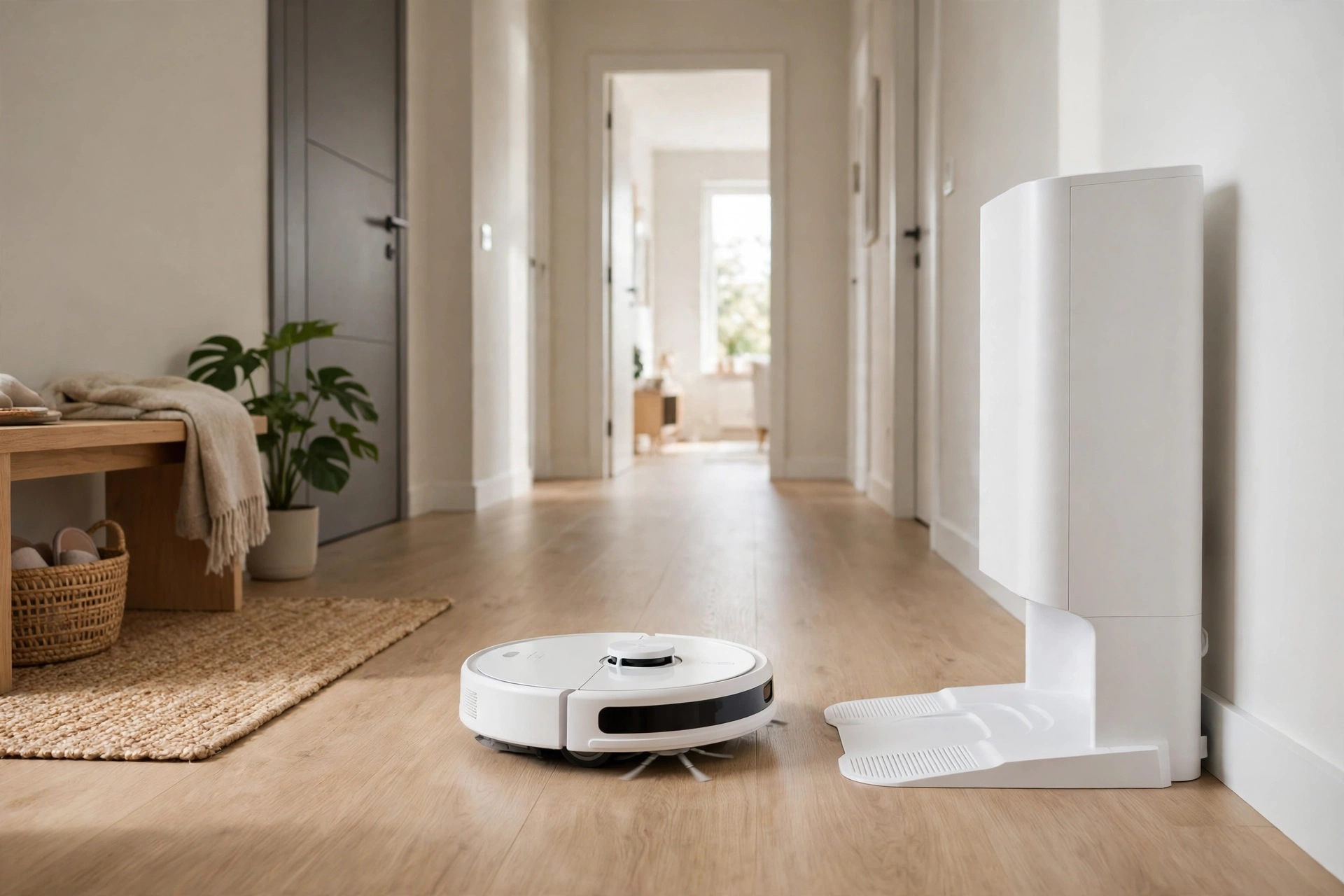
LiDAR mapping is the single most important technology in this market, and it works by spinning a small laser turret on top of the machine to measure the room many times per second, building a precise floor plan that the machine then uses to clean in efficient straight lines. That map is what unlocks everything else buyers actually care about: room-by-room cleaning, virtual walls and no-go zones around pet bowls or children’s play areas, scheduled cleans for the kitchen after dinner, and the ability to send the machine to a spill without it wandering through the whole house first. Camera-based navigation can add obstacle recognition, such as identifying cables or pet mess, but it raises privacy questions for some buyers and can struggle in dark rooms, while LiDAR works just as well with the lights off and never needs to see your home to map it.
Mops and docks deserve the same careful thought, because they determine how much work the machine actually saves you rather than simply moving it around. A basic drag mop freshens floors but needs its pad washed by hand, a washing station rinses the mop itself but still needs its tanks managed, and the best stations wash and hot-air dry the mop so it does not smell between runs, which is a bigger quality-of-life improvement than it sounds. Self-empty docks are the other major convenience, because they let the machine run for weeks without you touching its dustbin, but they need bags, and those bags are a running cost to factor in, so a machine that looks cheap can become less cheap over two or three years of ownership if its consumables are pricey.
Running Costs and Realistic Expectations
The purchase price is only part of the cost of owning a cleaning machine like this, and a realistic budget should include consumables of roughly £40 to £80 per year for dust bags, filters, brushes, and mop pads, with the exact figure depending on how often the machine runs and whether you buy official or third-party parts. Homes with pets will go through brushes and filters faster, and anyone who mops daily will replace mop pads more often, so it is worth checking the price and availability of spares before you commit to a brand, because a bargain machine with expensive or hard-to-find parts is no bargain at all. Battery life also matters over time, since a battery that covers a small flat easily may need a recharge-and-resume cycle in a large house, and replacement batteries, while rarely needed in the first few years, should be available at a sane price.
Expectations matter just as much as costs, and the honest version is that a good machine will keep your floors noticeably cleaner day to day, reduce the dust and hair you see, and cut the frequency of manual vacuuming, but it will not deep-clean a thick carpet, climb stairs, clean upholstery, or reach into tight corners and edges as well as a full-size machine. The best way to use one is as a daily maintenance cleaner with a manual session every week or two for stairs, edges, and furniture, and buyers who adopt that routine are almost always happy, while buyers who expect a machine to replace all vacuuming forever are almost always disappointed. Set the expectation correctly and a mid-range mapped machine is one of the most satisfying smart home purchases you can make.
How to Choose in Five Minutes
A fast, reliable choice comes from answering four questions in order, and the answers will point to one of the picks above without hours of comparison. First, how large is your home and how many rooms need cleaning, because a small flat can be served brilliantly by the budget pick, while a large multi-room house justifies the flagship’s bigger battery, smarter navigation, and larger dock. Second, what are your floors made of, because carpet-heavy homes should prioritise suction and brush design, while hard-floor homes should prioritise the mopping system and whether the mop lifts over rugs. Third, do you have pets, because pet hair punishes weak brushes and small dustbins, and a self-empty dock moves from luxury to near-necessity when a bin fills in a single run. Fourth, where will the dock live, because a self-empty station needs floor space, clearance, and a socket, and if you cannot give it that, a simpler dock-only model may suit you better.
Once those answers are clear, check two final details before ordering: that the machine’s app supports your phone and, if relevant, your smart home system, and that spare bags, filters, and brushes are available at reasonable prices from UK retailers. Prices in this market move quickly, so treat every figure in this guide as a snapshot and always check the live retailer price, including what is bundled in the box, before you buy. Keep the box for the first few weeks, run the machine hard during that period, and test it on your trickiest room, because if it is going to disappoint you, it is far better to learn that while a return is still simple than after you have thrown the packaging away.
Conclusion
The best robot vacuum for a UK home in 2026 is not the one with the biggest suction number or the longest feature list, but the one that maps your home properly, fits your floors, and has a dock you can actually live with. For most homes that means the eufy X10 Pro Omni as the balanced flagship, for smaller budgets it means the Roborock Q7 L5+ proving that proper LiDAR mapping no longer costs flagship money, and for hard-floor homes it means the eufy Omni S1 Pro with its washing mop station. Whichever pick you choose, the formula is the same: prioritise mapping over marketing, budget for consumables, accept that stairs and deep cleans still need a manual machine, and check the live price before committing.
A good robot vacuum earns its place by quietly removing one of the most repetitive chores in the house, and the difference between a home that is cleaned daily and one that is cleaned when someone finds the time is larger than most buyers expect. Choose with your floor plan in mind rather than a specification sheet, give the dock a proper home, and let the machine do the daily work while you keep the manual vacuum for the jobs it was always better at. That division of labour is the real secret of a clean home in 2026, and it is why these machines have moved from gadget to household essential.
FAQs
Do I still need a normal vacuum cleaner? Yes, but you will use it far less often, because a good robot handles daily dust, hair, and crumbs across your floors, while a full-size machine is still better for stairs, deep-pile carpets, upholstery, car interiors, and tight edges and corners that a round machine cannot reach. Most happy owners settle into a routine where the robot runs daily or every other day and the manual machine comes out once a week or so for the jobs the robot cannot do, which is a much better balance than vacuuming the whole house by hand several times a week.
Is LiDAR mapping worth paying extra for? In almost every case, yes, because LiDAR builds an accurate map of your home that lets the machine clean in efficient lines, return to its dock to recharge and resume, and accept room-by-room commands and no-go zones from your phone. Machines without LiDAR rely on bump navigation or basic sensors, which means slower cleaning, missed patches, and no reliable way to keep the machine out of a room, and those frustrations tend to grow over time rather than fade, so mapping is the one upgrade that pays for itself daily.
How much do consumables cost each year? A realistic budget is roughly £40 to £80 per year for dust bags, filters, brushes, and mop pads, with pet homes and daily mopping pushing towards the higher end and light use in a small flat sitting towards the lower end. It is worth checking the price of spares for your chosen brand before buying, because some brands charge far more for official bags and filters than others, and third-party alternatives vary in quality, so the cheapest machine can become the most expensive one over two or three years of ownership.
Can a robot vacuum handle pet hair? Yes, provided you choose a model with a brush designed to resist tangling and a dustbin or self-empty dock large enough to cope, because long pet hair wraps around the wrong brush type very quickly and a small bin can fill in a single run in a heavy-shedding home. Look for anti-tangle brush designs, strong suction, and a self-empty dock, run the machine daily during shedding season, and check the brush and wheels weekly, since even the best pet-friendly machine needs occasional maintenance to keep performing at its best.
Can it clean multiple floors? Most mapped machines can store maps for more than one floor, so you can carry the machine upstairs and let it clean from the saved map, but no machine in this guide can climb stairs by itself, and the dock stays on one floor, which means the machine must be carried and its dustbin managed manually on the other floor. For a multi-storey home, the practical options are a second dock upstairs, a second machine, or simply accepting that the robot covers the main floor daily while the other floors get a manual clean, and that compromise works well for most buyers.
If you found this guide helpful, you may also enjoy our other home appliance buying guides on this site.
Portable Air Conditioner: The Best UK Picks for 2026 and How to Choose You can find more top UK home picks in our related articles here on the site.