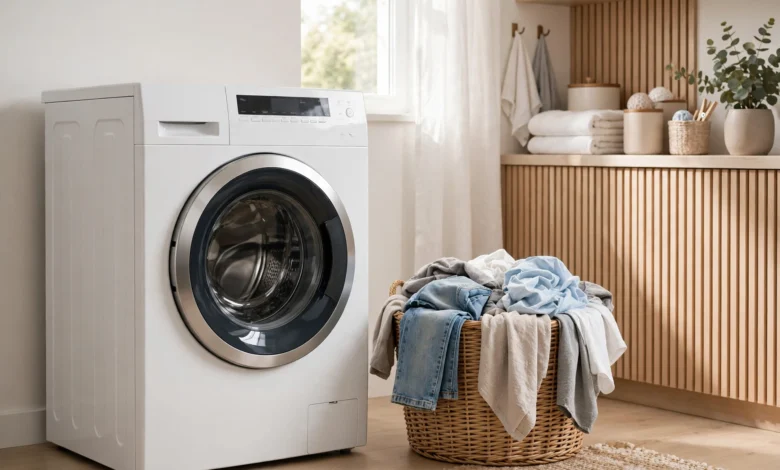
The best washing machine UK buyers can choose in 2026 is not necessarily the most expensive machine on the page, because the right machine for your home depends on household size, available space, and how much you care about running costs versus upfront price. The shortlist below is built around the models that UK tests and owner reviews keep returning to: a Bosch all-rounder that suits most families, a Samsung value pick with genuinely useful smart features, and a Beko budget option that proves a low price does not have to mean poor washing. Every pick here is a freestanding front-loader, which is the format the vast majority of UK homes use, and every price mentioned should be treated as approximate, since retailer offers move constantly and you should always check the live price before ordering.

When you compare the best washing machine UK options side by side, the first thing to understand is that the energy label changed a few years ago and the letters no longer mean what many buyers remember. The current scale runs from A to G, and most decent machines sold in 2026 sit at B or C, with A-rated models still rare and usually expensive, so a B rating on a well-chosen machine is a genuinely good result rather than a compromise. The second thing to know is that the single biggest saving available to any household is also the simplest, which is washing at 30 or 40 degrees instead of 60, since heating water accounts for most of a cycle’s energy use, and modern detergents clean perfectly well at lower temperatures for everyday laundry.
The Shortlist at a Glance
The shortlist for the best washing machine UK market in 2026 starts with the Bosch Series 4 WAN28281GB, an 8kg machine with a 1400rpm spin speed and a B energy rating that UK tests have repeatedly named as the best overall pick, thanks to quiet operation, reliable cleaning, and a build quality that tends to last well beyond the guarantee period. Next comes the Samsung Series 5 with EcoBubble, another 8kg machine that earns its place as the value pick, offering bubble-assisted washing that helps detergent work at lower temperatures, plus smart features that let you monitor and control cycles from your phone. For buyers who need to spend as little as possible without buying a machine that will disappoint, the Beko budget range, with models around £279, is the name to look at first, offering solid basic performance and a sensible set of programmes at a price that undercuts the big brands by a wide margin.
What unites these three picks is that each one is honest about what it is, with no inflated claims about capacity or efficiency that fall apart in real use, and each one comes from a brand with a UK service network, which matters enormously when a machine eventually needs a repair. The temptation with washing machines is to chase either the cheapest price or the longest feature list, but both approaches miss the point, because the machine you will live with for a decade is the one that washes well, spins quietly, fits your space, and costs little to run. A machine that ticks those four boxes at any price is a better buy than a cheaper machine that shakes the house or a flagship whose smart features you never use.
Best Overall Pick for Most Families
The Bosch Series 4 WAN28281GB is our best overall pick because it gets the balance right in exactly the way a family machine needs to, with an 8kg drum that suits a household of three or four, a 1400rpm spin that leaves clothes drier and therefore cheaper to dry afterwards, and a B energy rating that keeps running costs sensible without demanding a flagship price. Bosch has a long reputation in the UK for machines that last, and owner reviews consistently praise this model’s quiet operation, which matters more than most buyers expect when the machine sits in a kitchen or an open-plan living space rather than a separate utility room. Its programme range covers the essentials well, including quick washes for lightly soiled loads, an eco programme for full loads at lower temperatures, and allergy or hygiene options for households with sensitive skin.
If you want to compare the current range and check dimensions and specifications, the manufacturer’s UK site is the most reliable place to start, and you can browse the Series 4 line-up at Bosch Home UK before checking retailer prices. The main compromise with this pick is that it is not the cheapest machine available and it does not offer the smart features of the Samsung alternative, so buyers who want app control or the lowest possible upfront price should look at the other picks below. For a family that wants to buy once, wash well, and forget about the machine for years, however, this is the pick that makes the fewest compromises and the one we would recommend first to most UK households.
Best Value Pick with Smart Features
The Samsung Series 5 with EcoBubble is the value pick among the best washing machine UK options for buyers who want modern features without paying flagship money, and its headline technology is genuinely useful rather than a gimmick. EcoBubble works by dissolving detergent into bubbles before the wash begins, which helps it penetrate fabric more effectively at lower temperatures, and that matters because washing at 30 or 40 degrees is the single easiest way to cut both energy use and wear on clothes. The 8kg drum suits the same family of three or four as the Bosch pick, and the addition of smart control means you can start, monitor, and receive notifications about cycles from your phone, which is surprisingly handy when the machine lives in a garage or utility room and you would otherwise forget a finished load for hours.
The trade-off with Samsung’s value models is that build quality and long-term reliability, while good, do not quite match Bosch’s reputation among repair engineers, and the smart features, while genuinely convenient, are not essential to clean clothes. For a buyer who values the app, the lower-temperature washing performance, and a price that usually undercuts the Bosch, those are easy compromises to accept, and the machine’s quiet operation and wide programme range make it a strong all-rounder in its own right. Check the exact model number carefully when comparing prices, because Samsung sells several Series 5 variants with different capacities and features, and a single letter in the code can mean a different drum size or spin speed.
Best Budget Buy
For buyers who need to spend as little as possible, the Beko budget range is the pick that proves a low price does not have to mean poor results, with models available around £279 that wash perfectly well for everyday family laundry. Beko has become a major presence in the UK budget market precisely because its machines cover the essentials without frills: a sensible range of programmes, a decent spin speed, and a straightforward control panel that anyone in the household can use without a manual. The energy rating will typically be lower than the Bosch or Samsung picks, and the machine may be a little louder and a little less refined, but for a rental property, a first home, or a household where the machine is used a few times a week rather than daily, those compromises are entirely reasonable.
The honest limitations of a budget machine are worth stating plainly so that no buyer is surprised later, and they mostly concern longevity, noise, and running costs rather than cleaning quality. A budget machine may not last as many years as a premium model under heavy daily use, and its higher energy and water consumption can narrow the upfront saving over a decade of ownership, so a household that washes daily may actually save money by spending more initially on a B-rated machine. That said, for light to moderate use, or for a buyer who simply cannot stretch to a higher price right now, a Beko machine is a far better choice than a second-hand machine of unknown history, and it comes with a proper guarantee and a UK service network.
Sizes Explained: Drum Capacity by Household
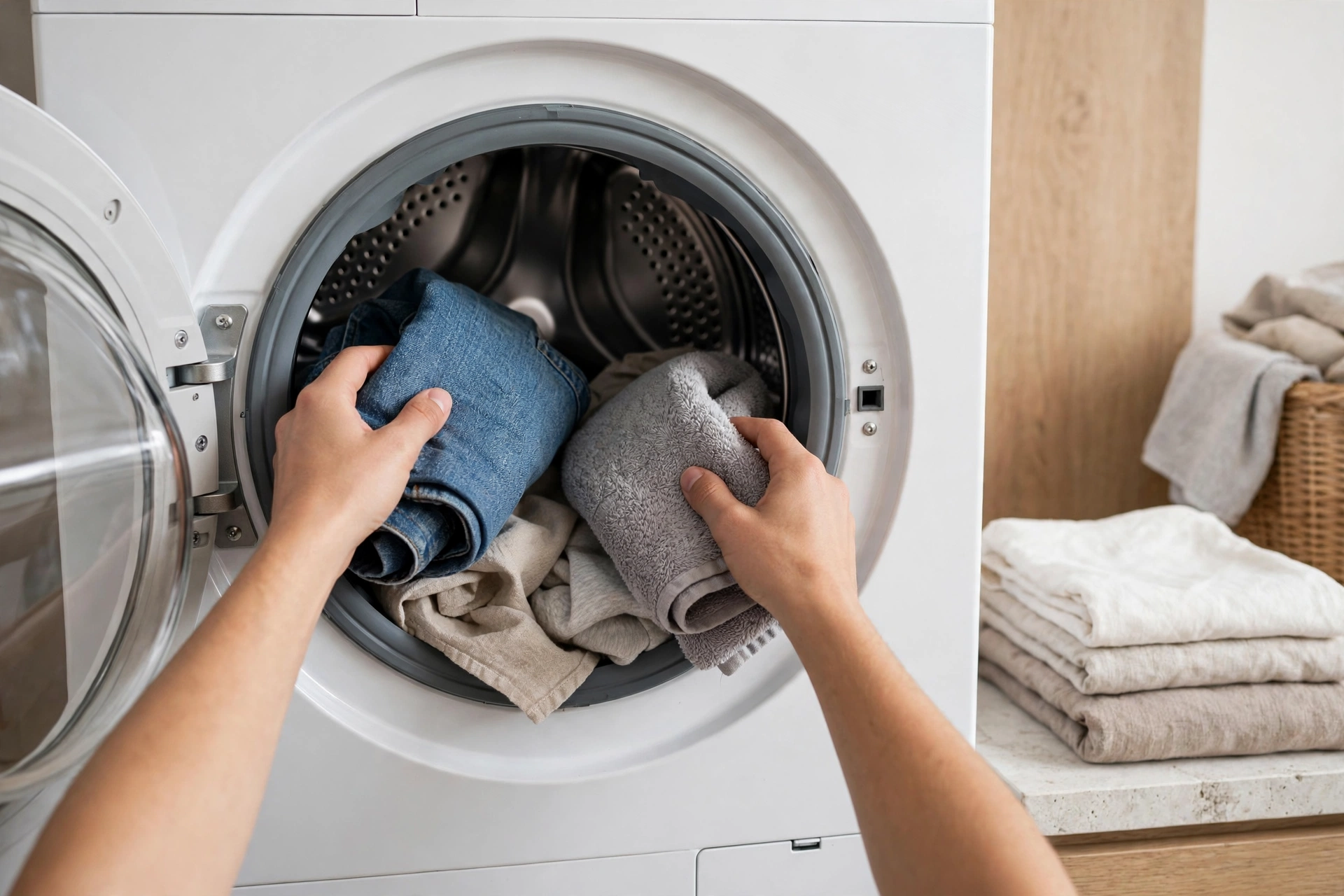
Drum capacity is the specification buyers get wrong most often, and the rule of thumb that works best is to allow roughly one kilogram of drum capacity per person in the household, plus a little headroom for bedding and towels. On that basis, a couple suits a 7 to 8kg machine, a family of three or four suits an 8 to 9kg machine, and a household of five or more should look at 10kg or above, since trying to wash a double duvet in a machine that is too small is an exercise in frustration that ends with a trip to the launderette. It is also worth remembering that manufacturers measure capacity by weight of dry cotton, which does not translate directly to bulky items, so a machine that handles a family’s clothes easily may still struggle with a king-size duvet, and that is a use case worth planning for explicitly.
Space matters just as much as capacity, because a standard freestanding machine is roughly 60cm wide and 85cm tall, but depth varies, and a machine that is a few centimetres too deep for its space will stick out of a kitchen run or block a door. Measure the width, height, and depth of the space, check the door swing, and confirm that water and drain connections are within reach, since moving a washing machine after delivery is a two-person job that nobody enjoys. Integrated machines, which hide behind a kitchen door, are a separate category with their own sizing and fitting costs, and they are worth considering only if your kitchen is designed for one, since retrofitting an integrated machine into a freestanding space is rarely straightforward.
Saving Energy and Money Every Wash
The biggest energy saving available to any household costs nothing at all, which is washing at 30 or 40 degrees instead of 60, since heating the water accounts for the majority of a cycle’s electricity use and modern detergents are designed to clean effectively at lower temperatures. For everyday clothes, bedding, and towels that are not heavily soiled, a 30-degree wash with a good detergent will clean just as well as a hotter wash while using far less energy and being kinder to fabrics, which also means clothes last longer and need replacing less often. Save the 60-degree programme for genuinely soiled items, such as bedding during illness or heavily stained work clothes, and use the eco programme for full loads whenever time allows, since it uses less water and energy by extending the cycle rather than heating more aggressively.
Load size is the second easy saving, because running a machine half-empty wastes water, energy, and detergent, while overloading it prevents clothes from moving freely and leaves them less clean, so a full but not crammed drum is the sweet spot. A 1400rpm spin speed also saves money indirectly, because drier clothes need less time in a tumble dryer or on a radiator, and that downstream saving is often larger than buyers expect, particularly in winter when drying space is limited. Finally, keep the machine itself in good condition with an occasional maintenance wash, a clean filter, and a wiped door seal, since a neglected machine smells, washes worse, and breaks sooner, and none of those outcomes saves anyone money.
How to Choose in Five Minutes
A fast, reliable choice comes from four questions, and the answers will point to one of the best washing machine UK picks above without hours of comparison. First, how many people are in your household, because that sets your drum size, with a couple suiting 7 to 8kg, a family of three or four suiting 8 to 9kg, and five or more suiting 10kg and above. Second, where will the machine live, because a kitchen machine needs to be quiet, a garage machine can be louder, and any machine needs its space measured carefully including depth and door swing. Third, how often do you wash, because daily washing justifies spending more on a B-rated machine that will pay back its premium in running costs, while a few washes a week make a budget machine a perfectly sensible choice. Fourth, do you care about smart features, because if app control matters to you, the Samsung pick earns its place, while if it does not, the Bosch pick’s simplicity is a virtue rather than a missing feature.
Once those answers are clear, check the live retailer price, confirm the exact model number, and check whether delivery, installation, and removal of the old machine are included, since those services vary widely and can add a significant amount to the headline price. Keep the packaging until the machine has run successfully a few times, test it on your largest load early, and register the guarantee promptly, because a washing machine is a decade-long purchase and the first few weeks are the time to discover any problem while a replacement is still straightforward. Done that way, the purchase becomes a quiet background success rather than a source of regret, which is exactly what a good washing machine should be.
Conclusion
The best washing machine UK households can buy in 2026 is the one that fits the household, the space, and the washing routine, rather than the one with the longest feature list or the lowest headline price. For most families that means the Bosch Series 4 WAN28281GB, for value and smart features it means the Samsung Series 5 EcoBubble, and for the tightest budgets it means a Beko model around £279 that covers the essentials well. Whichever pick you choose, the rules stay the same: size the drum by household plus headroom, wash at 30 or 40 degrees, spin at 1400rpm where possible, and check the live retailer price including delivery and installation before you commit.
A washing machine is one of the hardest-working appliances in the home, and choosing well pays back every week for years in cleaner clothes, lower bills, and fewer headaches. Measure your space, count your household, be honest about how often you wash, and buy the machine that matches those answers rather than the one with the flashiest advert. Do that, and the machine will disappear into the background of daily life, which is the highest praise any washing machine can earn.
FAQs
What size washing machine do I need? A useful rule is roughly one kilogram of drum capacity per person plus headroom, which means a couple suits 7 to 8kg, a family of three or four suits 8 to 9kg, and a household of five or more should look at 10kg or above. Remember that capacity is measured in dry cotton, so bulky items such as duvets need more room than their weight suggests, and if you regularly wash a double or king-size duvet at home, choose the larger drum even if your household is small.
Is a B energy rating good for a washing machine? Yes, under the current A to G scale, a B rating is a genuinely good result, because most decent machines sold in 2026 sit at B or C and A-rated models remain rare and expensive. The letter is only part of the story, however, since how you use the machine matters more than the label, and washing at 30 or 40 degrees, running full loads, and using the eco programme will save more energy than the difference between adjacent ratings in most households.
Should I wash at 30 or 40 degrees? For everyday laundry, 30 degrees with a good modern detergent cleans perfectly well and uses far less energy than hotter washes, while 40 degrees is a sensible choice for slightly dirtier loads, bedding, and towels. Save 60 degrees for heavily soiled items, bedding during illness, or items that genuinely need a hotter wash, because routinely washing everything hot wastes energy, wears clothes out faster, and costs more without producing cleaner results for normal loads. If you are unsure which temperature to choose for a particular load, check the care label first and default to 40 degrees, since it covers the widest range of everyday fabrics safely.
How much does a good washing machine cost? A good washing machine in the UK in 2026 costs roughly £279 for a solid budget model, around £400 to £600 for a strong mid-range machine such as the Bosch Series 4 or Samsung Series 5, and more for flagship models with larger drums and advanced features. Remember to check whether delivery, installation, and removal of your old machine are included in the price, since those services can add a significant amount, and a machine that costs more upfront but carries a B rating may work out cheaper over a decade of daily use.
Do I need smart features on a washing machine? Smart features are convenient but not essential, since the core job of a washing machine is washing clothes well, and a machine without app control will clean just as effectively as one with it. App control is genuinely useful if your machine lives in a garage or utility room, because it tells you when a cycle finishes and lets you start a wash remotely, but if your machine is in the kitchen and you are nearby anyway, it is a luxury rather than a necessity, and it should not outweigh drum size, spin speed, or energy rating in your decision.
If you found this guide helpful, you may also enjoy our other home appliance buying guides on this site.
Robot Vacuum: The Best UK Models for 2026 by Home and Budget You can find more top UK home picks in our related articles here on the site.