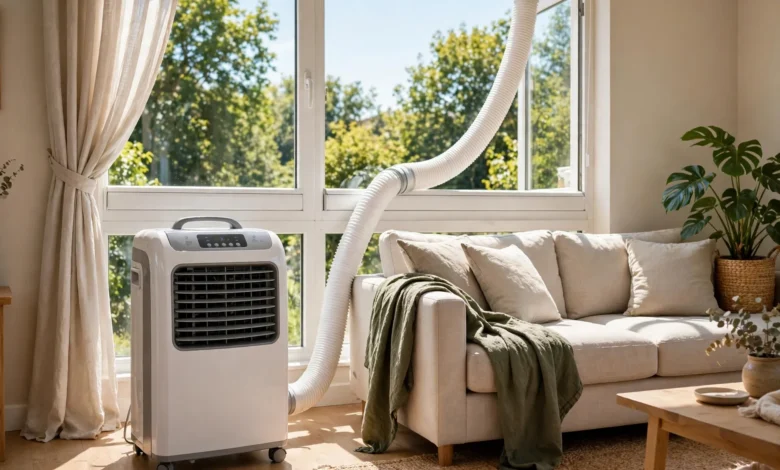
A portable air conditioner is the simplest way to get real cooling into a UK home without installing anything permanent, and the best models for 2026 are noticeably better than the noisy boxes of a few years ago. The shortlist below is built from the names that keep appearing in UK buying guides and owner reviews: a strong all-rounder for most living rooms, a quieter compact option for bedrooms, and a higher-output unit for open-plan spaces that smaller machines simply cannot cope with. Every pick here is a true compressor unit, which matters enormously, because only a compressor machine actually removes heat from the room, while the cheaper evaporative coolers that flood summer adverts merely blow damp air around and do very little on a genuinely hot, humid day.

When you buy a portable air conditioner, the two decisions that matter most are size and setup, and getting either wrong will leave you disappointed no matter how good the brand is. Size is measured in BTUs, and the rough UK guide is around 9,000 BTUs for a room under 20 square metres, 10,000 to 12,000 BTUs for a typical living room, and 12,000 to 13,000 BTUs for a larger open-plan space, with sunny south-facing rooms and top-floor flats needing the higher end of each range. Setup matters because every true compressor unit needs its hot air sent outside through an exhaust hose and a window kit, so before you spend anything, check that you have a suitable window, ideally a sliding or sash window the kit can seal against, and that you are happy with the hose running across part of the room.
The Shortlist at a Glance
The shortlist for 2026 starts with the MeacoCool Pro range, which UK guides consistently rate as the strongest all-round portable air conditioner for a typical British living room, thanks to a sensible balance of cooling power, a clear control panel, and a design that does not dominate the room. Next comes the De’Longhi Pinguino family, a long-running favourite whose larger models suit bigger rooms and whose build quality tends to hold up well over several summers, even if the price sits above the cheapest supermarket options. For smaller spaces, the Inventor Chilly and the compact electriQ models are the names to look at first, since both are made for bedrooms and small flats where a full-size unit would be overkill, while the Dreo Smart range appeals to buyers who want app control and scheduling from their phone. Prices move constantly, so treat any figure you see as a guide only and always check the live retailer price before buying.
What ties these picks together is that each one is a genuine compressor machine with a proper exhaust hose, a window kit in the box or available as an accessory, and a cooling output honestly matched to the room it is meant for. The Russell Hobbs and BLACK+DECKER portable models also appear regularly in UK roundups as budget-friendly alternatives, and they can be perfectly good buys for occasional heatwave use, provided you accept a little more noise and fewer smart features in return for the lower price. The mistake to avoid is choosing purely on headline price, because a cheap unit that is too small for your room will run all day, never reach the temperature you want, and cost more in electricity than a correctly sized machine that cycles on and off as it should.
Best Overall Pick for Most Living Rooms
The MeacoCool Pro is our best overall pick because it gets the fundamentals right in exactly the way a first-time buyer needs, with strong cooling for a standard living room, straightforward controls that do not require an app to operate, and a window kit that fits the sliding and sash windows found in most UK homes. Its output sits in the sweet spot for a room of roughly 20 to 30 square metres, which covers the majority of British living rooms, and it is powerful enough to bring a stuffy evening room down to a comfortable temperature within a reasonable time rather than merely stirring warm air around. Owners also tend to praise its reliability over multiple summers, which matters because a portable unit is the kind of purchase you want to make once and then forget about until the next heatwave arrives.
If you want to compare the current MeacoCool range and check which size suits your room, the manufacturer’s own site is a sensible starting point, and you can browse the range at Meaco before checking retailer prices. The one compromise to be aware of is that, like every portable unit, it is louder than a wall-mounted split system, so if you plan to run it overnight in the same room where you sleep, you should look at its sleep or quiet mode and, if possible, cool the bedroom before bedtime and then switch it off. For a living room, a home office, or a flat where installation is not an option, however, this is the pick that makes the fewest compromises and the one we would recommend to most UK buyers first.
Best for Small Rooms and Bedrooms
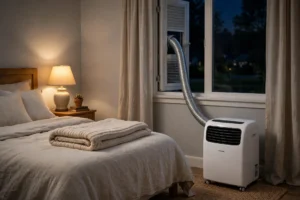
For a bedroom or a small flat, a smaller unit is not a compromise but the correct choice, because an oversized machine will cool the room too quickly, switch off, and leave the air feeling clammy rather than comfortable, while also taking up floor space you do not have. The Inventor Chilly is a good example of the breed, a compact machine designed for rooms under 20 square metres that is easier to move between rooms, simpler to store through winter, and generally quieter than its bigger siblings, which makes it far more liveable overnight. The electriQ compact models play a similar role and are often among the most affordable genuine compressor units on the market, which makes them a sensible entry point if you only need cooling for a handful of hot nights each year.
The practical advice for small rooms is to measure before you buy, check the unit’s dimensions against the space beside your bed or desk, and make sure the exhaust hose can reach a window without kinking, since a bent hose strangles airflow and ruins performance. Noise deserves special attention here, because a machine that is acceptable in a living room can feel intrusive at 2am, so look for a stated night or sleep mode, read owner reviews that mention bedroom use specifically, and consider cooling the room for an hour before bed rather than running the unit all night. A well-chosen small unit, used this way, will transform a hot bedroom from unbearable to comfortable without turning your sleep into a battle with a buzzing box.
Best for Open-Plan and Larger Spaces
Open-plan living is where most portable cooling purchases fail, because a machine rated for a box bedroom cannot hope to cool a combined kitchen, dining and living area, especially when cooking adds heat and large windows add sun. For these spaces you need to step up to the 12,000 to 13,000 BTU class, and the larger De’Longhi Pinguino models are the most frequently recommended option, since they combine high output with a robust build and a hose and window kit designed for sustained use rather than occasional bursts. Expect to pay more, and expect a bigger, heavier unit, but that is the honest price of cooling a large space with a portable machine, and buying small to save money will only leave you with a machine that runs constantly and still loses the battle.
There are two further points that open-plan buyers often miss, and both are worth checking before you order anything at all. First, heat sources matter enormously, so a kitchen-diner with an oven running, a south-facing glass wall, and a top-floor position may need the very top of the BTU range or even a second unit, and no single portable machine can repeal the laws of physics in a sun-trap room. Second, think about where the unit will actually live, because a large machine needs floor space near a suitable window, a route for the hose that does not cross a walkway, and a drain or a tank you can empty, since bigger machines condense more water on humid days. Get those details right and a large portable unit can genuinely rescue an open-plan summer, but ignore them and even the best model will disappoint.
What the BTU Numbers Actually Mean
BTU, or British Thermal Unit, is simply a measure of how much heat a machine can remove in an hour, and while the number looks technical, the buying logic is straightforward once you know your room size and its quirks. A room under 20 square metres usually needs around 9,000 BTUs, a typical living room needs 10,000 to 12,000 BTUs, and an open-plan area needs 12,000 to 13,000 BTUs, with the higher figure applying whenever the room is sunny, upstairs, poorly insulated, or used as a kitchen as well as a living space. Manufacturers sometimes quote optimistic figures measured in ideal conditions, so it is wise to buy at the top of the range for your room rather than the bottom, and to treat a machine that claims to cool a huge area on a tiny BTU rating with healthy suspicion.
The other number worth understanding is energy efficiency, because a portable unit is one of the thirstier appliances in the home and a machine that runs all summer can add a noticeable amount to an electricity bill. Look for the energy rating on the label, compare the stated power consumption in watts between similar models, and remember that a correctly sized machine that reaches its target temperature and cycles off will usually cost less to run than an undersized machine that never stops working. Using a timer, closing curtains during the hottest part of the day, and cooling only the room you are actually in are all simple habits that cut running costs without any sacrifice in comfort, and they are worth adopting from the first day you own the machine.
Exhaust Hoses, Window Kits and Noise
Every portable unit needs to send its waste heat somewhere, and that somewhere is outside, through an exhaust hose that is usually about 1.5 metres long and fitted to a window kit that seals the gap around it. The kit matters more than most buyers expect, because if hot air leaks back in around a poorly sealed window, the machine ends up cooling the room and heating it at the same time, which is a recipe for disappointment and a high electricity bill. Sliding windows and sash windows are the easiest to seal with the kits supplied, casement windows that open outward need a fabric seal kit that zips around the frame, and you should always check which type your windows are before ordering, since the wrong kit can add delay and extra cost to what should be a simple setup.
Noise is the other unavoidable reality of portable cooling, and honest buying means accepting that no portable machine is silent, with most producing a hum comparable to a loud fan or a quiet vacuum cleaner depending on the setting. The best approach is to check the stated decibel rating, read reviews from people who use the machine in a bedroom, and use the machine strategically, cooling a room before you need it and then turning it down or off rather than expecting whisper-quiet operation all night. Drainage is a smaller but real consideration too, because portable units collect condensed water that must go somewhere, either into an internal tank you empty or through a drain hose, and humid weeks will fill a tank faster than you expect, so a model with a continuous drain option is worth preferring if you plan heavy use.
How to Choose in Five Minutes
If you want a fast, reliable decision, work through four questions in order and the right portable air conditioner will usually reveal itself without hours of comparison. First, how big is the room, because that sets your BTU range and immediately rules out half the market, and if you are between sizes, always round up rather than down. Second, what kind of window will the hose use, because that determines which window kit you need and whether you should budget for a fabric seal for outward-opening windows. Third, where will the machine sleep, meaning whether it will run overnight in a bedroom, where noise and a sleep mode matter, or only in a living room during the day, where raw cooling power matters more. Fourth, how often will you actually use it, because occasional heatwave use justifies a budget model while daily summer use justifies spending more on efficiency and build quality.
Once those four answers are clear, the shortlist does most of the remaining work for you, and the final choice usually comes down to availability and price on the day you buy. Check that the model you want is a true compressor unit and not an evaporative cooler dressed up in similar language, confirm the window kit is included or add one to the basket, and measure the floor space and hose route before the delivery arrives so you are not rearranging furniture in a heatwave. Buy from a retailer with a clear returns policy, keep the box for the first few weeks, and run the machine hard during that window, because if it is going to disappoint you, it is far better to discover that while a return is still easy than in the middle of the hottest week of the year.
Conclusion
The best portable air conditioner purchase for a UK home in 2026 is not the cheapest machine on the page or the one with the biggest headline number, but the correctly sized compressor unit that fits your room, your window, and the way you actually live. For most living rooms that means the MeacoCool Pro as the safest all-round choice, for bedrooms and small flats it means a compact Inventor Chilly or electriQ model, and for open-plan spaces it means stepping up to a larger De’Longhi Pinguino and accepting the extra size and cost that genuinely cooling a big room requires. Whichever pick you land on, the rules stay the same: buy true compressor cooling, size up rather than down, seal the window properly, and check the live retailer price before you commit.
A portable machine will never be as quiet or as efficient as a professionally installed split system, but for renters, flat dwellers, and anyone who cannot or does not want to install permanent cooling, it is a genuinely good solution that can transform a miserable summer week into a comfortable one. Treat the purchase as a small project rather than an impulse buy, spend ten minutes on room size and window type, and you will end up with a machine that earns its floor space summer after summer. The heatwaves are not getting rarer, and a well-chosen portable unit is one of the most practical ways to meet them on your own terms.
FAQs
What size portable unit do I need for my room? For a room under 20 square metres, around 9,000 BTUs is usually enough, while a typical living room needs 10,000 to 12,000 BTUs and an open-plan space needs 12,000 to 13,000 BTUs, with sunny, top-floor, or kitchen-diner rooms needing the higher end of each range. Measure your room in square metres, add a margin if it has large south-facing windows or poor insulation, and round up when you are between sizes, because an undersized machine will run constantly, use more electricity, and still leave the room uncomfortably warm on the hottest days of the year.
Is an evaporative cooler the same as a portable air conditioner? No, and the difference matters enormously, because an evaporative cooler only blows air across a wet pad, which can feel refreshing in dry heat but does very little in the humid conditions that make UK heatwaves so uncomfortable, and it actually adds moisture to the air. A true portable air conditioner uses a compressor to remove heat and humidity from the room and sends the waste heat outside through an exhaust hose, which is why it costs more, needs a window kit, and genuinely lowers the room temperature rather than merely creating a breeze.
Do I really need a window kit? Yes, because the exhaust hose must send hot air outside, and without a kit sealing the gap around the hose, that hot air leaks straight back into the room and cancels out much of the cooling you have paid for. Most machines include a basic kit for sliding or sash windows, while outward-opening casement windows usually need a fabric seal that zips around the frame, so check your window type before ordering and budget for the right seal if the supplied kit does not fit your windows.
How noisy are portable units? Portable units are noticeably louder than wall-mounted systems, typically producing a hum comparable to a strong fan or a quiet vacuum cleaner, with the exact level depending on the model and the fan speed you choose. Most models offer a quieter night or sleep mode, and the best strategy for bedrooms is to cool the room for an hour before bed and then turn the machine down or off, rather than expecting silent operation all night, which no portable machine can honestly promise.
How much does a portable unit cost to run? Running costs depend on the machine’s power consumption and how many hours you use it, but as a rough guide a typical portable unit draws around 1,000 watts, so an hour of use costs roughly the same as running a kettle intermittently for that hour, and a full day of heavy use can add up to a noticeable amount on an electricity bill. To keep costs down, cool only the room you are using, close curtains during peak sun, use a timer, and choose a correctly sized machine that reaches its target temperature and cycles off instead of running flat out all day.
If you found this guide helpful, you may also enjoy our other home appliance buying guides on this site.
You can find more top UK home picks in our related articles here on the site.