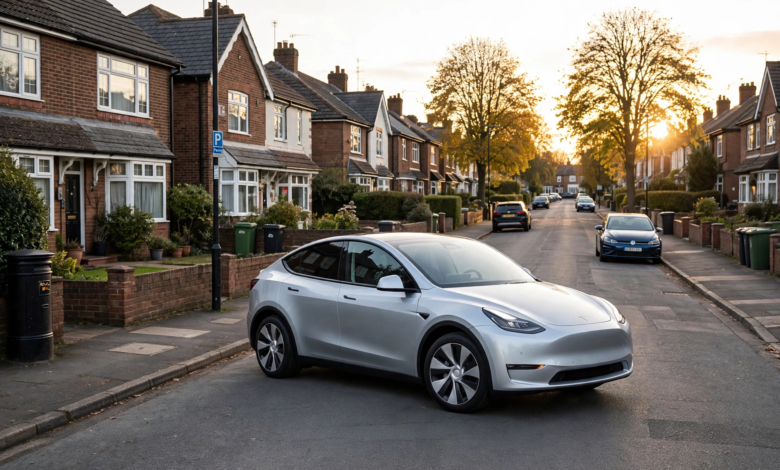
The cheapest Tesla Model Y ever sold in Britain costs £41,990. Launched in December 2025 as the new entry point to the range, the Model Y Standard undercuts the previous cheapest version by around £7,000, bringing the world’s best-selling electric car within reach of buyers who previously found it just too expensive. With 314 miles of WLTP range, the Juniper facelift styling and full access to Tesla’s Supercharger network, it is not the cut-price compromise early rumours feared — but Tesla has trimmed equipment in carefully chosen places to hit that headline figure, and buyers deserve to know exactly where.


This guide explains what the £41,990 Standard really is, how it differs from every other trim in the 2026 UK lineup, what you keep and what you lose for the saving, and whether the cheapest Model Y is actually the smartest buy. We will also cover real-world running costs, how the new pricing stacks up against rivals like the Skoda Enyaq, Kia EV6 and BYD Sealion 7, and one UK tax detail — the expensive-car VED supplement — that makes the Standard’s sub-£50,000 price far more significant than it first appears.
Tesla Model Y’s 2026 Headline: The Cheapest One Ever
Tesla announced the Model Y Standard for the UK on 5 December 2025 with a characteristically blunt post from Tesla UK: the new entry-level car would start at £41,990, with test drives beginning in January. Britain was the first right-hand-drive market in the world to get it, and the price represented a drop of more than fourteen per cent over the previous base rear-wheel-drive model. At launch, Tesla paired the headline price with a PCP offer from £299 a month, signalling clearly that this car was aimed at monthly-budget buyers and company-car drivers rather than early adopters.
The timing was no accident. By late 2025, the Model Y was facing the fiercest competition of its life: sharply priced Korean rivals, a wave of keenly equipped Chinese electric SUVs led by the BYD Sealion 7 — which starts at £44,990 in the UK, making the new Standard cheaper than its most obvious rival — and a maturing used market full of older Model Ys. Tesla’s answer was to strip cost out of the car rather than simply discount the existing one, creating a genuinely cheaper product instead of a temporary offer. It is a strategy the company has used before in other markets, but the UK Standard went further than most, with changes tailored specifically for British insurance and tax rules.
The 2026 UK Model Y Lineup and Prices
As of October 2026, the UK Model Y lineup runs across five core variants, and the ladder is now clearer than it has ever been. The Model Y Standard rear-wheel drive opens the range at £41,990 with 314 miles of WLTP range. Above it sits the Model Y Long Range rear-wheel drive at £44,990 with 383 miles of range — just £3,000 more for 69 extra miles, or roughly £43 per additional mile of quoted range. Then come the Premium models: the Premium Long Range rear-wheel drive at £48,990 with 387 miles, the Premium Long Range all-wheel drive at £51,990, and the Performance at £61,990 with 360 miles. A seven-seat Premium Long Range all-wheel-drive option is also listed at £54,490.
Two things are worth knowing before you fixate on those figures. First, Tesla’s UK prices move more often than most manufacturers’, and some independent UK price trackers have recently shown the Premium cars at £1,000 above the figures quoted here — a discrepancy price guides have been unable to resolve. Always confirm the live figure on Tesla’s own UK configurator before ordering, because a week-old screenshot is not a contract. Second, the Long Range rear-wheel drive at £44,990 only arrived in early 2026, which is why some older price lists still show the Standard as the only sub-£48,990 option. The current lineup gives buyers a genuine choice at every £3,000 to £4,000 step, which is exactly how Tesla wants it.
What the £41,990 Standard Keeps — and What It Loses
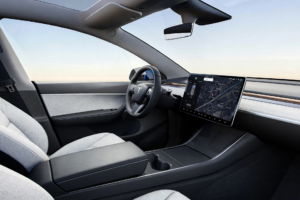 The clever thing about the Model Y Standard is how ordinary it feels, because Tesla kept everything that defines the modern Tesla experience. You get the full Juniper refresh design language, the same 15.4-inch central touchscreen running the same software, Autopilot driver assistance, heated front seats and a heated steering wheel, a powered tailgate, 19-inch wheels and complete access to the Supercharger network. The panoramic glass roof stays, the 314-mile WLTP range figure is honest for the class, and the boot remains one of the most practical in the segment. As background on the car’s history and engineering, Wikipedia’s overview of the Model Y is a useful reference for how the model has evolved since 2020.
What you lose is a catalogue of premium touches, each individually small but collectively noticeable. The full-width front and rear light bars that define the Juniper look are replaced with a simpler split-light design, the adaptive dampers give way to a more basic passive suspension setup, and the rear passenger touchscreen disappears. Inside, the upholstery switches to cloth, the steering column adjusts manually rather than electrically, and the sound system drops to a lower-grade seven-speaker arrangement. Performance is deliberately restrained for the UK car: top speed is capped at 110 mph and the 0–62 mph sprint takes 7.2 seconds, down from 5.4 in the Premium variants. Tesla made these changes partly to land the car in insurance group 34 — the lowest rating of any Tesla sold in Britain — which trims premiums by an estimated £300 to £600 a year against the higher trims.
Range, Charging and Running Costs in 2026
Quoted range and real range are different things, and honest buyers should budget accordingly. The Standard’s 314-mile WLTP figure will translate to roughly 220 to 250 miles in mixed real-world British driving, falling further on cold motorway runs in winter when heating and battery chemistry take their toll. That is still enough for the vast majority of journeys, and the Standard’s 175 kW DC fast-charging peak means a V3 Supercharger can add around 162 miles of range in fifteen minutes. Tesla’s Supercharger network remains the easiest and most reliable charging infrastructure in the business, and Standard owners get the same access as everyone else.
Running costs are where the Standard quietly shines beyond its purchase price. Home charging on an off-peak tariff keeps per-mile energy costs at a fraction of petrol, routine servicing is minimal because there is no engine oil, filters or exhaust system to maintain, and that low insurance group rating compounds the saving every year. Company-car drivers should note that the benefit-in-kind rate for electric cars rises from 3 to 4 per cent from April 2026 — still a fraction of the rate on a petrol equivalent, and one of the strongest reasons the Standard makes sense as a fleet choice. Salary-sacrifice schemes can make the monthly figures lower still, though the exact saving depends on your tax band and employer, so get a personalised quote rather than trusting a headline.
Tesla Model Y vs Its 2026 Rivals
The £41,990 Standard does not exist in a vacuum, and 2026 might be the first year the Model Y is not the default answer in its class. The Skoda Enyaq remains the rationalist’s choice with superb interior quality and a dealer network Tesla cannot match, the Kia EV6 offers striking design and ultra-rapid charging at competitive prices, and the BMW iX3 brings badge appeal to buyers who still care about that. The most direct threat is the BYD Sealion 7, which starts at £44,990 — meaning the Model Y Standard now undercuts it by £3,000, a reversal of the value argument that would have been unthinkable two years ago.
Where the Tesla still wins is in the areas that matter daily: the Supercharger network’s reliability and coverage, software that updates and improves over the air, class-leading efficiency that stretches every kilowatt-hour further, and residual values supported by enormous demand. Where rivals fight back is in build consistency, interior material richness, physical controls for drivers who dislike doing everything through a screen, and the reassurance of a traditional dealer to visit when something goes wrong. Neither side has a knockout blow in 2026, which is precisely why the Standard’s price cut matters so much — it moves the Tesla from “worth the premium” to “cheaper than the alternative” for a large slice of buyers.
Should You Buy the Cheapest Model Y?
The Standard suits three kinds of buyer especially well. Budget-focused families get genuine Tesla ownership — the space, the tech, the charging network — for less than many mid-spec petrol SUVs. Company-car and salary-sacrifice drivers get an efficient, low-BIK electric car whose modest list price keeps every tax calculation favourable. And private buyers who simply want the Tesla experience without paying for performance they will never use get ninety-five per cent of the car for a substantial discount. If your driving is mostly commuting, school runs and the occasional long trip, the Standard’s compromises will barely register.
There is also a tax reason to prefer the cheaper trims that has nothing to do with Tesla. From 1 April 2026, the UK’s expensive-car VED supplement applies to electric cars with a list price above £50,000 — an extra £440 a year on top of the £200 standard rate, or £640 a year in total, for years two through six. The Standard at £41,990, the Long Range rear-wheel drive at £44,990 and even the Premium Long Range rear-wheel drive at £48,990 all escape it, while the Premium Long Range all-wheel drive at £51,990 and the Performance at £61,990 do not. Step up to the Long Range rear-wheel drive if you regularly cover big motorway miles and want the extra 69 miles of quoted range for £3,000; choose the Premium or Performance only if all-wheel drive, maximum pace or the full equipment list genuinely matter to you.
Conclusion
The 2026 Model Y Standard is the most significant version of Britain’s best-selling electric car since the Juniper facelift itself. At £41,990 it is not a stripped-out penalty box but a carefully de-contented car that keeps the technology, space, range and charging access that make a Tesla a Tesla, while sacrificing the luxury trimmings many buyers never asked for. The full lineup now offers a logical step at every price point, the Standard undercuts its fiercest Chinese rival, and the sub-£50,000 price neatly sidesteps the expensive-car tax supplement. For most buyers, the cheapest Model Y in history is also one of the smartest buys in the electric car market right now.
For a broader look at how electric SUVs compare at the premium end of the market, our Volvo EX90 guide covers UK prices, range, charging and the honest verdict for British buyers. Where the Model Y Standard is all about maximum value and efficiency, the EX90 shows what considerably more money buys in luxury, refinement and seven-seat practicality — essential context if your budget has any stretch in it at all. Reading both guides together gives you the full picture, from budget champion to luxury flagship.
And if you are still weighing the wider costs of car ownership before deciding between electric and conventional power, the running-costs analysis in our Volvo EX90 review puts insurance groups, charging and depreciation in perspective. Whichever electric SUV you choose, understanding the full cost picture — not just the headline price — is what separates a smart purchase from an expensive impulse. Take your time, run the numbers honestly, and choose the car that fits your life — not just your aspirations.
How much is the cheapest Tesla Model Y in the UK in 2026?
The cheapest Tesla Model Y in the UK in 2026 is the Model Y Standard rear-wheel drive at £41,990 on the road. Launched in December 2025 as the new entry point to the range, it undercut the previous cheapest version by around £7,000, and the price has held steady through October 2026 according to independent UK price trackers. It comes with 314 miles of WLTP range, the Juniper facelift styling, a 15.4-inch touchscreen, Autopilot and full Supercharger access — the complete core Tesla experience without the premium trimmings.
Tesla launched the Standard with a PCP offer from £299 a month, though finance terms change regularly so confirm the current offer on Tesla’s UK configurator before visiting a showroom. One caution: Tesla adjusts UK pricing more frequently than most manufacturers, and some independent trackers have recently shown certain trims at slightly different figures, so always verify the live price on Tesla’s own configurator before ordering. A week-old screenshot is not a contract, and the price you see online today is the only one that matters.
What is the range of the Tesla Model Y Standard?
The Model Y Standard has an official WLTP range of 314 miles, making it the shortest-range version in the 2026 UK lineup but still competitive for the price. In real-world British driving, expect roughly 220 to 250 miles from a full charge depending on temperature, speed and driving style, with cold-weather motorway runs at the lower end of that band. It charges at up to 175 kW on DC fast chargers, adding around 162 miles of WLTP range in fifteen minutes at a V3 Supercharger or above.
For context, the Long Range rear-wheel drive at £44,990 offers 383 miles of WLTP range — 69 more miles for £3,000 extra, or roughly £43 per additional mile. Most owners will find the Standard’s range ample for daily commuting, school runs and weekend trips, with Tesla’s Supercharger network covering longer journeys painlessly. Unless you regularly drive more than 200 miles in a day without convenient charging stops, the Standard’s range is unlikely to be the limiting factor in your ownership experience.
What’s the difference between the Model Y Standard and Long Range?
The core differences between the Model Y Standard (£41,990) and the Long Range rear-wheel drive (£44,990) are range, equipment and a small performance gap. The Long Range offers 383 miles of WLTP range against the Standard’s 314 miles, and it keeps more premium equipment that the Standard drops: the full-width light bars, adaptive dampers, rear passenger touchscreen, powered frunk and upgraded interior trim. Both cars share the same Juniper design language, software and Supercharger access. In daily driving, both feel every bit a Tesla — quiet, quick and effortlessly high-tech.
The Standard counters with a lower insurance group rating of 34 — the lowest of any Tesla in Britain — which can save hundreds of pounds a year on premiums, and both cars escape the £50,000 expensive-car VED supplement that adds £440 a year to pricier trims. For £3,000, the Long Range is the better buy if you regularly drive long distances and want maximum range confidence; otherwise the Standard keeps the essential Tesla experience — space, tech and charging — for meaningfully less money.
Is the 2026 Tesla Model Y worth it?
For most buyers, the 2026 Model Y is worth it — particularly in Standard or Long Range rear-wheel-drive form. The Juniper refresh brought sharper styling, a quieter cabin, better ride comfort and the return of a proper indicator stalk, while the Standard’s £41,990 price makes it cheaper than key rivals like the BYD Sealion 7. You get class-leading efficiency, the most reliable charging network in Britain, software that improves over the air and strong residual values supported by enormous demand.
Caveats remain: build consistency still trails the best German and Korean rivals, almost everything runs through the central touchscreen which some drivers dislike, and there is no traditional dealer network for servicing reassurance. But as a complete package of purchase price, range, technology and running costs, few electric SUVs in 2026 match the Model Y’s breadth of appeal. If you want maximum car for minimum outlay, the Standard is arguably the pick of the entire electric SUV market right now.
Will Tesla cut Model Y prices further in 2026?
Nobody outside Tesla knows for certain, but further Model Y price cuts in 2026 cannot be ruled out. Tesla has a long history of adjusting prices to stimulate demand, and the Standard’s introduction was effectively a permanent £7,000 price cut delivered as a new trim rather than a discount. Pressure from Chinese brands, the arrival of new rivals and Tesla’s own volume targets all point towards continued price competition through the rest of the year. Elon Musk has never been shy about using price as a weapon, and 2026 has given him plenty of reasons.
That said, the current lineup already looks keenly priced — the Standard undercuts its closest rival and the Long Range rear-wheel drive offers strong value at £44,990. If you need a car now, waiting for a cut that may never come has its own cost in depreciation on your current car and months of higher running costs. If your purchase can wait and you are not in a hurry, Tesla’s track record suggests patience is sometimes rewarded — but buy the car you need when you need it.