Volvo EX90: UK Price, Range, Charging and the Honest Verdict for British Buyers

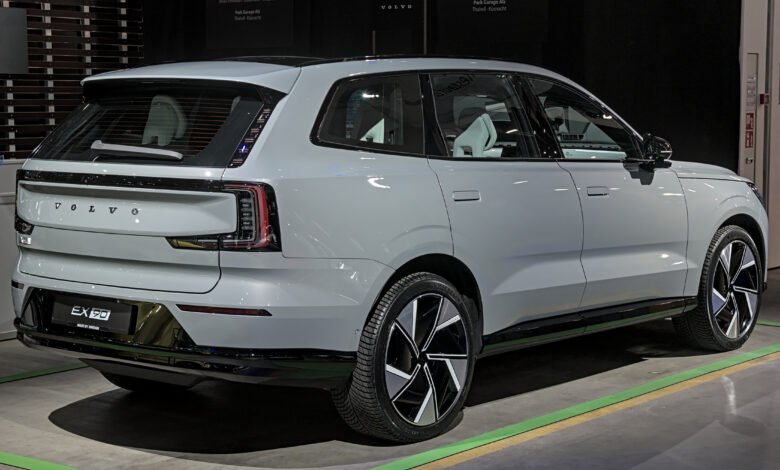
What the Volvo EX90 Is and Why It Matters in Britain
The volvo ex90 is the car Volvo hopes will define its electric future, a large seven-seat SUV that replaces the diesel-powered XC90 at the top of the range and carries the Swedish brand’s reputation for safety into the battery era. It arrived in Britain after a long and much-publicised delay, and it landed in a market that has changed dramatically since it was first revealed, with cheaper rivals, a far bigger charging network and a government grant that it cannot claim. For British families who want electric motoring without giving up space, comfort or long-distance ability, this is one of the most important new cars of the decade, and it deserves a closer look than the headline price alone suggests.

Understanding this car starts with understanding what it is not. It is not a cheap electric car, it is not a sporty coupe-style SUV, and it is not a vehicle designed to chase sales volumes the way smaller electric hatchbacks do. Instead, it is a flagship: the most expensive, most technologically advanced and most comfortable car Volvo currently makes, built for families who cover serious miles and want to do so quietly, safely and without tailpipe emissions. That positioning explains both its strengths and its weaknesses, because everything from the price to the software has been shaped by the ambition of building a luxury electric car rather than an affordable one.
Volvo EX90 UK Prices and Trims Explained
The volvo ex90 range in Britain now starts at around £73,160 for the Single Motor version, a rear-wheel-drive model with a single electric motor that Volvo added after cutting the entry price significantly from its original launch figure. Twin Motor versions, which add a second motor and all-wheel drive, start from roughly £79,060, while the flagship Performance model, offered only in top-specification Ultra trim, climbs to about £98,160. Those figures put the car firmly in premium territory, alongside well-specified Range Rovers and German luxury SUVs, and they mean most buyers will be choosing between trims rather than haggling over the entry price itself.
Three trim levels structure the range: Core, Plus and Ultra. Core models already include a large 14.5-inch touchscreen, four-zone climate control, a fixed panoramic roof, 20-inch alloy wheels and Volvo’s full suite of safety technology. Plus adds 21-inch wheels, a head-up display, a 360-degree parking camera and a Bose sound system, while Ultra brings air suspension, 22-inch wheels, soft-closing doors, massaging and ventilated seats and a 25-speaker Bowers and Wilkins sound system. One important disappointment for British buyers is the Electric Car Grant, because the scheme only covers new electric cars priced at £37,000 or less, so no version of this car qualifies for the government’s £1,500 or £3,750 discount.
Volvo EX90 Range and Charging on British Roads

Range is where this car makes its strongest case, because the big battery delivers a WLTP figure of up to 380 miles in the most efficient versions, with the Twin Motor models close behind at around 374 miles. Real-world range will always be lower than the laboratory figure, especially on a cold British motorway in winter, but even a conservative estimate leaves enough for a London-to-Edinburgh run with one charging stop, which is the test that matters for most families. The 2026 model year also brings 800-volt electrical architecture, which improves charging speeds and efficiency compared with the earlier 400-volt setup, and that upgrade matters more in daily use than any single headline number.
Charging is the other half of the story, and here Britain’s rapidly growing network works in the car’s favour. The EX90 accepts DC fast charging at up to 250kW, which can take the battery from 10 to 80 per cent in roughly half an hour at a suitable ultra-rapid charger, while home charging on an 11kW wallbox fills it overnight. Zapmap data shows the UK now has more than 124,000 public charge points, including over 15,000 ultra-rapid units, with more than 1,000 charging hubs spread across the country. Anyone weighing the switch should study the latest Zapmap figures on ultra-rapid charge point growth before deciding, because the network you will actually use matters more than the car’s theoretical maximum charging speed.
Volvo EX90 Interior, Space and Seven-Seat Practicality
Inside, the cabin is a masterclass in Scandinavian restraint, with pale wood, recycled fabrics and a dashboard dominated by a single tall touchscreen that controls almost every function. The driving position is commanding, the front seats are superbly comfortable on long journeys, and the sense of calm at motorway speeds is something rivals struggle to match. Material quality is genuinely luxurious in the higher trims, and the standard panoramic roof floods the cabin with light, which makes the interior feel even roomier than its already generous dimensions suggest. For families who spend hours in the car on school runs and holiday trips, this is a cabin that rewards every mile.
Practicality is more complicated, because the seven-seat layout is best understood as five-plus-two rather than a genuine seven-adult car. The first two rows are spacious and comfortable for adults of any size, with generous legroom and a large boot behind them, but the third row is tight and best reserved for children or short journeys. That is a familiar compromise in this class, and the rear seats fold flat electronically when they are not needed, freeing up a large and usefully flat load bay. A family that regularly carries six or seven people should test the third row carefully before buying, because a Kia EV9 offers more space there, even though this car feels more special everywhere else.
Volvo EX90 Safety Technology and Driver Assistance
The volvo ex90 carries Volvo’s most ambitious safety package ever, built around a roof-mounted LiDAR sensor that scans the road ahead with laser precision and feeds data into the car’s driver assistance systems. Volvo says the system can detect hazards far earlier than cameras and radar alone, and it underpins features such as automatic emergency braking, lane-keeping assistance, blind-spot monitoring and a driver-monitoring camera that watches for distraction or drowsiness. For a brand whose entire identity is built on safety, this car is meant to be a showcase, and on paper it is the most comprehensively equipped Volvo ever sold in Britain.
There is, however, an important caveat that British buyers should understand before paying extra for the technology. Much of the most advanced functionality depends on software, and Volvo has been candid that some features arrived later than planned through over-the-air updates after the car’s launch. Early owners reported that certain driver-assistance features felt unfinished at delivery, which is frustrating in a car costing the better part of £100,000. The hardware is undoubtedly impressive, and the car has the potential to be one of the safest on British roads, but buyers should confirm exactly which features are active on the car they are collecting rather than assuming everything promised in the brochure is switched on.
Volvo EX90 vs Kia EV9 and Hyundai Ioniq 9 in the UK
The most obvious rival is the Kia EV9, which offers seven seats, a similar electric range and a far lower price, starting from roughly half of what the flagship Performance model costs. The Kia is more practical in the third row, its interior is roomier for growing families, and its warranty is longer, which makes it the rational choice for buyers who prioritise space and value over badge and luxury. Hyundai’s Ioniq 9 plays a similar role, with bold styling and a generous equipment list at a price that undercuts the Volvo by a wide margin. For many British families, either Korean car delivers ninety per cent of the experience for considerably less money.
Where the volvo ex90 fights back is in refinement, materials and brand appeal. Its cabin feels quieter and more luxurious than either rival, its ride is more composed on British B-roads, and the Volvo badge still carries a weight that Kia and Hyundai cannot yet match in the premium market. The Bowers and Wilkins sound system in Ultra trim is genuinely exceptional, the seats are among the best in any car at any price, and the overall sense of calm suits long-distance touring better than the more utilitarian Korean interiors. Buyers who value those qualities, and who can afford the premium, will find the Volvo a more satisfying car to live with, even if the spreadsheet says otherwise.
What UK Reviews Say About the Volvo EX90
The volvo ex90 has earned warm but qualified praise from British motoring journalists, who consistently describe it as a magnificent car held back by software that arrived before it was fully ready. Reviewers praise the refinement, the ride quality, the interior design and the sheer sense of luxury, with several calling it the most comfortable electric SUV they have driven. The price cuts since launch have also improved the verdict considerably, because a car that once looked wildly overpriced now costs little more than a plug-in hybrid XC90, which reframes the whole value argument in the Volvo’s favour.
The reservations are consistent too, and honest buyers should weigh them carefully. Reviewers note that the touchscreen controls too many functions, that some features were missing at launch, and that the third row is cramped compared with the Kia EV9. There is also a broader question about whether a car this expensive makes sense when cheaper rivals are so capable, and reviewers are split on that point. The consensus, though, is that the EX90 has improved noticeably since its introduction, and that the 800-volt update and the price cuts have turned it from a curiosity into a genuinely recommendable luxury electric SUV for British buyers who want the best Volvo money can buy.
Frequently Asked Questions
How much does the EX90 cost in the UK? UK prices start at around £73,160 for the Single Motor version, rising to roughly £79,060 for Twin Motor models and about £98,160 for the flagship Performance variant in Ultra trim. Those are list prices before any dealer discount or finance offer, and they mean no version qualifies for the government’s Electric Car Grant, which only covers cars priced at £37,000 or less. Used examples are already appearing on the market at lower prices, so patient buyers may find nearly-new cars for considerably less than the list figure within the first couple of years of ownership.
What is the real-world range of the EX90 in Britain? The official WLTP figure is up to 380 miles for the most efficient versions, but real-world range depends on temperature, speed and driving style. On a British motorway in mild weather, most owners should expect somewhere between 280 and 320 miles from a full charge, dropping further in cold winter conditions when heating and battery chemistry take their toll. That is still enough for the vast majority of journeys, and the 250kW fast-charging capability means a 10 to 80 per cent top-up takes roughly half an hour at a suitable ultra-rapid charger.
Can the EX90 use Tesla Superchargers in the UK? Tesla has opened parts of its UK Supercharger network to other brands, but compatibility depends on the specific site, the connector and whether Volvo has enabled access for the car. Owners should check the Tesla app and Volvo’s own charging guidance before planning a journey around a Supercharger stop, because not every site accepts non-Tesla vehicles. In practice, the growing network of ultra-rapid chargers from operators such as Gridserve, InstaVolt and Ionity already covers most motorway routes, so Supercharger access is a bonus rather than a necessity for most British drivers.
Is the EX90 a good family car? Yes, with one reservation. It is superb for families of five, with a huge boot, excellent safety technology, a calm and comfortable cabin and enough range for long holiday trips. The reservation is the third row, which is tight for adults and best used for children or short journeys, so families who regularly carry six or seven people should test it carefully or consider the roomier Kia EV9. For everyone else, it is one of the most refined and reassuring family cars on sale in Britain today, and its safety credentials are genuinely class-leading.
Final Thoughts
The Volvo EX90 is a car that rewards a careful, clear-eyed look, because its headline price tells only half the story. Yes, it is expensive, yes, some of its software arrived late, and yes, cheaper rivals offer more space for less money. But it is also one of the most refined, comfortable and reassuring electric cars on sale in Britain, with a superb cabin, class-leading safety technology, a genuinely useful range and access to a charging network that grows more capable every month. The price cuts since launch have transformed its value, and the 800-volt update has made it a better car in the ways that matter daily.
For British buyers, the decision comes down to priorities rather than arithmetic. If space and value matter most, the Kia EV9 is the smarter buy and nobody should feel embarrassed about choosing it. If refinement, safety and the pleasure of driving a genuinely luxurious car matter more, the EX90 earns its premium and will repay its owner on every long journey. Either way, this car shows how far electric motoring has come in Britain, and it deserves to be judged on what it is rather than what it costs. Readers weighing the wider costs of car ownership may also find our guide to buying a car with $500 down and no credit check useful, even though that market sits at the opposite end of the price spectrum. For the full technical background, the Volvo EX90 entry on Wikipedia is a solid reference.
