Among the various sought-after solutions for industrial equipment maintenance, the likes of grease, oils, and lubricants will always be hugely important.
After all, the relevance and importance of lubrication in industrial settings goes well beyond merely “oiling the wheels”. That’s because products like those cited above can form a critical protective barrier between moving parts, thereby helping bring about significant performance improvements and cost reductions.


Across industrial environments such as manufacturing plants, warehouses, processing facilities, and engineering workshops, machinery operates under relentless pressure. Even minor increases in friction can have significant adverse consequences.
While proper lubrication might not be one of the most obvious ways to bolster the performance of industrial equipment, it can be a highly effective one.
This article, then, will take a closer look at the difference the right lubrication strategy can make as part of a broader preventative maintenance programme for an industrial site.
The Impact That Lubrication Can Have on Industrial Machinery
It isn’t a secret that industrial equipment contains many different moving components, with these inevitably generating friction during operation.
If adequate lubrication isn’t carried out, these parts can be susceptible to overheating, wearing prematurely, and ultimately failing.
When, on the other hand, high-quality lubricants are used in the right ways, this can have the following desirable effects:
- Friction And Wear Can Be Reduced
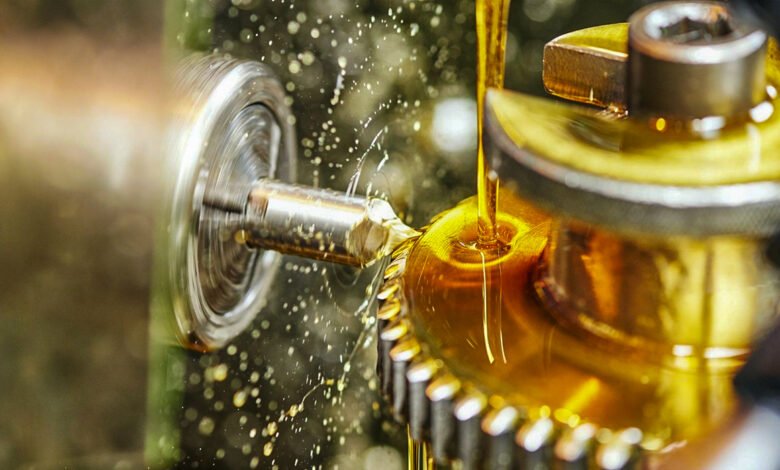
The application of lubricants to components creates a thin film that minimises direct metal-to-metal contact. A good shorthand for this is “sliding, not grinding”; once the parts are separated, they ride on the lubricant film. This means that instead of the components grinding against the rough metal, fluid particles roll over each other easily.
As a result, abrasive wear on the likes of bearings, gears, chains, and slides can be dramatically lowered. This helps extend component lifespan.
- Operating Temperatures Can Be Brought Down
Friction generates heat, which in turn, needs to be dissipated effectively. Otherwise, there can be a high risk of overheating, potentially leading to thermal expansion, seal failures, and rapid breakdowns.
Good lubrication helps reduce temperatures in two ways. Firstly, it puts a slippery liquid between moving metal parts to stop them rubbing together and creating friction (which, as we mentioned above, creates heat). Secondly, it acts like a liquid blanket that absorbs the heat and carries it away from hot engine parts to cooler areas.
- Energy Efficiency Can Be Improved
When equipment is well-lubricated, it typically runs more smoothly and doesn’t need to consume as much power to deliver the same performance. This helps businesses’ efforts to manage rising industrial energy costs and meet net-zero targets.
The slippery barrier that lubricant creates between moving parts brings down friction. Less friction means less energy is wasted as heat. As a consequence, engines and machines can operate smoothly and require less fuel or electricity to do the same amount of work.
- Protection Against Corrosion Can Be Enhanced
For industrial installations in humid or outdoor conditions, it can be particularly important for a strong barrier to be provided against moisture and rust. Especially pertinent examples include equipment in coastal regions and food and beverage plants where washdowns are frequent.
Sure enough, effective lubrication helps protect metal from corrosion by creating a physical shield. In this sense, lubricant acts as a “raincoat”, preventing the metal from coming into direct contact with the three things necessary for rusting to occur: water, oxygen, and corrosive chemicals.
- Equipment Lifespan Can Be Extended and Downtime Reduced
The protection that the right lubrication routine provides against wear, corrosion, and contamination can go a long way to reducing unplanned stoppages. In a world of 24/7 industrial operations and just-in-time manufacturing, this can help solve a major headache for industrial-site operators.
It isn’t just a theory, either. As noted by POWER magazine, while industrial lubricants typically account for a mere 1% of plant operational costs, an Institute of Mechanical Engineers case study found that 43% of machine failures could be attributed to the incorrect choice and usage of lubricants.
Act Today to Optimise Lubrication Practices at Your Industrial Premises
If you’re reading this as a key decision-maker for an industrial site, this article will have hopefully helped you appreciate the role that lubrication can play in cost-effectively improving the performance of your specialised machinery.
By minimising friction, shielding components from wear and contamination, and supporting efficient operation, a well-designed lubrication strategy can extend the life of your on-site equipment and help reduce unplanned downtime. This will all contribute to keeping your organisation’s critical assets performing at their best.