What Happened When a Travel Company Went All In on Trustpilot’s Paid Plan Review of Trustpilot’s malpractices

The Short Version
- Trustpilot talked Thrillophilia into upgrading to its paid review service.
- Not long after, a wave of positive reviews just started vanishing.
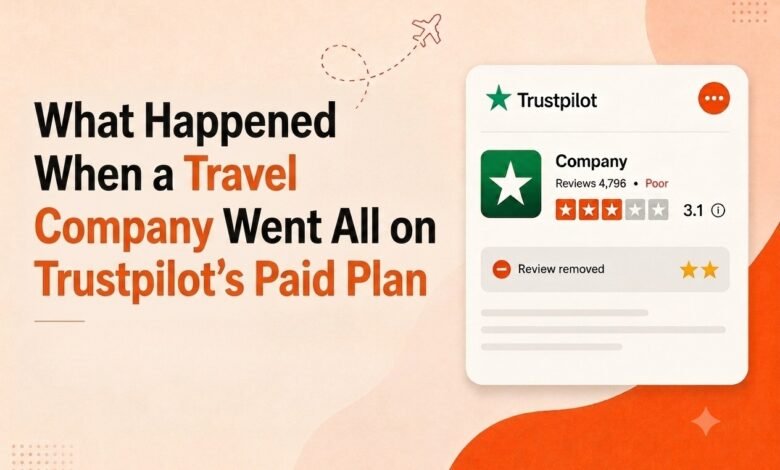
- More than 500 reviews got wiped out in a 15 day span, hitting the company’s rating and reputation hard.
- According to the company, asking for review IDs, proof, or any real explanation went nowhere, over and over.
- The whole thing points to a bigger question about how honest and accountable automated review moderation actually is.
Trustpilot is one of the biggest names in online reviews, sitting on more than 330 million of them and used by millions of shoppers and businesses to make buying decisions. But there’s a pattern that’s been building for years: businesses complaining that real reviews get taken down, that Trustpilot barely explains why, and that there’s constant pressure to buy a subscription.

Independent write ups, customer complaints, and business forums all seem to tell a similar story: a setup that looks a lot like pay to play, which naturally makes people ask how a review platform can claim to fight fraud while still being fair to the businesses it reviews.
None of this was on Thrillophilia’s radar going in. Like most companies that depend on customer feedback for credibility, its reviews were built on real trips and real travelers, thousands of honest accounts gathered over years of business.
Digging into Thrillophilia’s actual review timeline on Trustpilot shows exactly why these concerns came up.
Where It All Began
Thrillophilia had been holding a steady 4.2 rating for a while, collecting feedback the ordinary way: inviting customers to leave a review once their trip wrapped up, something thousands of companies do as standard practice. But two years into that routine, despite happy customers and consistent collection, the rating had slowly dropped to 3.6. That was the trigger for the company to start digging.
The Sales Pitch That Started It All
When they raised the dropping numbers with Trustpilot, the response was that reviews collected outside Trustpilot’s own invite system were tougher for the platform’s automated checks to verify. And right around that time, a Trustpilot sales rep reached out with a pitch to move to a paid plan.
Trusting Trustpilot’s reputation and confident their own reviews were genuine, Thrillophilia agreed to upgrade.
Looking back, it feels less like a business partnership and more like a setup that eventually chipped away at their ratings and reviews. The sales pitch promised better visibility and a rating boost, and that lasted only briefly before the review removals started.
The subscription, Trustpilot’s Plus plan, kicked off in August 2024 at roughly £3,108 a year. Trustpilot’s own written communication during the sales process said reviews collected the right way, in line with platform rules, would stay up. Taking that at face value, Thrillophilia had every review invite go out carrying a verified booking reference and PNR number.
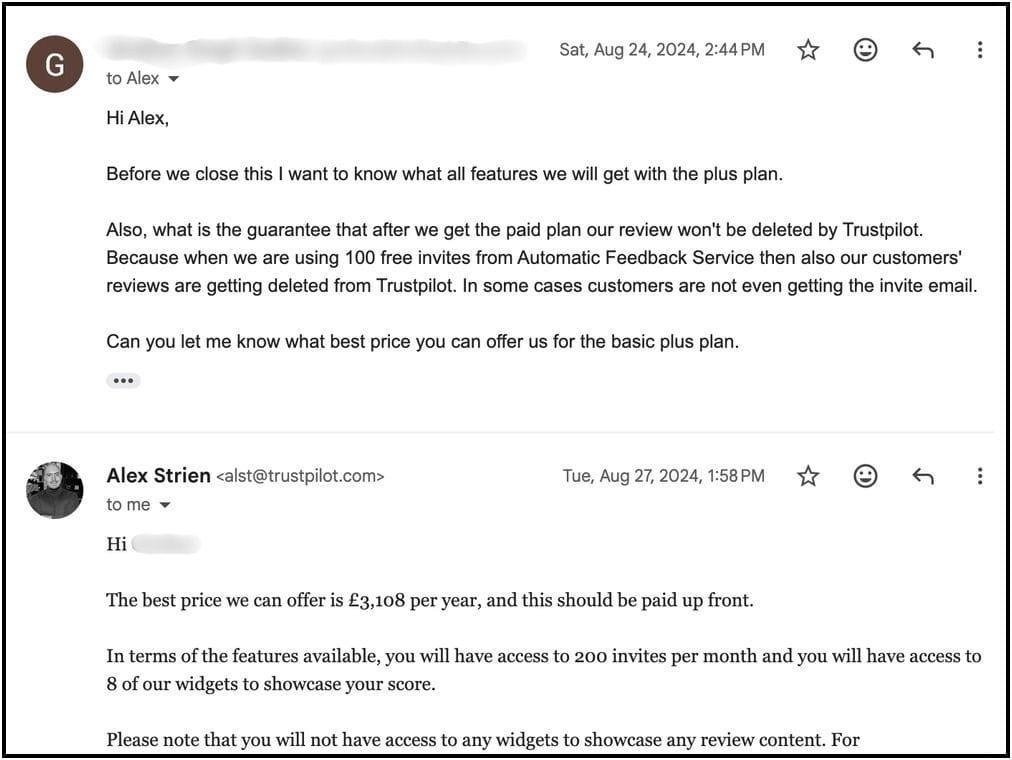
Emails with Trustpilot’s sales team discussing the paid plan and its pricing
Even after moving entirely onto Trustpilot’s Automatic Feedback Service, reviews kept dropping off. That’s when the company sent its first mild nudge, hoping for a straight answer.
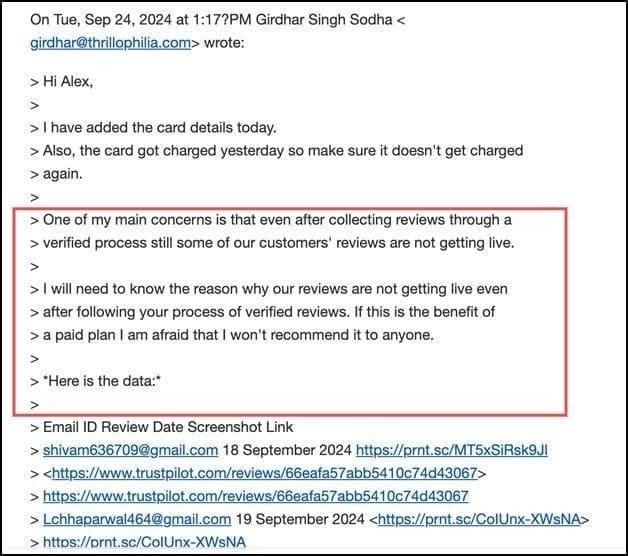
A follow-up email flagging that verified reviews weren’t going live
The rating eventually bounced back to about 4.1, but the stretch was still marked by frequent removals and swings in the score, even though reliability was the whole point of paying. Across 2024 and again in 2025, the team logged ticket after ticket, and mostly heard back with generic, automated messages and no actual person involved.
More emails pressing Trustpilot on removed reviews and the lack of any real payoff from the paid plan
Even with all that back and forth, the rating stayed near 4.1. A screenshot from August 19, 2025 shows verified positive reviews accounting for 65% of over 5,000 total reviews at that point.
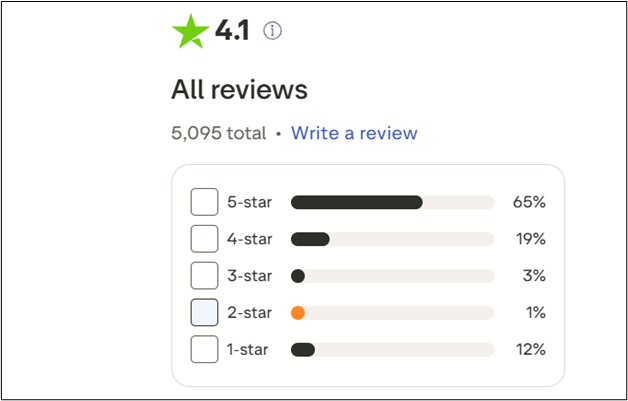
Screenshot Date: 19th August 2025
Then the Removals Really Picked Up
Once the second year of the subscription rolled in, positive reviews started dropping fast, typically without any heads up or clear reasoning. This happened even though Trustpilot had previously said verified reviews were protected. Here are a few examples of positive, verified reviews that got pulled anyway:
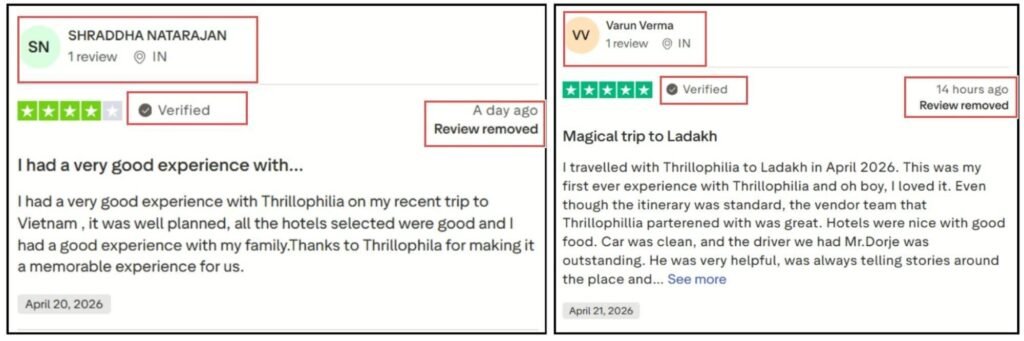
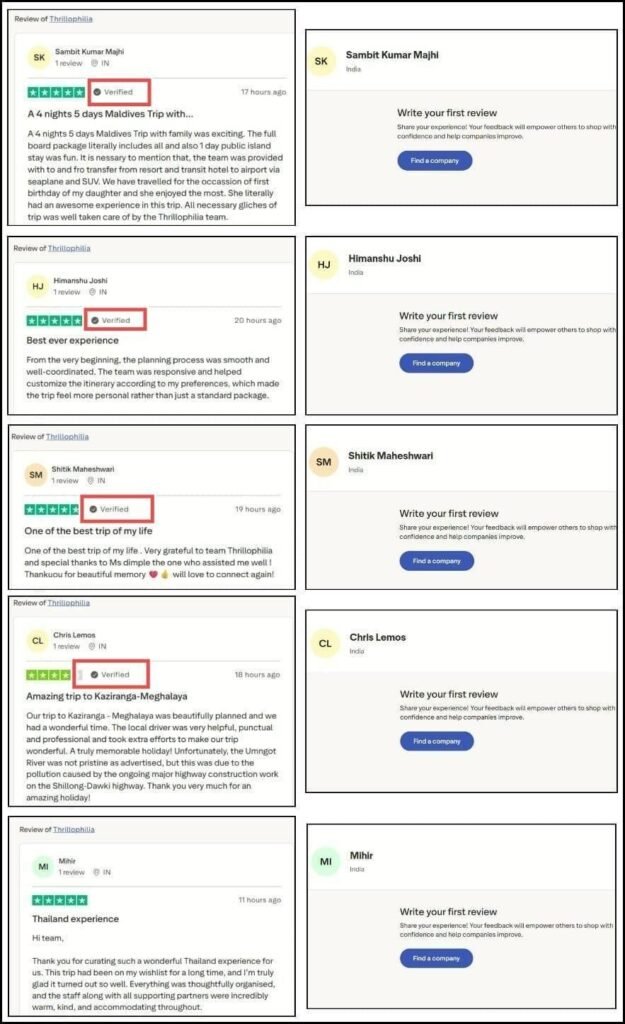
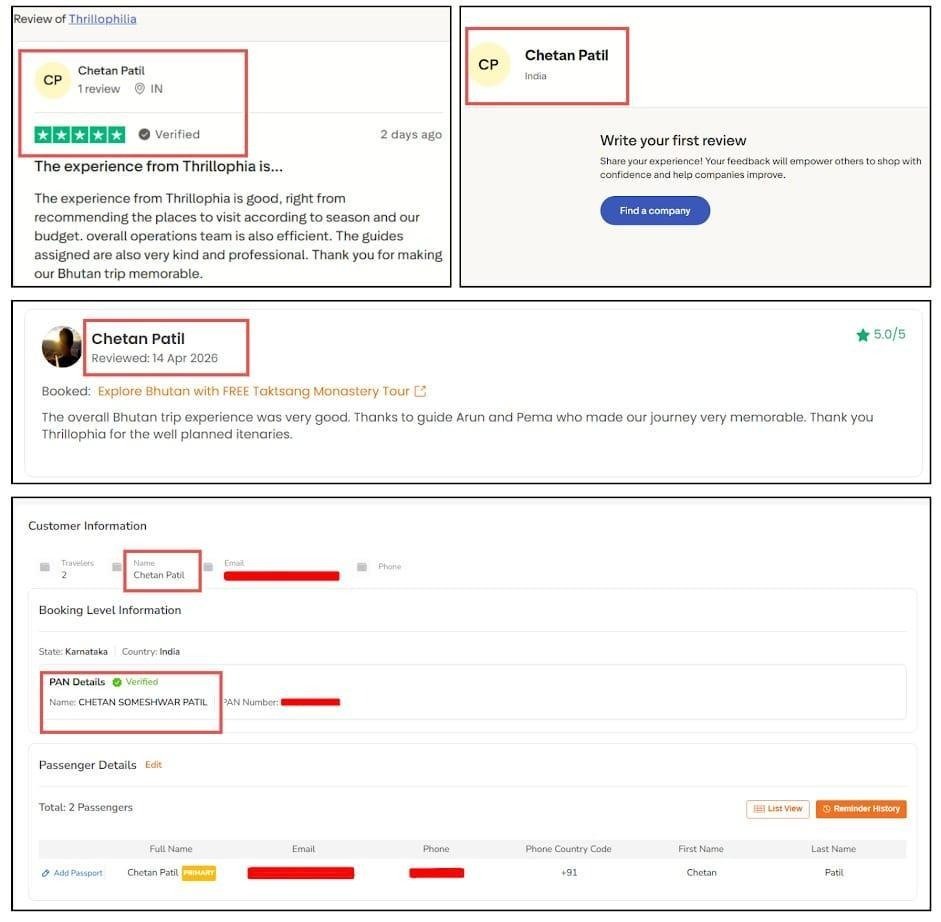
Some of the removed reviews had also been posted by the same customers directly on Thrillophilia’s own site, yet Trustpilot took them down with zero explanation. The company says it has thousands of examples just like this one:
The company renewed its subscription for a second year on September 13, 2025, banking on the removals finally stopping now that they were paying customers. Instead, just a month later on October 12, 2025, Trustpilot began sending warnings claiming a portion of their reviews were flagged as fake and violated platform rules.
Trustpilot’s warning about fake reviews, followed by the account restriction notice
In the span between October 1 and October 15, 2025, the review count dropped from 5,186 down to 4,644, a loss of more than 500 reviews in two weeks flat. That alone pulled the average rating down from 4.1 to 3.6, and no breakdown or justification was ever given despite the company asking repeatedly.
That same month, Thrillophilia sent over proof for more than 2,000 verified bookings, complete with references, PNR numbers, and customer details. But Trustpilot said reviewer verification had to happen directly with the reviewer, which meant the company had no way of knowing which specific reviews were flagged, let alone a way to push back on the claims.
The team kept at it, following up somewhere between 10 and 15 times with different parts of Trustpilot, from the Content Integrity team to account managers to senior staff, but never got a straight answer about what rule had supposedly been broken, even though every single review came from real traveler bookings.
Emails sharing review data and asking Trustpilot to look into what had been removed
A response eventually came from account manager Petra Kukuckova on December 30, 2025, but instead of naming the guideline that was allegedly broken, it just labeled the account non-compliant and pointed the company back to the Content Integrity team, the same place they’d already been stuck
The escalation email sent to Trustpilot, and Petra Kukuckova’s non-compliant reply
Over the next couple of months, despite all the documentation and pushback, the rating kept sliding, from about 3.6 down to 3.1, which is where it sits today. Trustpilot’s stance was that removals and reinstatements were handled entirely by automated systems, leaving little room for anyone to step in manually.
Then on May 6, 2026, Trustpilot issued a warning over alleged platform misuse tied to fake reviews, and locked down account features like review invites, TrustBoxes, and other brand perks, even with proof of authenticity sitting right there.
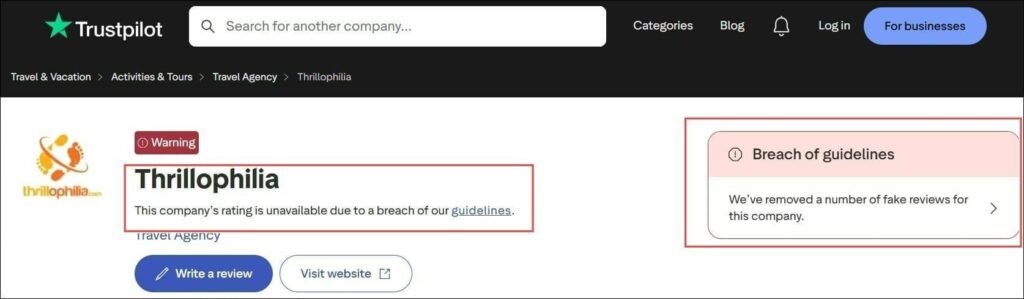
Thrillophilia pushing back against the consumer warning, and the Trustpilot profile page that resulted
Nearly Two Years of Asking, No Answers
Over a stretch of roughly 610 days, Thrillophilia kept requesting basic details: which reviews were removed, when, and under what specific rule. None of it ever showed up. Most follow up attempts were met with auto-generated replies from support.
Automated replies from Trustpilot’s support desk
The Audit That Finally Landed
Almost 20 months after the concerns were first raised, Trustpilot finally shared a numbers based audit summary on June 10, 2026, covering the period from September 2025 through May 2026:
- 451 reviews were looked at
- 305 came back marked as positive
- 253 were removed on suspicion of being fabricated
- That comes out to an 82% fabrication rate among the positive reviews checked
- Still, no review IDs or actual evidence were handed over
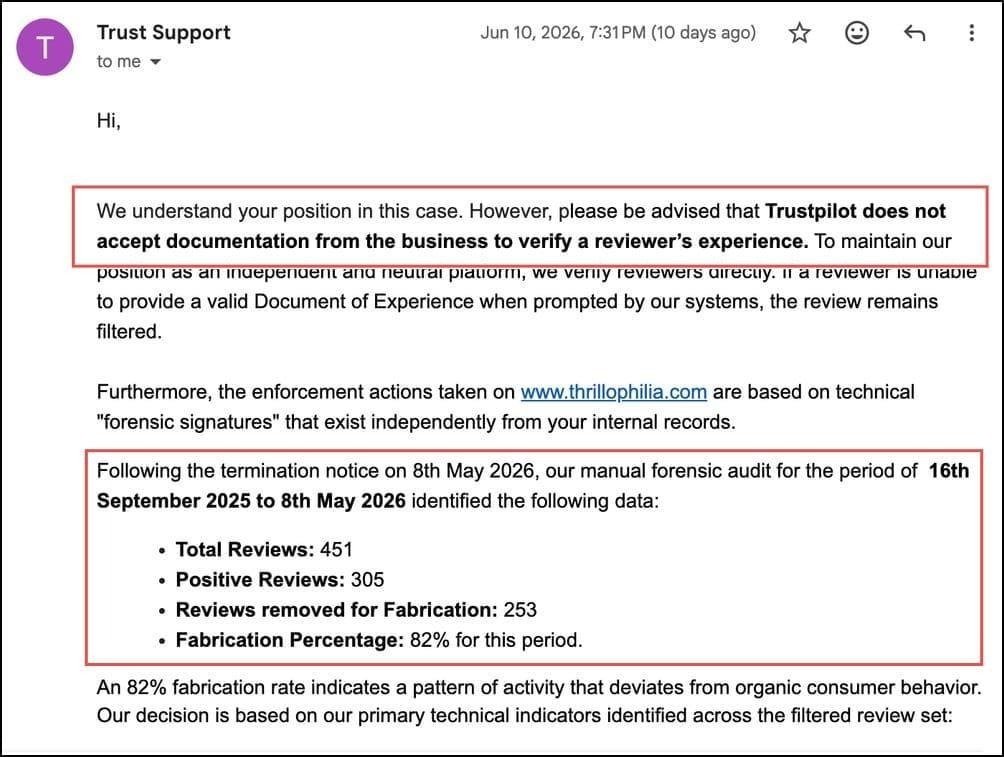
Trustpilot’s audit summary, sent June 10, 2026
Trustpilot’s reasoning came down to three things: suspicious connections between reviewers, suspicious reviewer behavior, and odd patterns across accounts and content. No specific cases or detailed breakdowns backed any of it up.
Meanwhile, Thrillophilia’s public page was still showing 4,789 total reviews, roughly 80% of them sitting at 4 or 5 stars, a mostly glowing picture from customers. Yet the TrustScore itself stayed hidden behind a warning label. That gap between what the audit claimed and what was actually visible on the page has never been explained.
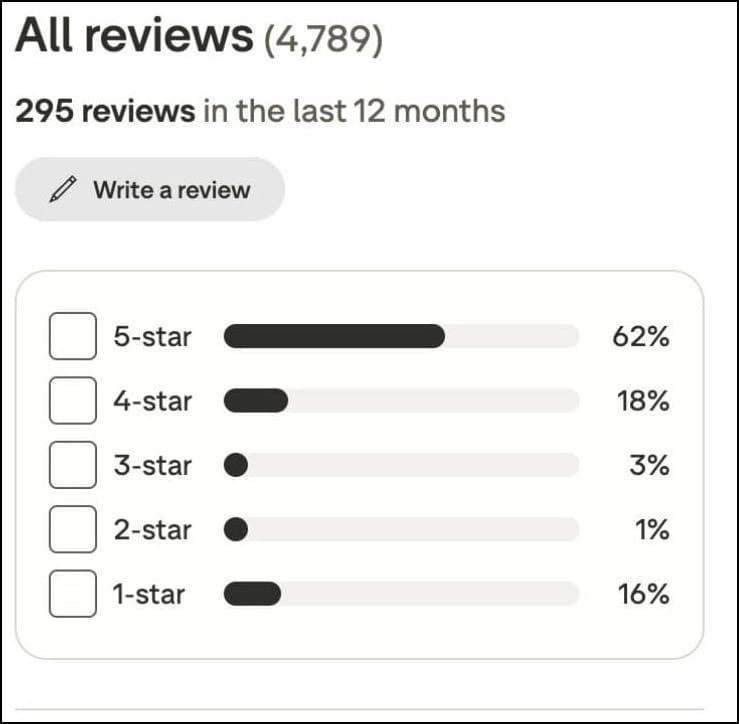
Thrillophilia’s TrustScore concealed behind a consumer warning
This Isn’t a One Off Story
Automated moderation systems exist for a real reason. They’re meant to keep things fair across businesses and catch fraudulent feedback before it spreads. But no system is flawless, and sometimes genuine reviews get flagged as suspicious by mistake.
Thrillophilia is far from the only business raising these concerns about Trustpilot. Other companies and outside researchers have pointed to the same issues around unclear moderation and limited transparency. Back in December 2024, the investment research firm Grizzly Research published a report called The Trustpilot Mafia, claiming that Trustpilot’s business model creates incentives that can actually hurt the very businesses it says it supports. Its findings included declining ratings, unexplained review removals, and growing pressure to pay for visibility and reputation on the platform.
Grizzly Research’s report, The Trustpilot Mafia, published December 2024
The Telegraph ran its own investigation in December 2025, gathering complaints from several businesses that all described the same basic pattern: reviews disappearing without a real explanation, followed by sales pressure to renew or upgrade, and no clear way to independently challenge Trustpilot’s calls.
On top of that, a verified complaint filed with the Better Business Bureau in 2026 described an experience nearly identical to Thrillophilia’s, with the business saying Trustpilot wouldn’t manually check the evidence it submitted, treating its automated systems as the final say, and the business also reported being locked out of its paid Pro dashboard. The BBB verified that complaint independently.
Even on Reddit, there’s an active r/trustpilotcomplaints community filled with similar accounts of businesses feeling boxed into paid plans they can’t seem to get out of.
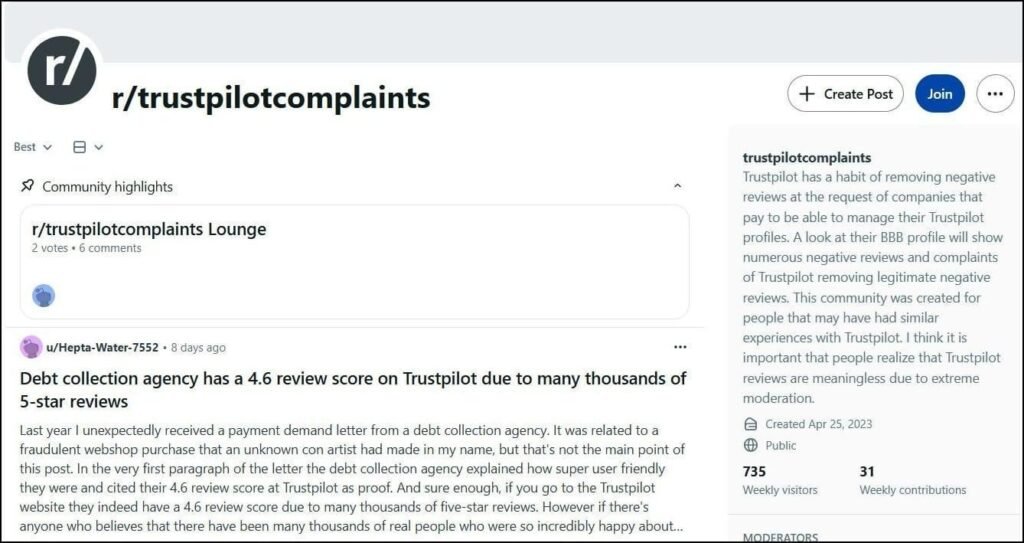
Discussions from the r/trustpilotcomplaints community on Reddit
All of it circles back to one bigger question for the industry: how do you protect against fraud while still being fair and transparent when real customer feedback gets challenged? And why does the credibility of genuine reviews seem to depend on whether a business is paying?
Waiting on Real Answers
For Thrillophilia, none of this was ever really about invoices or single reviews. It’s about years of effort and trust built up over time, and watching that credibility get undermined despite doing everything by the book.
If a company plays it straight, follows the guidelines, verifies every booking, avoids any violations, and still ends up here, that says something is off with the process itself, not the business.
What they’re asking for now is simple: the actual evidence behind Trustpilot’s decisions, and an independent look at what happened to their account. More than anything, they want a fair, transparent way for businesses to challenge moderation calls, especially ones that directly affect how customers view a company’s credibility.
To Thrillophilia, every review stands for a real trip and a real relationship built on trust, and holding onto those voices matters just as much to the business as it does to the travelers who trusted them in the first place. They’re still hoping Trustpilot will finally produce real evidence and set things right after everything they’ve paid for.