In today’s fast-moving construction market, being great at building does not automatically lead to steady growth. If you want to grow faster, bring in better leads, and win higher-profit jobs, you need a clear marketing plan. This is where a construction-focused marketing agency helps.


The right agency works like a growth partner, not a simple service provider. They know the construction industry and they know digital marketing, so they can help you stand out, reach the right clients, and turn interest into signed contracts.
For example, a partner like BuiltFor marketing construction agency can take your outreach from hit-or-miss to consistent, helping you keep up with a digital-first market where 96% of people search online for local businesses before contacting them.
How a Construction Industry Marketing Agency Accelerates Builder Growth
Construction is changing a lot, and online channels now play a big role in how companies win work. Old-school methods still matter, but they are usually not enough on their own anymore. A specialized agency understands what has changed and builds a plan that fits how construction buyers actually make decisions.
What Makes Construction Marketing Different from Other Industries?
Construction marketing is different from marketing a product or a typical service. Projects are often expensive and take a long time, so the buying process is usually longer and has more steps.
Many clients think things through for months (sometimes longer), ask for multiple quotes, and compare several companies before picking one. That means your marketing needs to build trust over time, explain your value clearly, and show proof that you can deliver.
Construction also has many ways of awarding work. Some jobs come from relationships. Others depend on prequalification, reputation, and smart bidding. If an agency does not understand these details, they may offer generic ideas that do not work.
Different buyers-general contractors, subcontractors, and owner-direct clients-also care about different things and move at different speeds.
For example:
- Subcontractors often market to estimating teams and need to highlight prequal readiness, trade coverage, bonding capacity, and safety records.
- General contractors pitching a commercial developer often focus on delivery methods, schedule reliability, and the size and type of past projects.
Basic claims like “Quality work, on time, on budget” rarely stand out, because almost every contractor says the same thing.
Why Most Builders Struggle to Scale with Traditional Marketing Approaches
Many builders get stuck with uneven lead flow, low-quality inquiries, and missed chances because they rely on older tactics or disconnected marketing efforts. Referrals are helpful, but they are hard to predict and usually cannot support steady growth in an online-first market. Even well-known contractors often need more than word of mouth to keep a full pipeline.
Competition is also intense. Bigger companies often have more budget, wider coverage areas, and stronger brand recognition. Without a focused plan, smaller and mid-sized firms may end up underbidding or taking lower-profit work just to stay busy.
Doing marketing in-house without a plan-or hiring a general agency that does not know construction-often leads to weak results. A site may look good but fail to support the full buying process, from early research to contract signing.
Without construction-specific knowledge, builders may struggle to show what makes them the best choice, which makes scaling harder.
Key Services Construction Marketing Agencies Provide for Builders
A construction marketing agency offers a set of services built around the real needs of contractors and construction firms. These services are not “one plan for everyone.” They are built around your market, your audience, and your goals, so your marketing budget goes further.
Strategy Development and Market Positioning
A strong strategy is the base of good marketing. Agencies build a digital marketing plan that matches your message, brand, and services to what your buyers are searching for. This often includes competitor research and defining your ideal customer profiles and personas.
They also separate different job types, like:
- Bid work vs. negotiated work
- Public sector vs. private sector
Each one needs different messaging and content. With a clear strategy, the rest of your marketing becomes more focused and more likely to bring in the right leads.
Branding That Builds Authority and Trust
A strong brand helps you stand out in a crowded market. A construction marketing agency helps you explain what makes your company different in a clear way. This goes beyond a logo. It includes how you talk about your work, how you show proof of results, and how you present your experience.
Modern branding often includes video and digital ads that show your work and your process. Agencies may also share stories about your team, community work, or behind-the-scenes updates, which can make your company feel more real and more trustworthy across every place clients see you.
Website Design and Optimization for Lead Generation
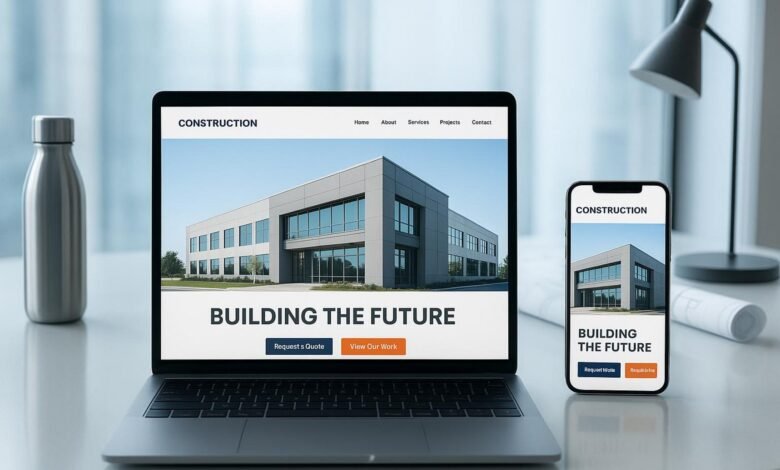
Your website is often your first impression. For most builders, the main goal of a website is to capture leads, not sell instantly. A specialized agency builds professional, mobile-friendly sites with landing pages built to convert.
A good construction website usually includes:
- Clear service pages
- A strong project portfolio
- Testimonials and trust signals
- Clear calls to action (request a quote, book a consultation, download a guide)
This supports the longer sales cycle in construction while building trust and credibility.
Content Creation and Portfolio Showcasing
Strong content does more than list what you do. Agencies write helpful blog posts on topics like renovation tips, construction trends, and customer stories. They also create case studies that explain project scope, problems solved, delivery approach, and performance on schedule and budget-details that buyers care about.
Visual content is also a big part of construction marketing, such as:
- Before-and-after photos
- Timelapse project videos
- Client video testimonials
This kind of content helps people trust you before they ever call.
Search Engine Optimization (SEO) for Local and Niche Markets
Builders need to show up in search results, especially since 96% of people research local businesses online. SEO helps you appear when someone searches for your services.
Agencies often focus on:
- Improving and updating your Google Business Profile (photos, services, reviews)
- Targeting location-based keywords
- Building landing pages for each city or service area
This helps you show up in map results and local searches where many buyers start. With 85% of marketers saying SEO works better than PPC, SEO is a key part of getting found.
Targeted Digital Advertising (PPC and Display Ads)
SEO takes time, but paid ads can bring leads faster. Agencies run PPC campaigns on Google and social platforms, with ads built to turn clicks into calls and quote requests.
This includes:
- Choosing the right keywords
- Writing ad copy that matches buyer intent
- Building landing pages that convert
- Managing budget and bids
- A/B testing and ongoing improvements
They also use retargeting to bring back past site visitors, and display ads to keep your brand visible across websites and YouTube.
Social Media Campaigns for Builder Visibility
Social media supports both paid and organic marketing. Agencies manage profiles that show your work, your people, and your approach. This may include project highlights, team introductions, and industry updates.
Platforms often vary by goal:
- Facebook is often strong for reaching homeowners.
- LinkedIn is often better for commercial work and B2B relationships.
With consistent posting, even a simple plan can increase reach and keep your business visible.
Email Marketing and CRM Integration
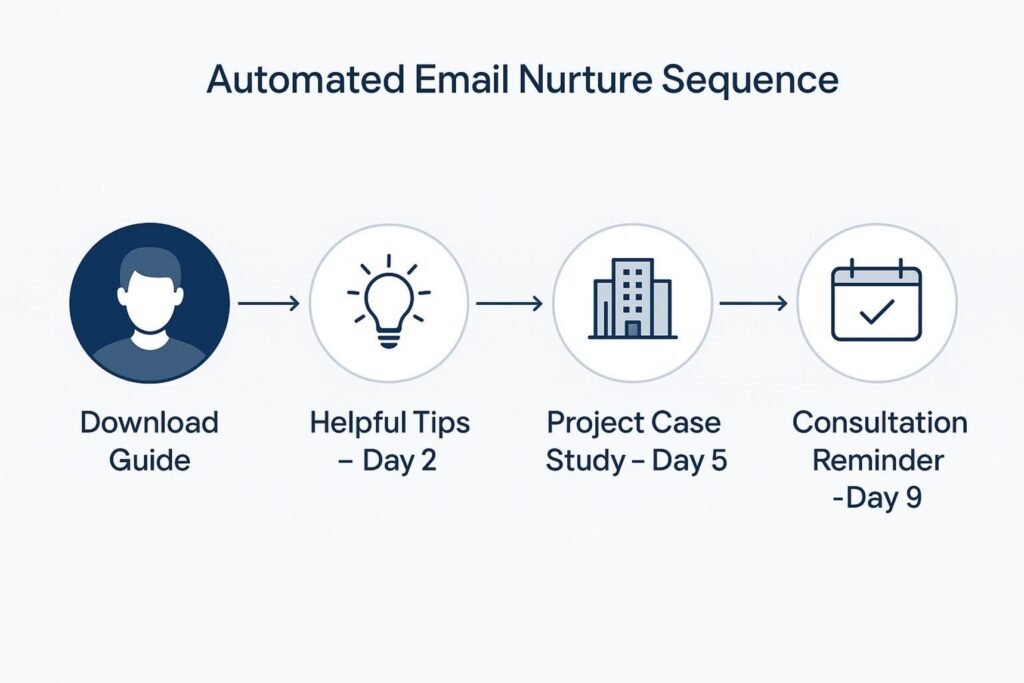
Email is still one of the best ways to stay in touch with leads and past clients. Agencies use CRM tools to manage contacts and run newsletters and follow-up campaigns.
They often set up automated email sequences that send:
- Project updates
- Helpful tips and guides
- Reminders to schedule a consultation or respond to a bid
With CRM tracking, your team can see who opened emails and clicked links, making follow-up easier and more organized.
Reputation Management and Review Generation
In construction, trust matters a lot, and reviews help build it fast. Agencies help you set up and improve profiles on sites like Google, Yelp, and Angi. They also put systems in place to ask happy clients for reviews.
That matters because:
- 70% of people trust reviews from strangers
- 97% of B2B buyers say testimonials and peer recommendations are the most reliable content
Agencies can also help you respond to negative reviews in a calm, professional way that protects your reputation.
How Marketing Agencies Drive Faster Scaling for Builders
The biggest benefit of working with a construction marketing agency is predictable growth. With the right strategy and systems, builders can scale faster and with less waste than they can with older methods alone.
Generating More High-Quality Leads with Data-Driven Campaigns
Good agencies focus on lead quality, not just volume. They use data and targeting to reach the right people at the right time. Instead of broad messaging, they build campaigns aimed at clear results.
This creates a steadier pipeline of real opportunities and helps your team spend more time on jobs that fit your business.
Improving Customer Acquisition and Conversion Rates
An agency improves the full path from “first visit” to “signed contract.” That often means better landing pages, better lead forms, and CRM systems that support quick follow-up.
By guiding prospects step by step-research, inquiry, consultation, proposal, signing-agencies help you convert more leads into paying clients, while your team spends less time chasing people who are not serious.
Building Long-Term Brand Awareness in Competitive Markets
Construction is growing fast. The industry is projected to reach $15.7 trillion by 2025, and the global building sector is expected to grow to $19.59 trillion by 2032. That also means more competition.
A marketing agency helps you stand out online through clear branding, video, and targeted ads that show what makes you different. Consistent messaging and community presence can also help your company become a trusted name.
By 2025, companies using contract award data, market trends, and customer insights are expected to beat firms that rely mainly on gut feel. That is why smart brand building matters.
Automating Follow-up and Nurture Sequences for Builder Leads
Because construction sales cycles are often long, staying in touch matters. Agencies set up automated nurture campaigns that keep leads warm without creating extra work for your team.
These sequences might include planning guides, blog content, or simple check-in messages. Automation tools can also send messages based on an actions, like downloading a guide. This keeps your company top-of-mind so that when the buyer is ready, they come back to you.
Tracking and Measuring ROI on Every Marketing Dollar
One major benefit of digital marketing is that you can measure what is working. Agencies track performance and share reports, often weekly, using real numbers.
Common KPIs include:
| KPI | What it tells you |
| Website traffic | How many people are finding you and where they come from |
| Lead volume | How many inquiries you get (forms, calls, emails) |
| Cost per lead | How much you pay to get each lead from ads |
| Conversion rate | How many visitors turn into leads |
With clear tracking, you can spend more on what works and cut what does not. By comparing spend to revenue, agencies help connect marketing directly to your bottom line.
Selecting the Right Construction Marketing Agency for Your Business
Picking the right marketing partner can change how fast you grow. The key is choosing an agency that understands how construction buyers think and how work is awarded.
Critical Questions to Ask Prospective Agencies
Ask direct questions that show whether they truly know construction. Examples include:
- “Do you understand bid work vs. negotiated work, and how does your content change for each?”
- “Have you worked with contractors in prequalification-heavy markets?”
- “How do you position a general contractor differently than a specialty subcontractor?”
- “What does your content plan look like for public sector work vs. private sector work?”
- “How do you present project portfolios, and what details do you collect for each project?”
- “How do you measure results when the sales cycle can be six months or longer?”
Clear, specific answers usually show real experience. Vague answers often mean they are using a general approach.
Evaluating Case Studies and Client Results
Do not rely on promises-ask for proof. Look for case studies that show measurable results, such as lower ad spend with better leads, big jumps in organic traffic (like the threefold increase Market Veep achieved for manufacturing clients), or stronger lead flow from PPC and social ads.
Also pay attention to how they describe results. Do they speak clearly about job sites, RFPs, and margins? Strong communication and consistent branding across channels, like those delivered by BuiltFor Studio, are also signs of a good partner.
What to Expect During the Onboarding Process
A solid agency starts with a strategy session to line up the marketing plan with your business goals. This should feel specific to your company, not like a copy-paste system.
You should expect:
- Campaign setup and ongoing management handled by a skilled internal team
- Research into your market, audience, and key selling points
- A clear plan for how leads will be attracted, followed up, and converted
The best agencies build systems that can support growth over time and work like a long-term partner.
Warning Signs of Ineffective Construction Marketing Partners
Watch out for agencies that avoid specifics about procurement, buyer types, and long sales cycles. Another red flag is pushing generic messaging like “quality work, on time, on budget” without a clear plan to stand out.
Also be careful if the agency focuses mainly on a pretty website without explaining how it will produce leads. If they cannot explain how they track results over long sales cycles, they may not have the right experience. An agency that treats construction like every other industry often will not deliver what builders need.
Common Questions about Partnering with a Construction Industry Marketing Agency
Builders often ask similar questions when they think about hiring a construction marketing agency-especially about timing, cost, and what they need to do internally.
How Soon Should Builders Expect Results from Marketing Agencies?
It depends on the channel. SEO and content usually take several months to build traction and show strong gains in rankings and traffic. Paid ads (Google Ads, social ads) and email campaigns can bring leads faster because they put you in front of active buyers right away.
A good agency will explain what to expect for each channel and give realistic timelines for your plan.
What is the Cost Structure for Construction Marketing Services?
Pricing varies based on what you need, and it often ranges from $500 to $10,000 per month (or more). Cost depends on service scope (SEO, PPC, content, social, CRM), market competition, and growth targets.
Agencies may charge:
- Monthly retainers
- Project fees
- Performance-based pricing
Ask for clear pricing and clear deliverables. Focus on ROI, not just the monthly fee.
How Involved Should Builders Be in the Marketing Process?
The agency runs the work day to day, but your input matters. You will likely join early strategy sessions and share details about your best clients, preferred jobs, and business goals. Ongoing feedback on content and campaign performance also helps.
The agency brings marketing skills, and you bring real construction knowledge. Together, that creates messaging that feels real and targets the right work.
Can Agencies Help with Both Residential and Commercial Builder Growth?
Yes. Construction agencies know that homeowner (B2C) marketing and commercial (B2B) marketing require different messages.
- Residential often focuses on visuals, testimonials, and lifestyle benefits.
- Commercial often focuses on prequal readiness, delivery, safety, and project scale.
A full-service construction marketing agency can build a complete system that supports lead generation across remodeling, home building, and commercial construction.
Next Steps for Builders Ready to Scale Faster
Growing your construction business faster is easier with a clear marketing plan and the right partner. The next step is choosing an agency that fits your goals and can support steady growth.
Checklist for Choosing a Marketing Agency Partner
Before you sign, use this checklist to pick a partner who is truly built for marketing construction agency success.
- Construction experience: Can they explain bid vs. negotiated work and public vs. private procurement? Do they understand buyers like GCs, subs, and owner-direct clients?
- Service coverage: Do they offer key services like construction SEO, paid ads, content, and CRM support?
- Reporting and ROI: How do they track results in long sales cycles, and which metrics do they report?
- Partnership mindset: Do they act like a long-term partner or a short-term vendor?
- First step offer: Do they offer a free strategy call so you can check fit before committing?
Tips for Maximizing ROI from Your Construction Marketing Investment
After you choose the right agency, getting the best ROI becomes a shared effort. Be clear about your goals and who you want to reach. Join strategy calls and give fast feedback so campaigns keep moving.
Use the agency’s skills to test new tools like VR or AI in your promotions if it fits your market. Review performance data often and adjust based on what the numbers show. Connect offline marketing (signage, trucks, job sites, events) with online tracking so real-world interest turns into measurable leads.
Most of all, focus on trust and long-term relationships. That is what creates steady, profitable growth for construction companies.