People move between online and offline life all day. So the real question is not “digital or traditional advertising?” It is “how do we use both in a smart way?” A blended Out-of-Home (OOH) plan can do that.


By mixing the long-lasting strength of traditional OOH with the speed and accuracy of digital screens, brands can build a clear, strong, and easy-to-remember presence that connects with many types of people.
This mix helps your message feel like something people notice and remember, whether your goal is broad awareness or more direct actions, even in markets like OOH advertising in Poland.
What Is OOH Advertising and How Do Digital and Traditional Formats Differ?
Out-of-Home (OOH) advertising, also called outdoor advertising, includes any ads you see in public places outside your home. Over time, OOH has changed a lot. It started with printed posters and billboards, and now it also includes modern digital screens. To see why combining them works so well, it helps to understand how traditional and digital OOH are different.
What Is Traditional OOH Advertising?
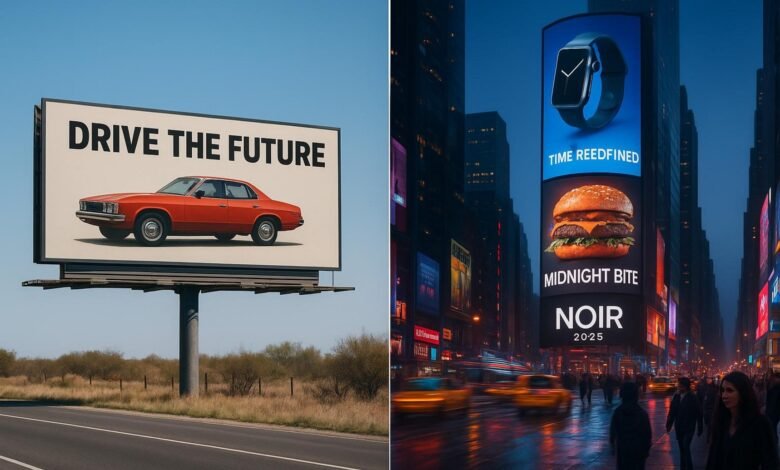
Traditional OOH advertising uses printed, static ads that stay the same for a set time. These formats have been used for a long time and are known for big visibility and strong placements. Examples include classic billboards, posters, and large wall murals along highways and busy roads, where they can be seen from far away and by many people. Other types include transit ads (on buses, subways, and taxis) and street furniture (bus shelter panels, kiosks, and bench ads), which people see at street level in crowded city areas.
The main strengths of traditional OOH are wide reach and nonstop exposure. After the ad is installed, it can be seen 24/7 with no need for constant digital updates, which can make it a good value for building mass awareness. The message is usually simple and visual, so people can understand it quickly while walking or driving by. Because these ads are a familiar part of cities and roads, they can also support trust and credibility.
What Is Digital OOH Advertising (DOOH)?
Digital Out-of-Home (DOOH) advertising is OOH shown on digital screens instead of printed posters. You can find these screens in busy public places such as shopping malls, transit stations, fuel stations, grocery stores, bus shelters, and smart city spaces. Common formats include large digital billboards, screens in malls and airports, and place-based ads in specific venues like EV charging locations or gyms.
DOOH changes outdoor advertising because it can react quickly. Unlike a fixed printed billboard, a DOOH ad can update fast to match current events, weather, traffic, or other signals, so the message stays current and interesting. Screens can run several ads in rotation, show video and motion graphics, and sometimes include interactive features. This makes DOOH a flexible option for modern campaigns and can also support better reporting and measurement.
Comparing Static and Digital OOH Advertising
Both traditional and digital OOH fight for attention in public spaces, but they work in different ways. Traditional OOH gives you one creative that stays up for the whole booking period, so you get steady visibility and a clear, repeated message. This can be a strong choice for brand-building campaigns that do not need frequent changes.
DOOH, on the other hand, can rotate multiple creatives on the same screen. Content can be scheduled by daypart or changed through software. This is helpful for campaigns that depend on timing or context. Traditional OOH often has low CPMs and can bring strong value compared to many digital channels. DOOH can cost more at the start, but programmatic buying (pDOOH) can help by allowing more precise targeting and smarter budget use over time. Many teams now use both together to get the best of each format.
Why Combine Digital and Traditional OOH Advertising?
The biggest value of OOH often shows up when you use traditional and digital formats together in one plan. This is not just about more impressions. It is about getting a combined effect that improves reach, sharpens targeting, and builds stronger engagement than either format can do alone.
Enhanced Audience Reach and Visibility
Traditional OOH, with large displays in high-traffic areas, is great for mass awareness. It reaches many kinds of people, including drivers, commuters, and pedestrians. It also reaches a large share of the public each month (studies often cite around 90% in the U.S.). Digital OOH adds reach in places where people spend more time, like malls and transit hubs, which can increase visibility throughout daily routines.
Using both helps brands cover more ground. Research from MRI-Simmons and the Outdoor Advertising Association of America (OAAA) found that adding OOH to a media mix can raise reach by as much as 100% or more, depending on the channel. This means your message shows up in more places, helping people recognize it faster and remember it longer.
Comprehensive Targeting and Personalization
Traditional OOH targets well by area and broad audience groups. Digital OOH can go further by using data such as location signals, time of day, weather, and audience patterns. This makes it possible to show messages that fit the moment, like breakfast offers near office areas in the morning, or dinner deals closer to residential zones later in the day.
Using both formats together supports a strong “push and pull” approach. Traditional OOH pushes awareness to people who may not be looking for you yet. Digital OOH pulls interest by showing more relevant messages when people are more likely to respond. That mix can lead to better engagement.
Consistent Cross-Channel Messaging
Consistent messaging across touchpoints matters for building a strong brand and keeping customers coming back. A blended OOH strategy helps your brand look and sound the same on a printed billboard and on a digital screen. Keeping key elements consistent-logo, colors, tagline, and tone-helps avoid confusion that can happen when channels are planned separately.
A smooth brand experience supports recall and loyalty. Harvard Business Review research shows that 73% of consumers use multiple channels during shopping, and omnichannel customers tend to spend more. A unified message can guide people through the journey without making them feel like they are seeing random, disconnected ads.
Higher Engagement and Brand Recall
OOH advertising can lift brand recall. The OAAA reports that OOH campaigns can raise brand awareness by up to 48%. When combined with digital marketing, recall can improve even more: consumers who see both OOH and digital ads are 43% more likely to remember the brand than those who see only digital ads. OOH also cannot be skipped like many online ads, which increases the chance it will be noticed.
DOOH can lift engagement by adding motion, video, and interactive features. Bright digital screens often attract attention faster than static posters. Together, the steady presence of traditional OOH and the attention-grabbing style of DOOH can leave a stronger impression.
Improved Flexibility and Real-Time Adjustments
A major benefit of DOOH is flexibility. You can change messages quickly to match promotions, events, or context such as weather and time of day. This helps keep ads timely. Advertisers can also “roadblock” screens, meaning they buy exclusive time during key moments like rush hour or big events.
Traditional OOH provides stable visibility over weeks or months. DOOH adds the ability to react quickly. Together, a brand can keep a long-running message in the market while also adding fast updates that take advantage of short-term opportunities.
Key Benefits of an Integrated OOH Advertising Strategy
A blended OOH strategy gives brands a strong and flexible option. By using what each format does best, businesses can create an impact that is hard to match with only one channel.
Extends Brand Awareness Across Diverse Audiences
Traditional OOH is strong for wide awareness, reaching people in daily life-drivers on highways and pedestrians in city centers. This repeat exposure builds recognition with a broad audience. Digital OOH adds another layer by showing more timely content in specific busy locations like malls and transit hubs. Messages can update quickly based on events or audience patterns, which helps keep the brand fresh in people’s minds. Together, these formats reach different groups and help build familiarity and trust.
Amplifies Campaign Impact with Omnichannel Touchpoints
OOH can also support online channels. Google research shows that 48% of consumers visit a brand’s website after seeing an OOH ad. Brands can use QR codes or social handles on OOH ads to connect offline exposure with online action. For example, a digital billboard can send people to a social page or a landing page, making the full campaign work harder. This approach supports a smoother customer journey and can increase conversions.
Supports Data-Driven Measurement and Analytics
In the past, OOH measurement was harder. DOOH has improved this by using connected screens and stronger reporting. Programmatic DOOH can also fit into omnichannel and multi-touch attribution models. Tools such as foot traffic studies (using mobile location data), device ID passbacks (linking exposure to actions), and brand lift studies (exposed vs. control groups) help show what is working. This helps brands improve ad spend and prove ROI, making OOH more accountable.
Increases Cost Efficiency and ROI
Some big OOH placements can be expensive, but OOH often delivers competitive CPM compared to many channels, and it can beat TV, print, and much of digital on value. Programmatic DOOH, offered by providers like BE Media, can improve efficiency by allowing tighter targeting and flexible budgets. Digital billboards also sell rotating slots, which can be affordable for smaller advertisers. When you mix the broad reach of traditional OOH with the precise and more measurable side of DOOH, you can improve return on investment.
How to Plan and Execute a Combined Digital and Traditional OOH Campaign
Running a blended OOH campaign takes planning and clear thinking. It is more than buying placements. It is about building one message that shows up across different physical and digital spaces.
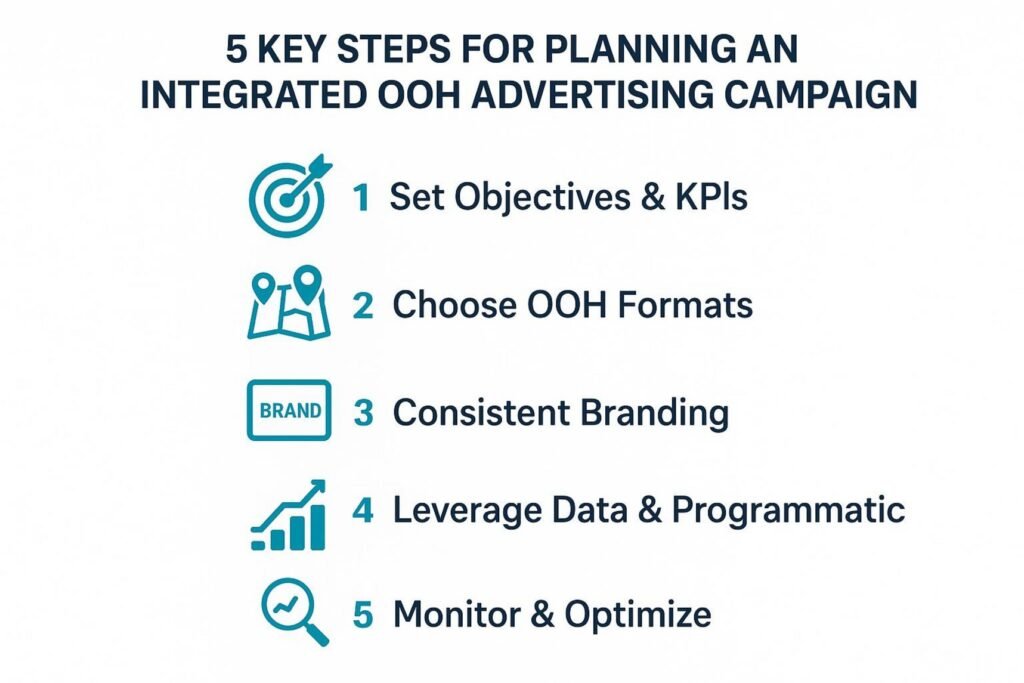
Set Clear Objectives and KPIs
Start by defining what success means. Set goals you can measure (for example: raise awareness by X%, increase foot traffic by Y%, or drive Z conversions). Then pick KPIs to track those goals. Think about how traditional OOH supports broad awareness and trust, while digital OOH supports engagement and trackable actions. This alignment helps every part of the campaign work toward the same outcome.
Choose OOH Formats that Fit Your Audience
OOH includes many formats, each with its own strength. Traditional billboards work well for broad reach along highways. Bus shelters and street furniture work well in dense city areas at eye level. Transit ads reach commuters during daily travel. Digital billboards offer the scale of billboards plus changing content. Interactive mall screens can drive deeper engagement. Place-based DOOH in grocery stores or gyms reaches people in specific contexts. A strong blended plan uses a mix based on where your audience lives, works, shops, and spends time.
Use Consistent Branding and Creative Elements
Consistency helps people recognize your brand fast. Keep core elements the same across placements: logo, colors, tagline, and tone of voice. The format can change-static image for printed placements, motion for digital screens-but the brand should still feel the same. DOOH often performs best with clear visuals and motion that fits the location and timing. Traditional placements work best with bold visuals and short, easy-to-read copy. Adjust creative for each format, but keep the brand identity steady.
Leverage Data, Geotargeting, and Programmatic DOOH
A blended OOH plan works best when you use data smartly. Mobile location data can help identify audience groups and habits, so you can run messages when people are more likely to respond. Geotargeting and geofencing help focus delivery in specific areas. For DOOH, programmatic buying is a key tool. pDOOH automates buying and selling ad spots and supports data-based targeting, real-time bidding, and content updates based on signals like weather, traffic, and time of day. This improves efficiency and keeps messages timely.
Monitor, Measure, and Optimize Campaign Performance
A blended OOH campaign needs regular tracking and updates. Measure results against your KPIs. For traditional OOH, track reach and frequency (GRP) and use trackable tools like vanity URLs or unique phone numbers. For DOOH, use screen reporting, foot traffic studies, and brand lift studies. Since DOOH can change quickly, you can adjust creative, targeting, and scheduling based on what the data shows. This cycle of tracking and improving helps increase results and ROI.
Measurement and Attribution in Integrated OOH Campaigns
Measuring blended OOH campaigns has improved a lot, especially when digital screens are part of the plan. Traditional OOH used to rely on basic estimates, but digital tools now add more detailed data, which helps with attribution and optimization.
How to Track Cross-Channel Performance
Tracking results across traditional and digital formats means working with different types of data. For traditional OOH, common methods include vanity URLs (like company.com/billboardoffer), dedicated call tracking numbers, and QR codes that send people to a specific page. These make it easier to connect an offline ad to online actions such as site visits or phone calls.
For DOOH, tracking is stronger because it is already digital. Unified measurement platforms can show results across different media owners in one place. Attribution studies that compare an exposed group with a control group can show overall impact. pDOOH also supports omnichannel and multi-touch attribution, giving a clearer view of how OOH supports the full customer journey along with other channels.
Tools and Metrics for OOH Campaign Success
Brands use several tools and metrics to judge success. Delivery metrics include impressions, reach, and frequency (often shown as GRP-Gross Rating Points, where a higher GRP suggests wider awareness). In DOOH, impression estimates use screen-based multipliers backed by real-world data.
Engagement metrics can include QR scans, mobile surveys to check brand perception, and interactions with touch or interactive screens. Attribution methods use anonymized location and behavior signals, such as mobile location data and device ID passbacks, to see if people who were exposed later visited a store, downloaded an app, or visited a website. Brand lift studies help measure awareness, perception, and purchase intent, which is useful for upper-funnel goals.
Role of Data and Analytics in Optimizing Results
Data and analytics are the base of better OOH results. Advanced analytics, sometimes supported by AI, can improve audience insights using mobile signals, GPS data, and camera sensors. AI can support more accurate audience estimates in real time, which helps with targeting and reporting.
Programmatic tools that use third-party data and real-time bidding let advertisers run more relevant messages and adjust campaigns quickly. By watching performance across OOH placements and linking it with other digital marketing data, brands can improve creative, adjust targeting, shift budgets, and show clear ROI.
Real-World Examples: Successful Integrated OOH Campaigns
The benefits of combining digital and traditional OOH are easier to see when you look at real campaigns. These examples show how brands use both formats to create campaigns that people remember and that deliver strong results.
Case Study: Combining Billboards with Digital Geotargeting
A strong example of mixing traditional OOH with digital geotargeting comes from Wisp, a women’s telehealth platform. To raise awareness and familiarity in the New York DMA, Wisp ran a programmatic digital out-of-home (pDOOH) campaign. The plan used large-format billboards for broad visibility, plus urban panels near busy areas and pharmacies, along with in-pharmacy screens. This mix gave wide reach, while the digital placements supported more context-based messaging.
The campaign results were strong: a 4x lift in brand preference compared with top competitors, a 3.8x increase in brand familiarity, and a 107% lift in purchase consideration. It shows how billboards can build base awareness, while targeted digital placements repeat the message at key moments when people are close to making decisions.
Case Study: Local Businesses Using Transit Ads and Digital Screens
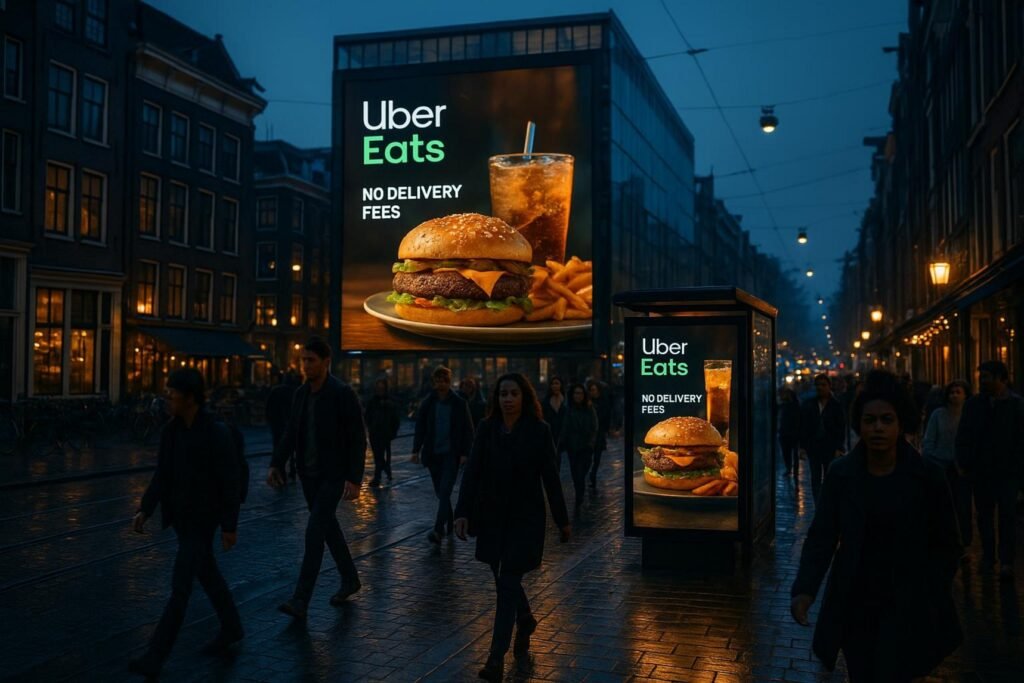
Many local businesses and large brands combine transit ads with digital screens. Uber Eats ran a pDOOH campaign in the Netherlands to increase awareness and purchase consideration for its “No Delivery Fees” offer. Ads ran on digital screens in busy areas across major cities, alongside paid social and online video. A brand lift study showed ad interest nearly doubled among those who remembered the ads, and purchase consideration rose twofold, putting the campaign in the top 15% in its category across media platforms. This shows how digital screens in transit-heavy areas can support both awareness and intent.
Another example is British Airways at London Heathrow, where DOOH used live flight arrival data to suggest activities based on local weather. A tech company in Tokyo saw a 47% increase in app downloads by showing real-time earthquake alerts on screens in train stations. These cases show how timely, context-based messaging on digital screens-paired with wider OOH coverage-can shape behavior and drive direct actions.
Future Trends in Combining Digital and Traditional OOH Advertising
Advertising changes often, and OOH-especially its digital side-will keep growing. The next stage of combining digital and traditional OOH will likely bring better targeting, more personal messages, and stronger measurement, making it a bigger part of omnichannel marketing.
Emergence of Programmatic and AI in DOOH
Programmatic buying and Artificial Intelligence (AI) are changing DOOH quickly. pDOOH automates the buying process and makes it easier to run data-based, context-aware ads at scale. The U.S. pDOOH market nearly tripled from 2020 to 2022, showing fast adoption. AI can improve measurement by using mobile signals, GPS data, and camera sensors to estimate audience size more accurately and in real time. This supports better targeting and smarter budget use. As AI improves, campaign optimization and forecasting should also get better.
Increasing Personalization and Interactivity
DOOH is likely to become more personal and more interactive. Dynamic content can adjust based on live factors like audience behavior, local events, and specific market conditions. Interactive tools like touchscreens, QR codes, and NFC chips (for example, Nike using NFC to give access to app content) will become more common. These features can increase engagement and also create useful data about what audiences respond to, helping brands improve messages over time.
Continuous Expansion of Measurable OOH Solutions
Measurement and attribution will keep improving, giving advertisers more detailed insights. Unified measurement platforms should become more common, helping solve tracking issues across different media owners. More advanced attribution models that connect mobile exposure data with play logs will give a clearer picture of how DOOH affects real behavior. Growth in in-store retail media is also expected to push more innovation in point-of-purchase measurement between 2025 and 2029. DOOH and connected TV are also starting to overlap, which can lead to smoother cross-screen campaigns and better combined reporting.
Maximize Impact with an Integrated OOH Advertising Approach
Most people do not follow a straight path from seeing an ad to buying. Their day includes both screen time and real-life moments. Brands that accept this and use a blended OOH approach can stand out. By mixing the wide reach and steady trust of traditional OOH with the fast, precise, and interactive strengths of digital OOH, marketers can build campaigns that feel consistent and relevant.
This approach is not just about running more ads. It is about building one connected story that shows up across the places people go, supports brand recognition, builds long-term value, and drives actions you can measure. People do not live in separate “digital” and “traditional” spaces-they move between them. Each exposure, whether static or on a screen, shapes how they feel about a brand and whether they take the next step. As technology keeps moving forward, options for personalization, interactivity, and measurement in OOH will keep growing, making this combined approach a smart way to keep your marketing effective over time.
Frequently Asked Questions about Merging Digital and Traditional OOH
As marketers plan blended OOH campaigns, a few common questions come up about targeting, performance, and whether it works for different business sizes.
Can DOOH Ads Be Targeted to Specific Audiences?
Yes. A major advantage of DOOH is better targeting. While traditional OOH is strong for broad reach, DOOH can use data analytics, geotargeting, geofencing, and third-party data to reach more specific audience groups. Messages can change based on location, time of day, weather, and behavior patterns. For example, a coffee ad might run near offices in the morning, or a raincoat ad might appear when it starts raining. This helps keep messages relevant.
What Is Programmatic OOH and Is It Effective?
Programmatic OOH (pDOOH) uses software to buy, sell, and deliver DOOH ads, similar to online ads. It lets advertisers run and adjust campaigns more efficiently using data-based targeting and real-time bidding. Instead of buying placements only through manual deals, purchases can happen automatically based on rules set by the advertiser. pDOOH is effective because it supports timely, context-aware messages and more efficient spending. Its fast market growth shows that many advertisers see clear value in it.
How Is Attribution Handled Between OOH Formats?
Attribution in blended OOH has improved a lot. For traditional OOH, brands use tools like brand lift studies, vanity URLs, QR codes, and dedicated phone numbers. For DOOH, attribution can include foot traffic measurement (using mobile location data) and device ID passbacks that connect exposure to later actions across digital channels. pDOOH also supports omnichannel and multi-touch attribution, which helps show how OOH supports the full marketing plan.
Are Integrated OOH Campaigns Cost-Effective for Small Businesses?
Yes, they can be. Traditional large billboards can feel expensive, but digital billboards often sell rotating ad slots that can be bought for a monthly fee (for example, $250 to $3,000), which lowers the entry cost. pDOOH platforms also support local targeting and flexible budgets, so small businesses can focus on specific areas and reduce waste. As budgets shift to digital, some traditional options can also become more affordable, giving small brands more ways to mix broad awareness with targeted reinforcement.