
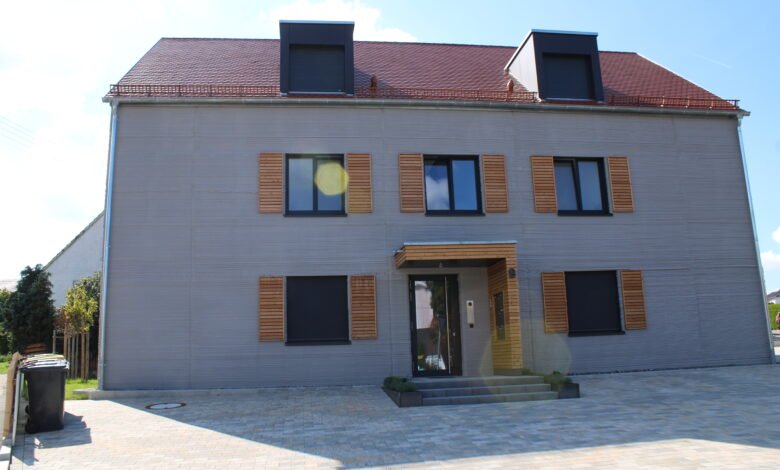
What a 3D Printed House Actually Is
A 3d printed house is a home whose walls are built by a machine rather than by bricklayers, using a process engineers call additive manufacturing. Instead of stacking blocks or pouring concrete into wooden formwork, a giant printer lays down ribbons of a specially formulated concrete mix, one layer on top of another, until the walls of the entire building stand complete. The idea sounds like science fiction, yet finished homes already exist in Germany, the Netherlands, Texas and Ireland, and British developers have been trying to bring the technology to these shores for several years. What surprises most people is how ordinary these houses look once the roof, windows and doors go on.

The technology sits at the meeting point of construction, robotics and digital design, and it belongs to the same wave of innovation that is reshaping other industries too. Architects draw the home in a design program, engineers convert that drawing into instructions the printer understands, and the machine then turns data into solid walls with remarkable precision and consistency. The printer itself is usually a huge gantry frame that straddles the building footprint, or a robotic arm mounted on a movable base, and the print head travels back and forth following the digital model with millimetre accuracy. For a small home, the printing stage can be finished in roughly one to two weeks of machine work, which is dramatically faster than traditional bricklaying.
Britain’s Housing Shortage in Numbers
To understand why anyone in Britain cares about robot builders, start with the numbers, because they are stark. England approved just 45,315 new homes in the second quarter of 2026, a fall of 21 per cent on the previous quarter and the lowest quarterly total since 2012, according to the Home Builders Federation. Approvals in the year to June stood at 214,515 homes, down 8 per cent year on year and the lowest annual total since 2013. The Federation says the annual total amounts to just 58 per cent of the permissions needed each year to support the Government’s target of 300,000 net additional homes, which means the pipeline of future housing is thinning at exactly the moment it needs to grow.
Those figures describe permissions rather than completions, and a consent does not guarantee that a scheme will ever be built, but they are an early warning for future housing supply. The cost of delivering a new house has risen by an average of £76,000 since 2020, according to the same Federation research, while new levies and policy costs keep arriving. More than a third of small and medium-sized housebuilders are already delaying, redesigning or cancelling schemes, and that matters because smaller builders deliver a large share of Britain’s new homes. Against that backdrop, any technology that promises faster, cheaper and more predictable construction deserves serious attention, even if it cannot solve the crisis on its own.
The Accrington Story: Britain’s First 3D Printed Homes
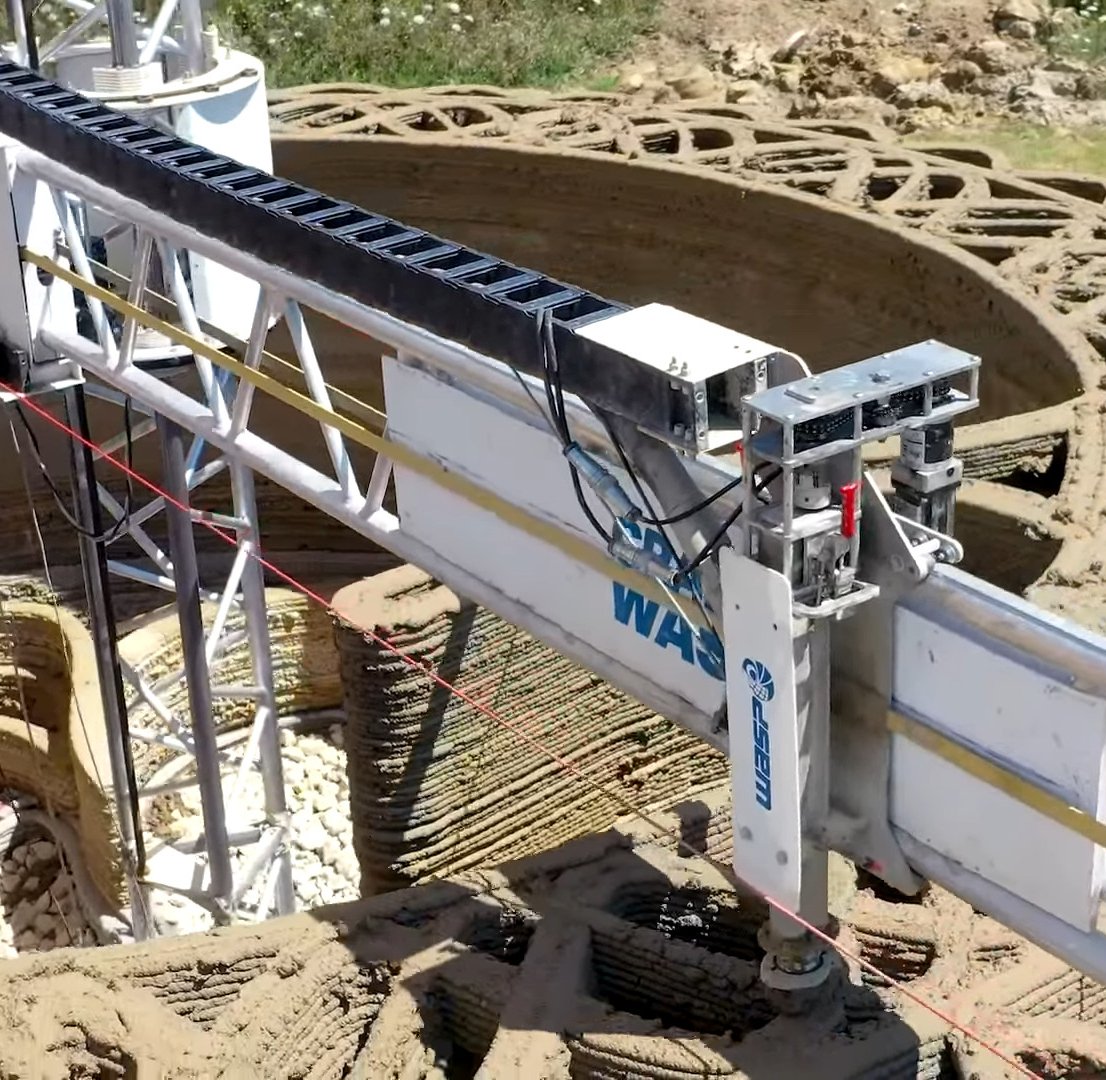
The most ambitious British attempt at a 3d printed house began in Accrington, Lancashire, where a not-for-profit developer called Building for Humanity planned 46 affordable homes on Charter Street, aimed at homeless veterans and low-income families. The £6 million scheme gained planning permission in 2021 and was billed as the first in the UK to use 3D concrete printing, with a community hub at its centre and a promise of high-quality, net-zero-carbon-ready homes. The developer worked with Harcourt Architects and Harcourt Technologies, specialists in 3D concrete printing who had already delivered a trio of three-bedroom homes in Dundalk, Ireland, to technical standards including the ISO and ASTM standard for additive construction.
Then the story took a turn that every honest account must include. Building for Humanity went into liquidation, owing £1.49 million, including £685,000 to HM Revenue and Customs and £763,000 to unsecured creditors, according to a statement of affairs document reported by the Architects’ Journal. Harcourt Architects and Harcourt Technologies had already ended their relationship with the developer in 2023, and the flagship scheme never reached construction. Readers who want the full account should read the Architects’ Journal report on the collapse of the developer behind Britain’s first 3D printed homes. The failure was financial and organisational, not a failure of the printing technology itself, but it is a reminder that new building methods need sound businesses behind them just as much as they need good machines.
The Yorkshire Test: A 3D Printed House in the Open Countryside
A very different British test is now working its way through the planning system in Yorkshire, where Manchester-based Define Architects has submitted proposals for a four-bedroom, two-storey house on a former agricultural plot near the village of Bielby in the East Riding of Yorkshire. The home, dubbed Speckled Wood, would become the first private residential dwelling in the UK built from 3D-printed low-carbon concrete, and the practice says it could be built in a fortnight if consent is granted. A bespoke printhead developed with Harcourt Technologies would create a distinctive surface texture, and initial analysis suggests the superstructure could be fully printed in just two print cycles taking a total of 14 days, including load-bearing internal walls.
The planning route is as interesting as the technology, because the scheme seeks consent under paragraph 84e of the National Planning Policy Framework, which allows isolated homes in the open countryside only if they are of exceptional design quality and would significantly enhance their immediate setting. The design hides the house behind a fruit tree and wildflower meadow with a pond, while the gable roof references local agricultural buildings, and outbuildings such as a garage, plant room and glasshouse sit in front to further conceal its mass. You can read the full planning story in the Architects’ Journal coverage of Define Architects’ plans for a 3D-printed house in Yorkshire. If it is approved and built, Speckled Wood could become the proof of concept that the Accrington scheme never got to deliver.
Why UK Planning Rules Slow Robot Builders Down
The deepest obstacle facing a 3d printed house in Britain is not the printer, the concrete or the cost, but the planning system that decides what gets built and where. Building codes and building regulations were written long before construction robots existed, and officials are still working out how to inspect, certify and approve printed walls. That uncertainty slows projects down, raises costs and frightens lenders and insurers, who need decades of evidence before they will treat a new construction method as routine. Until printed walls have a clear and well-trodden route through building control, every project becomes a bespoke negotiation rather than a standard build.
Then there is the politics of planning, which in Britain is famously shaped by local opposition to new development. Residents who object to new homes in their area do not care whether the walls are printed or bricked, and the same objections about traffic, character and countryside apply either way. Printed construction also faces a shortage of trained operators who understand both construction and the software, and a supply chain that is still immature compared with the vast industry that serves traditional housebuilding. None of these problems is insoluble, but together they explain why a technology that works well in Texas and Ireland has struggled to gain a foothold in Britain, and why its advocates talk about years of patient work rather than an overnight revolution.
What a 3D Printed House Costs in Britain
So what would a 3d printed house actually cost a British buyer? Honest answer: nobody yet knows with confidence, because no printed home has been completed and sold in Britain. International evidence suggests that a finished printed home currently costs roughly the same as a comparable traditionally built one, because around 60 to 70 per cent of a project’s cost sits in the parts the printer never touches: foundations, roofing, services, glazing and finishes. Even if wall printing became completely free tomorrow, the majority of the bill would remain exactly where it is today, which is why honest builders talk about printing as one powerful tool inside a normal construction process rather than a machine that manufactures entire homes at the push of a button.
The genuine savings show up in different places: far less time on site, smaller crews, and dramatically less wasted material, since the machine places concrete only where the design needs it. Builders reasonably expect prices to fall as printers get faster, more builders adopt the method, and supply chains mature, but anyone promising a half-price home today is selling a fantasy rather than a floor plan. British buyers should also compare printed construction against other modern methods, because the UK already has experience with alternatives that promise similar benefits, including timber frame, which has its own well-documented problems. Our guide to timber frame houses and their problems in the UK is a useful reality check for anyone weighing a non-traditional build.
Could 3D Printing Really Fix the UK Housing Shortage
So, could the 3d printed house fix Britain’s housing shortage? The fairest answer is that it could help, but it cannot do the job alone. Printing is strongest where speed, repetition and labour shortages bite hardest: new neighbourhoods of similar homes, emergency housing, and sites where transporting materials and workers is expensive. It is weakest, for now, in one-off custom builds on awkward plots and in regions where permits, mortgages and insurance have not yet caught up with the technology’s possibilities. The housing shortage is fundamentally a problem of land, planning, finance and politics, and no printer, however fast, can print a planning permission or conjure a building plot out of thin air.
What happens next depends less on the printers than on everything around them. If building regulations adapt, lenders grow comfortable, material scientists keep cutting the carbon in printable mixes, and councils learn to assess printed schemes quickly, then printed walls could become as unremarkable as the prefabricated roof trusses builders already use without thinking. The direction of travel is clear even if the timeline is not: each completed project teaches regulators, insurers and buyers something new, and each generation of machines prints a little faster, a little cleaner and a little cheaper than the one before it. Britain’s housing crisis needs every tool available, and printed construction has earned its place in the toolkit, even before the expected price falls arrive.
Frequently Asked Questions
Has a 3D printed house ever been built in the UK? Not yet as a completed home, although several serious attempts have come close. The most advanced scheme was Building for Humanity’s planned 46 affordable homes in Accrington, which gained planning permission but collapsed when the developer went into liquidation before construction began. A second test, the Speckled Wood house in Yorkshire, has been submitted for planning permission and would be the first private printed home in Britain if it is approved. Ireland, by contrast, already has completed printed homes in Dundalk, built to recognised technical standards, which shows the technology works in these islands when the project behind it holds together.
Do I need planning permission for a 3D printed house in the UK? Yes, exactly as you would for any other new home. A printed house must go through the same planning process, including building regulations approval, and the novelty of the construction method can make that process slower because officials and inspectors have less precedent to work from. The Yorkshire Speckled Wood scheme is seeking consent under the exceptional-design route for isolated homes in the countryside, which shows how creative developers must be to get printed homes approved. Buyers should always confirm that a printed-home scheme has full planning consent and building control sign-off before committing any money.
Are 3D printed houses strong and safe? The printed walls are solid concrete, and concrete is one of the most battle-tested materials in construction. Printed homes have shown strong resistance to high winds, and the walls do not burn, rot or attract termites and mould the way timber structures can. Designers can also print thick walls with internal cavities that improve insulation and energy performance. The honest caveat is time rather than strength: because large-scale printing is only about a decade old, long-term durability records are still being built, so buyers should ask builders about testing, engineering certification and warranties before signing anything.
Will 3D printed houses be cheaper than normal houses in Britain? Not significantly at first, at least based on international evidence. Because most of a home’s cost sits in foundations, roofing, services and finishes that the printer never touches, a finished printed home currently costs about the same as a similar traditionally built one. The savings today are real but indirect: weeks of labour saved, far less material wasted, and a much shorter build, which reduces financing and site costs. Most builders expect the purchase price itself to drop as the technology scales up, printers multiply and competition between printed-home companies grows over the coming years.
Final Thoughts
The 3d printed house is neither the miracle its loudest fans promise nor the gimmick its critics describe. It is a practical new way to build the hardest-working part of a home, the walls, faster, cleaner and with a freedom of shape that traditional methods struggle to match. Everything else about building a house, from foundations and roofs to plumbing, paperwork and patience, remains reassuringly familiar. Judged on those honest terms, printed construction already earns its place in the modern builder’s toolkit, even before the expected price falls arrive.
For Britain, the lesson of Accrington and Yorkshire is that technology alone is never enough. Printed homes need sound developers, supportive planning rules, confident lenders and a public willing to live in them, and all of those take time to build. The families who will one day live in Britain’s first printed neighbourhoods will not care how the walls were made; they will care whether the homes are warm, dry, affordable and built to last. If the industry can deliver that, the printer will have quietly won the argument, and Britain’s housing shortage will have one more weapon in a fight it cannot afford to lose.
