There’s a filing cabinet in just about every quality department. Sometimes two, depending on how “organized” people feel that week. It’s full of audit checklists , corrective action forms, supplier evaluations and SOPs that may or may not be the latest version… you know. For decades this was basically just how quality management worked. Paper, pen, and a kind of silent hope that nobody opens the wrong drawer.


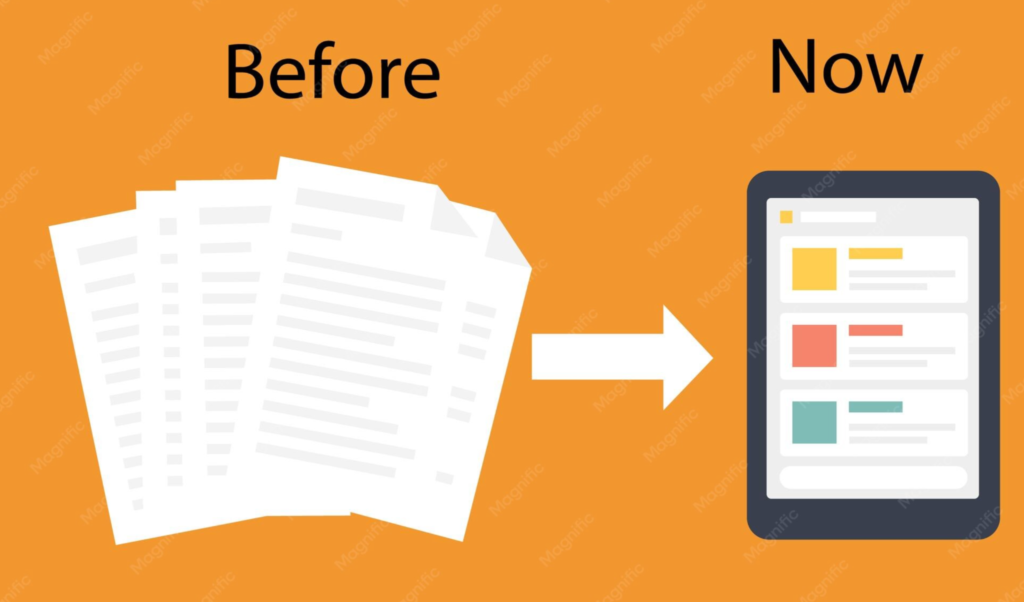
But businesses don’t operate the same way anymore, and the tools used to run quality need to catch up. The move from paper based processes to digital QMS software isn’t only a tech upgrade. It’s kind of a re-think of how quality actually gets done, monitored and improved across the organization, all together.
Why Paper-Based Quality Management Has Run Its Course
Paper processes aren’t automatically bad. In smaller, simpler operations they can work, or at least limp along fine enough. Yet once a company grows more sites, more suppliers, more product lines, more regulatory requirements paper starts to fall apart pretty quickly.
And the issues are familiar. Documents end up misplaced or accessed through outdated revisions. Audit findings pile up with no real structured follow up. Non conformances get recorded but not genuinely followed through to closure. Reporting takes days to put together, and by the time it gets read it’s already behind the moment. Visibility across teams becomes close to zero, like nobody can see the same truth.
These aren’t only messy day to day problems. They turn into actual risks. Regulatory bodies don’t accept “we couldn’t find the record” as a legitimate response. Customers also don’t pause their expectations while your team hunts down a supplier qualification document from two years ago.
The limits of paper based quality management don’t always show up loudly at first. They build in a quiet way, and then, until there’s a failed audit or a product recall, the real cost suddenly becomes very visible.
What a QMS Actually Needs to Do
Before looking at software, it’s worth being clear on what a strong QMS is supposed to deliver in the first place.
A QMS – Quality Management System is the structured framework that defines how an organization plans, executes, monitors and improves quality across its operations. Done well, it connects every quality-related activity into a coherent system rather than a collection of isolated tasks.
That means document control, internal audits, non-conformance management, corrective actions, supplier quality, training records and performance reporting all need to work together. When one piece is weak, the whole system feels the strain.
Paper can document a QMS. It can’t truly operate one.
Where QMS Software Changes the Game
This is where digital tools earn their place not as fancy filing systems, but as operational infrastructure that actually runs quality processes from day to day.
Good QMS software takes the framework your quality team already works within and makes it functional in real time. Workflows move automatically. Tasks get assigned and tracked. Data is captured at the source, not reconstructed after the fact.
Here’s where the transformation is most tangible:
Document Control: Finally Under Control
Keeping documents manually is kind of a daily fight with version confusion, approval delays, and access trouble. QMS software puts it all into one place, documents stay there, they move through structured approval workflows, and they get versioned automatically . When a procedure changes, the right folks are notified right away. Outdated versions are archived, not accidentally printed and then used on the floor, by someone “just for now”.
For organizations handling ISO 9001 (or something very similar) certifications, even this alone counts as a big compliance win.
Non-Conformance Management with Real Follow-Through
One of the most common quality failures isn’t that problems go unnoticed, it’s that they get logged and then forgotten. An email gets sent, someone acknowledges it and weeks later nothing has changed.
QMS software closes that loop. A non-conformance is raised, immediately assigned to an owner and tracked through every step of the resolution process. Nothing sits idle. If a deadline is missed, the system escalates. Management gets visibility without having to ask for it.
CAPA That Actually Prevents Recurrence
Corrective and Preventive Action – CAPA is only useful if it’s tied to root cause. Too often, paper-based CAPA processes treat the symptom and move on. The same issue resurfaces three months later.
Digital CAPA workflows within a QMS guide teams through proper root cause analysis, action planning and verification. Trends across multiple non-conformances become visible, which means systemic issues get caught before they become recurring problems.
Audit Readiness: Year-Round, Not Just Before an Audit
Ask any quality manager what audit preparation looks like under a paper system and the answer usually involves late nights and a lot of scrambling. Finding records, proving completion, demonstrating compliance it all has to be assembled manually.
With a digital QMS, audit readiness is continuous. Evidence is captured automatically as part of everyday workflows. Checklists, findings, actions and closure are all tracked in one place. When the auditor arrives internal or external the organization is already prepared.
Supplier Quality Visibility
Supply chain quality is where paper systems fall apart fastest. Qualification records, performance data, audit results and corrective actions for dozens of suppliers are nearly impossible to manage in spreadsheets and folders.
QMS software brings supplier quality into the same framework as internal quality. Performance gets tracked, risks get flagged early and supplier relationships are managed with data rather than gut feel.
Reporting That Tells You Something Useful
The real power of a digital QMS shows up in reporting. Instead of manually pulling data from multiple sources to build a monthly quality report, managers get live dashboards with up-to-date information across every part of the system.
This changes how quality performance gets communicated to leadership and how quickly teams can respond to emerging trends. Evidence-based decision making is one of the foundational principles of effective quality management and it’s nearly impossible to achieve without reliable, accessible data.
The Business Case Beyond Compliance
It’s tempting to frame QMS software purely as a compliance tool. But the business case stretches much further.
Organizations that operate with a mature digital QMS typically see faster issue response times, lower cost of quality through reduced rework, stronger customer retention, shorter audit cycles and better cross-functional alignment.
Quality stops being a department that slows things down to check boxes. It becomes a function that actively supports business performance.
Common Hesitations and Why They Fade Quickly
The most common pushback on moving to QMS software involves cost, disruption and whether the team will actually adopt it.
These concerns are real but tend to dissolve once teams work in a system built around how quality actually happens. When raising a non-conformance takes two minutes instead of twenty, people use it. When audit prep stops consuming entire weeks, the ROI becomes hard to argue with.
Most implementations are far less disruptive than expected especially when done in focused phases.
The Direction of Travel Is Clear
Paper-based quality management had a good run. But the demands on modern quality teams more regulations, complex supply chains, more data, more accountability have outgrown what paper can handle.
A digital QMS, supported by the right software, gives organizations the structure and visibility to manage quality proactively rather than reactively. It’s the difference between knowing about a problem after it’s caused damage and catching it early enough to prevent it.
You may also read: Make It Personal With Meaningful Details