Running a food business in the UK means preparing for the arrival of an Environmental Health Officer (EHO). Most owners know the basics of food safety, but few know how the scoring system works behind the scenes. A poor rating can damage your reputation and impact your revenue overnight. Here’s exactly how inspectors score your premises and how to secure a top rating.


How the EHO Scoring System Works
The inspection relies on a points system that covers three distinct areas of your operation. Inspectors assess hygienic food handling, the physical condition of your premises, and confidence in management.
Food safety and structural compliance are each scored from zero to twenty-five, while confidence in management is scored from zero to thirty. In every category a lower score is better, so zero means full compliance and a high score signals serious failings.
Your total score across these three elements determines your final food hygiene rating from zero to five. It’s worth pointing out that a high score in one area won’t save you if you fail in another. The scheme uses an additional scoring factor, which means no single category can go above a set cap.
If one does, your rating drops down the scale even when your total looks fine. This is why confidence in management trips up so many businesses. You can prepare food safely, but you’ll still get a low rating if your physical premises are in poor condition.
Structural Compliance and Wall Hygiene Requirements
When an inspector walks into your kitchen, they look closely at the walls, floors, and ceilings. Under Regulation (EC) No 852/2004, UK law states that wall surfaces in food preparation rooms must be kept in sound condition. They must be easy to clean, non-absorbent, and washable.
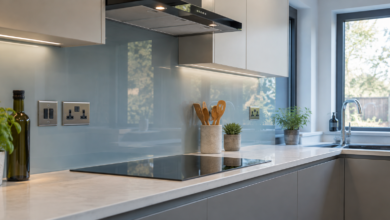
Many businesses make the mistake of relying on a fresh coat of paint, but paint can peel and trap moisture over time. Cracked tiles and missing grout also create perfect breeding grounds for harmful bacteria. Because grout lines and porous paint are so hard to keep compliant, many commercial kitchens turn to PVC hygienic cladding, which gives a smooth, impervious surface that meets the legal standard. This material eliminates grout lines and resists grease build-up, which makes daily washdowns simple.
Proper ventilation and pest-proofing also fall under structural compliance. If grease accumulates in joints or windows lack fly screens, your score will drop quickly. You must ensure that every physical barrier keeps pests out and lets your staff clean every corner without obstruction.
Food Safety and Temperature Control
Safe food handling is the most visible part of any inspection. Officers watch your staff as they prepare, cook, cool, reheat, and store ingredients. They look for clear separation between raw and ready-to-eat foods to prevent cross-contamination.
Temperature control requires constant vigilance and accurate record-keeping. Your fridges must operate at 8°C or below, though 5°C is ideal, while hot food must stay above 63°C. Inspectors will check your probe thermometers to verify that staff test core cooking temperatures regularly.
Cooling hot food quickly is another common area where businesses fail. If you leave large joints of meat on a counter to cool slowly, bacteria will multiply. You need to use blast chillers or split portions into smaller containers instead of letting food sit at room temperature. As a guide, the Food Standards Agency recommends cooling food from 63°C down to 8°C within about ninety minutes.
How to Show Confidence in Management
The final piece of the inspection puzzle involves your paperwork and staff training. Officers need to see that you understand food safety risks and actively manage them every day. This means you must have a documented Hazard Analysis Critical Control Point (HACCP) system in place.
Your HACCP plan only counts if your team actually uses it day to day. Staff must follow it, and your records must prove this compliance. Inspectors will look at your fridge temperature logs, cleaning schedules, and pest control reports to ensure they’re accurate.
The inspector will ask to see several essential documents during their visit. You must keep the following records organised and accessible in your kitchen:
- Daily fridge and freezer temperature logs
- Staff training records and food hygiene certificates
- The business HACCP documentation and flow charts
- Recent pest control reports and actions
- Detailed cleaning schedules that match your kitchen layout
Common Mistakes That Lower Your Rating
Many food businesses lose points on simple issues that are easy to fix. For example, staff might use the same sink for washing hands and washing vegetables. You must have dedicated wash hand basins supplied with hot and cold water, soap, and hygienic hand drying facilities.
Another frequent error is the lack of a detailed cleaning schedule that matches the actual materials on your walls and floors. If your schedule doesn’t specify how and when to clean high-level areas, grease will accumulate. This build-up attracts pests and signals a lack of daily control to the officer.
The Big Picture
Securing a five-star food hygiene rating requires equal attention to your food habits, your paperwork, and your physical building. A clean kitchen with broken wall tiles or missing records will still receive a disappointing score.
By maintaining your structural surfaces and keeping accurate logs, you protect your customers and your business reputation. Regular self-audits will ensure that you’re always ready when the inspector knocks on your door.