If you are choosing between the OnePlus 15, Samsung’s Galaxy S26 and Apple’s iPhone 17, the short answer is that the OnePlus flagship wins on battery life, charging speed and value for money, while Samsung and Apple still hold real advantages in software support, cameras and ecosystem. That verdict is the heart of this comparison, and it matters because all three phones now cost roughly the same money at the entry level, yet they spend that money in very different places. The OnePlus flagship gives you a 7,300mAh battery and 120W wired charging at £849 in the UK, Samsung gives you a smaller phone with a longer software promise, and Apple gives you the iPhone experience with a dual-camera system that deliberately skips a dedicated telephoto lens. Which of those trade-offs suits you is the question this guide answers in full.


This is a buying comparison, not a specifications list, so every section below weighs what each phone actually does better rather than simply repeating numbers from a launch event. The OnePlus flagship launched globally on 13 November 2025 and has now been on sale long enough for independent reviewers to test its battery, cameras and performance properly, while the Galaxy S26 arrived in March 2026 and the iPhone 17 dates from September 2025, with a price rise in September 2026 that changed its value equation. Prices, specifications and review findings are drawn from Tech Advisor’s review and specifications coverage, Samsung’s published specifications and MacRumors’ iPhone 17 guide, and where a figure could not be verified it has been left out rather than guessed, because a buying guide that invents numbers helps nobody.
OnePlus 15 at a Glance
The OnePlus flagship is built around three headline strengths: Qualcomm’s Snapdragon 8 Elite Gen 5 chipset, a 6.78-inch 1.5K LTPO OLED display with a peak refresh rate of 165Hz, and a 7,300mAh battery that is the same size in every market, according to Tech Advisor. That combination is unusual because most phone makers still ship smaller batteries outside China, yet OnePlus kept the full 7,300mAh cell for global buyers, and paired it with 120W wired charging plus 50W wireless charging, so the phone can recover a huge amount of charge in a very short time. The phone runs OxygenOS 16 on top of Android 16, weighs 211g, and carries IP66, IP68, IP69 and IP69K ratings, which Tech Advisor notes is more water and dust resistance certification than any other phone on the market, including protection against high-pressure, high-temperature water jets.
There are two configurations to choose from, and the pricing is refreshingly simple compared with its rivals. The 12GB RAM with 256GB storage model costs £849 in the UK, or $899.99 in the United States, while the 16GB RAM with 512GB storage model costs £979, or $999.99, according to Tech Advisor, and the higher model also brings faster memory alongside the extra storage. OnePlus promises four years of operating system updates and six years of security updates, which Tech Advisor points out still lags behind Apple, Google and Samsung, who all offer six to seven years of both, so buyers who keep phones for a very long time should weigh that carefully. Colours are Infinity Black, Ultra Violet and Sand Storm, with Sand Storm using a micro-arc oxidation process across the metalwork that OnePlus claims is tougher than titanium, and the overall package is what Tech Advisor’s reviewer called the fastest phone available at the time of review.
OnePlus 15 vs Samsung Galaxy S26
The Galaxy S26 is the closest Android rival to the OnePlus flagship, and the comparison starts with size, because these two phones feel very different in the hand. Samsung’s base model has a 6.3-inch display and weighs 167g, making it noticeably smaller and lighter than the 6.78-inch, 211g OnePlus phone, and for buyers who want a flagship that disappears into a pocket, that difference alone may settle the argument. Both phones run Qualcomm’s Snapdragon 8 Elite Gen 5 silicon, although Samsung uses a tuned For Galaxy version in some markets and its own Exynos 2600 in others, and both ship with 12GB of RAM and 256GB or 512GB of storage, so day-to-day performance should feel broadly comparable. The real differences appear in battery, charging and cameras, which is where the two companies have made opposite bets about what flagship buyers actually value.
Battery life is where the OnePlus phone pulls away most clearly, because its 7,300mAh cell is far larger than the Galaxy S26’s 4,300mAh battery, according to Samsung’s published specifications. That gap of three thousand milliamp-hours is not a minor specification footnote but a difference you will feel every single day, since the OnePlus phone is built to last well into a second day of use while the Samsung phone is a more conventional one-day device. Charging widens the gap further, because the OnePlus flagship charges at 120W wired and 50W wireless, while the base Galaxy S26 is listed at 25W wired and 15W wireless charging in its published specifications, meaning a quick top-up before leaving the house gives you far more power on the OnePlus phone. Samsung fights back with software support, promising seven years of updates against four operating system upgrades from OnePlus, and with a more compact design, but on raw endurance and charging speed this particular contest is not close.
Cameras give Samsung a different kind of argument, although not necessarily a winning one at this price. The Galaxy S26 carries a 50MP main camera, a 10MP telephoto lens with three-times optical zoom and a 12MP ultrawide camera, plus a 12MP front camera, according to its published specifications, which is a versatile setup that covers everyday shooting well. The OnePlus flagship answers with three 50MP rear cameras, including a telephoto lens with three-and-a-half-times optical zoom, and a 32MP front camera with autofocus, so on paper it offers higher-resolution supporting cameras and a longer zoom reach. Samsung’s trump card sits higher up its own range, because the Galaxy S26 Ultra adds a 200MP main camera, a 50MP five-times telephoto lens and a built-in S Pen at $1,299.99, but that phone costs far more than either base model, and at the base-model price the OnePlus camera system is at least as capable as Samsung’s equivalent.
OnePlus 15 vs iPhone 17
Comparing the OnePlus flagship with Apple’s iPhone 17 is really a comparison between two philosophies, because Apple sells an ecosystem and a software experience while OnePlus sells hardware value and raw capability. The iPhone 17, introduced in September 2025, runs Apple’s A19 chip, has a 6.3-inch OLED display with ProMotion at up to 120Hz, and starts with 256GB of storage, according to MacRumors, and its price rose from $799 to $899 in September 2026, which puts it at almost exactly the same dollar price as the OnePlus flagship’s $899.99 starting price. Apple rates the iPhone 17’s battery at up to thirty hours of video playback, which is a different measurement from the milliamp-hour figures Android makers publish, so direct battery comparisons need care, but the practical difference is clear: the OnePlus phone charges at 120W wired, while iPhone charging is far slower and Apple does not even include a power adapter in the box.
The camera comparison with Apple is where the OnePlus phone’s hardware advantage is most obvious, because the iPhone 17 has a dual-lens system with two 48MP lenses, a main and an ultrawide, and relies on a 12MP two-times crop for zoom, according to MacRumors. That is a very good camera system for everyday photography, and Apple’s image processing is superb, but it simply cannot match the reach of a dedicated telephoto lens, and the OnePlus flagship’s three 50MP cameras include a genuine three-and-a-half-times optical zoom that keeps distant subjects sharp. Where Apple wins is in the things that do not appear on a specification sheet: years of software updates, the tight integration between iPhone, Mac, iPad and Apple Watch, and a resale value that Android phones rarely match. If you already live inside Apple’s world, the iPhone 17 remains the sensible choice, but if you are buying on hardware alone, the OnePlus phone gives you more camera versatility, a bigger battery and much faster charging for the same money.
Software is the other decisive difference, and it cuts both ways depending on how you use a phone. The OnePlus flagship runs OxygenOS 16 on Android 16, which Tech Advisor notes borrows heavily from iOS in its look and feel, and it brings OnePlus AI features plus a dedicated gaming focus with a 165Hz peak refresh rate that only unlocks in select titles. Apple’s iOS, by contrast, is famous for consistency, privacy controls and long-term support, and the iPhone 17 also benefits from features like Camera Control and a customisable Action button, according to MacRumors. Android buyers get more customisation, a proper file system and the freedom to choose default apps, while iPhone buyers get a simpler, more predictable experience with fewer decisions to make. Neither approach is objectively better, but buyers switching from iPhone to Android should know that some conveniences, like iMessage and FaceTime, do not transfer, and that single fact keeps many people inside Apple’s ecosystem regardless of hardware value.
Camera Comparison
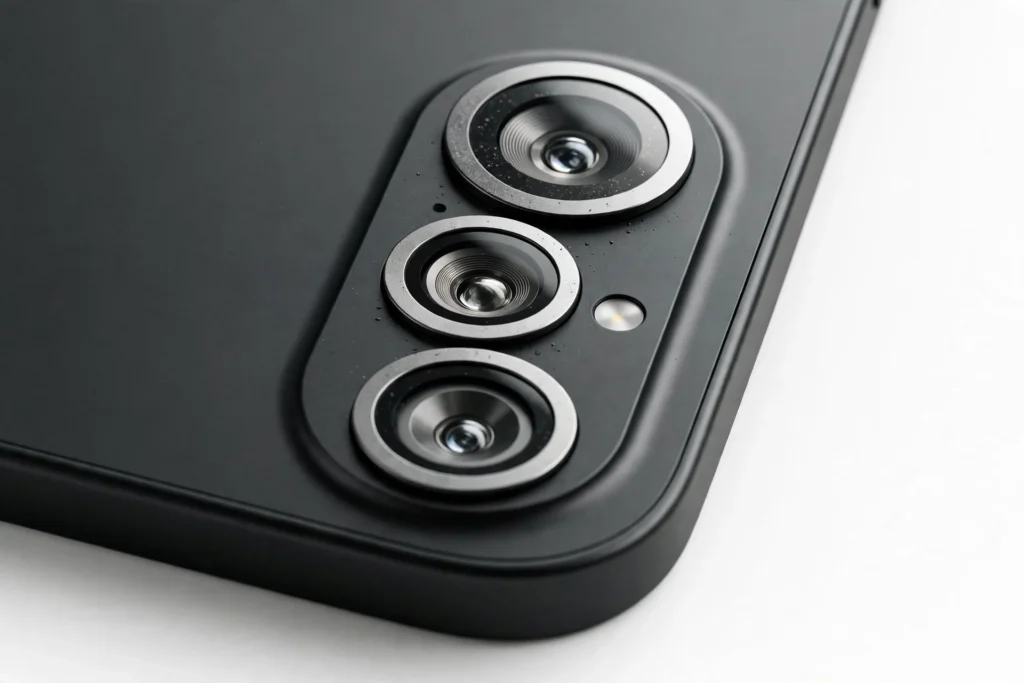
Cameras deserve their own section because they are the area where buyers most often regret a purchase, and where marketing numbers hide the most important differences. The OnePlus flagship’s camera system consists of a 50MP main camera, a 50MP ultrawide camera and a 50MP telephoto camera with three-and-a-half-times optical zoom, plus a 32MP front camera that has gained autofocus, according to Tech Advisor. The headline change this year is not the hardware alone but the software behind it, because OnePlus has ended its long partnership with Hasselblad and replaced it with its own imaging system, called the DetailMax Engine, built around what OnePlus China calls LUMO condensed light imaging, which aims to pursue not just clarity but the depth of light and shadow and the vitality of colour. That is a significant gamble, because the Hasselblad name carried real prestige, but early review findings suggest the new system delivers detailed, vibrant photos, and the phone also records 4K video at 120 frames per second with Dolby Vision support.
Samsung’s camera philosophy is different, favouring extreme resolution at the top of its range and reliable versatility at the base, while Apple’s philosophy favours computational consistency over raw hardware. The base Galaxy S26 pairs its 50MP main camera with a 10MP three-times telephoto and a 12MP ultrawide, which is a solid everyday trio, but its telephoto resolution and zoom reach both fall short of the OnePlus flagship’s offering. The iPhone 17, with two 48MP lenses and a two-times crop zoom, produces superb point-and-shoot results and arguably the best video on any phone, yet it cannot optically zoom as far as either Android rival, and that limitation shows in concert photos, travel shots and any scene where you cannot simply walk closer. For buyers who photograph a lot, the verdict is therefore nuanced: the OnePlus phone offers the most versatile hardware for the money, the Galaxy S26 Ultra offers the most capable camera system overall at a much higher price, and the iPhone 17 offers the most consistent results with the least effort.
The front camera is easy to overlook but matters enormously for video calls and selfies, and here the OnePlus phone again leads on paper. Its 32MP front camera with autofocus should keep faces sharp at varying distances, while the Galaxy S26 uses a 12MP front camera and the iPhone 17 uses an 18MP Centre Stage front camera, according to the published specifications and guides cited above. Autofocus on a selfie camera makes a genuine difference in group shots and vlogs, where fixed-focus cameras can leave faces soft, and it is the kind of feature that rarely appears in headlines yet affects daily use. Low-light performance is harder to judge from specifications alone, because sensor size, aperture and processing all matter more than megapixels, and Tech Advisor’s review samples from the OnePlus flagship showed strong night results, but buyers who prioritise low-light photography should still compare real sample photos before deciding. The honest summary is that no phone here has a bad camera, and the differences are about zoom reach, versatility and processing style rather than outright quality.
Battery, Charging and Performance
Battery life and charging are the OnePlus flagship’s strongest arguments, and they deserve to be examined properly rather than reduced to a single number. The phone’s 7,300mAh battery is the largest in this comparison by a wide margin, dwarfing the Galaxy S26’s 4,300mAh cell, and Tech Advisor’s review praised the OnePlus 15’s outlandish battery life in real-world testing, with independent testing elsewhere recording more than twenty-three hours of active use. That endurance comes from a combination of the huge cell, the efficient Snapdragon 8 Elite Gen 5 chipset and the LTPO display that can drop its refresh rate as low as 1Hz when nothing is moving, and it means heavy users can realistically expect two days of use while lighter users may stretch further. Apple measures battery differently, rating the iPhone 17 at up to thirty hours of video playback, which sounds impressive but describes video playback rather than mixed daily use, so buyers should not treat that figure as directly comparable to Android battery claims.
Charging is where the gap becomes almost embarrassing for the competition, because the OnePlus flagship supports 120W wired charging and 50W wireless charging, while the base Galaxy S26 is listed at 25W wired charging and Apple does not publish a comparable wattage figure for the iPhone 17 at all. In practical terms, the OnePlus phone can recover a large portion of its battery during a short stop at home, while rival phones need much longer on a charger to gain the same amount of power, and that changes how you use a phone day to day. Performance is closer than the battery story, because all three phones use flagship silicon: the OnePlus flagship and the Galaxy S26 share the Snapdragon 8 Elite Gen 5 family, while the iPhone 17 uses Apple’s A19 chip, and Tech Advisor’s benchmark reporting found the OnePlus phone’s multi-core scores around twenty percent better than those of A19 Pro-powered phones. Gaming is a particular strength for the OnePlus phone, with its 165Hz peak refresh rate, 3200Hz touch sampling rate and dedicated G2 Wi-Fi chip, although the 165Hz mode only unlocks in select titles, so competitive gamers should check whether their favourite games are supported.
The performance story also includes a caveat that matters for long-term ownership, because raw speed today does not guarantee a good experience in four years’ time. OnePlus promises four years of operating system updates and six years of security updates for the OnePlus flagship, which Tech Advisor notes is fair for the price but still lags behind Samsung’s seven-year pledge and Apple’s traditionally long support. Samsung’s advantage here is real, because a phone that receives updates for seven years stays secure and compatible for far longer, and that longevity can easily outweigh a bigger battery for buyers who keep phones until they genuinely wear out. Apple’s support is similarly long-lived, and iPhones have a well-earned reputation for remaining fast and supported for many years, which is one reason they hold their resale value so well. Buyers who upgrade every two or three years can safely ignore this difference, but anyone planning to keep a phone for five years or more should treat software support as a major factor in the decision.
UK Price, Deals and Where to Buy
In the UK, the OnePlus 15 costs £849 for the 12GB RAM and 256GB storage model, and £979 for the 16GB RAM and 512GB storage model, according to Tech Advisor, and those prices already undercut the launch prices of its predecessor, the OnePlus 13, which started at £899. That pricing is the foundation of the phone’s value argument, because it delivers flagship silicon, a huge battery and a versatile triple-camera system for less than the cost of many rival flagships, and the 512GB model also brings faster memory alongside the extra storage, which makes the step up more worthwhile than a simple capacity increase. At launch, OnePlus offered a £100 discount on the higher-capacity model for the first month on sale, but that introductory offer has long since expired, so buyers in late 2026 should check current retailer pricing rather than expecting launch deals to still apply. The phone is available from the OnePlus website and from major retailers including Amazon, according to Tech Advisor, and it comes in Infinity Black, Ultra Violet and Sand Storm finishes, although some colourways may be tied to particular storage configurations in certain markets.
Comparing UK prices across all three phones requires care, because Samsung and Apple do not always publish directly comparable UK figures in the same sources, and the dollar prices tell a clearer story. In the United States, the OnePlus flagship starts at $899.99, the base Galaxy S26 starts at $899.99 and the iPhone 17 starts at $899 after its September 2026 price increase, which means all three entry-level flagships cost essentially the same money in America. That parity makes the OnePlus value argument even stronger, because for the same dollars you get a much larger battery, far faster charging and a more versatile camera system than either rival offers at the base level. Samsung’s Ultra model, at $1,299.99, and Apple’s Pro models, starting at $1,099 for the iPhone 17 Pro at launch, sit in a higher price bracket entirely, and buyers considering those models are shopping for different priorities, such as the S Pen or Apple’s most advanced cameras. For UK buyers, the practical advice is simple: check the current street price of each phone before buying, because retailer discounts and trade-in offers can shift the value equation quickly, but on list price alone the OnePlus flagship is the cheapest route to true flagship hardware.
Deals and timing also matter, because flagship prices rarely stay still for long after launch. The OnePlus flagship launched globally on 13 November 2025, so by late 2026 it has been on sale for nearly a year, which is exactly when retailers start offering meaningful discounts, bundles and trade-in bonuses to clear stock ahead of the next generation. Samsung’s Galaxy S26, launched in March 2026, is newer and therefore less likely to be heavily discounted, while the iPhone 17, which Apple does not discount directly, tends to hold its price at Apple but can appear cheaper through carriers and third-party retailers. Buyers who are not in a hurry should watch for seasonal sales events and compare the total cost including any trade-in value for their current phone, because a generous trade-in offer can easily outweigh a small difference in list price. Whatever the deal, the fundamentals in this comparison do not change: the OnePlus phone wins on battery, charging and hardware value, while its rivals win on software longevity and ecosystem, and the right deal is the one that strengthens the advantage you care about most.
Verdict: Should You Buy It?
The OnePlus 15 is the phone to buy if you want the most hardware for your money, the longest battery life and the fastest charging available in a mainstream flagship, and if you are comfortable with Android and with a shorter software support window than Samsung or Apple offer. It is also the obvious choice for mobile gamers, thanks to its 165Hz peak refresh rate, dedicated touch response chip and sustained performance, and for photographers who want a versatile triple-camera system with genuine optical zoom without paying Ultra or Pro prices. Buyers coming from an older OnePlus phone will find the upgrade straightforward, and buyers switching from another Android brand will appreciate the clean, fast OxygenOS 16 experience, even though Tech Advisor notes that the software borrows heavily from iOS in its appearance. For this large group of buyers, the verdict is clear: the OnePlus flagship is the best-value flagship of its generation.
There are, however, three groups of buyers who should think twice before choosing the OnePlus phone, and being honest about them is what makes this verdict trustworthy. If you are deeply invested in Apple’s ecosystem, with a Mac, an iPad and an Apple Watch, the iPhone 17 remains the better choice despite its smaller battery and slower charging, because the convenience of that integration is worth more than any specification advantage. If you keep phones for six or seven years, Samsung’s longer update pledge makes the Galaxy S26 the safer long-term purchase, even though its battery and charging are weaker today. And if you want the absolute best camera system money can buy, regardless of price, then the Galaxy S26 Ultra or an iPhone Pro model will serve you better than any base flagship, including the OnePlus phone. For everyone else, the OnePlus flagship offers an unbeatable combination of battery, charging, performance and price, and it is the flagship this guide recommends most warmly.
Conclusion
The comparison between the OnePlus flagship, the Galaxy S26 and the iPhone 17 ultimately comes down to what kind of buyer you are, because all three phones are excellent and none of them is a bad purchase. The OnePlus phone wins the hardware argument decisively, with its 7,300mAh battery, 120W wired charging, Snapdragon 8 Elite Gen 5 performance and versatile triple-camera system, all for £849 in the UK, and that combination is unmatched at the price. Samsung answers with a smaller, lighter phone and a seven-year software promise that makes it the better long-term investment, while Apple answers with an ecosystem, a consistent software experience and a camera system that prioritises simplicity over versatility. Those are genuine strengths, not consolation prizes, and buyers who value them should choose accordingly without feeling they have settled for second best.
For most buyers, though, the deciding factors are the ones they notice every day: whether the phone lasts until bedtime, how quickly it charges when it runs low, and whether the camera captures the moment without fuss. On those everyday measures, the OnePlus flagship is the strongest of the three, and its £849 starting price makes that strength available without demanding a premium over its rivals. The Hasselblad question, the software support gap and the ecosystem trade-offs are all real, but they matter less than the daily experience of a phone that simply keeps going, charges in minutes and takes great photos. If that sounds like the phone you want, then the OnePlus flagship is the flagship to buy, and the comparison in this guide should give you the confidence to buy it knowing exactly what you are gaining and what you are giving up.
How much is the OnePlus 15 in the UK?
The OnePlus flagship costs £849 in the UK for the 12GB RAM and 256GB storage model, and £979 for the 16GB RAM and 512GB storage model, according to Tech Advisor. Those are the list prices, and they already represent a reduction from the previous generation, whose entry model launched at £899, which means OnePlus has managed to deliver a faster chip, a bigger battery and a new camera system while actually lowering the starting price. The 512GB model is worth considering for buyers who store a lot of photos and video, because it also brings faster memory alongside the extra storage, although most buyers will find 256GB perfectly adequate for everyday use. Retailer discounts and trade-in offers can reduce the effective price further, especially now that the phone has been on sale for nearly a year, so checking current street prices before buying is always worthwhile.
It is also worth remembering that the headline price is not the whole cost of ownership, because accessories, cases and screen protectors add to the total, and the OnePlus phone’s magnetic accessories only work with a compatible case, according to Tech Advisor. That is a minor consideration rather than a deal-breaker, but it is the kind of detail that a buying guide should mention, since magnetic charging accessories and car mounts are increasingly popular. The phone itself, however, remains one of the best-value flagships available in the UK, and its £849 starting price is the single strongest argument in its favour when compared with rivals that cost the same money but offer less battery, slower charging and less versatile cameras.
Is it better value than the iPhone 17?
On hardware value alone, the answer is yes, because the OnePlus flagship gives you a much larger battery, far faster charging and a more versatile camera system than the iPhone 17 for essentially the same money. The iPhone 17 starts at $899 in the United States after its September 2026 price increase, which is virtually identical to the OnePlus flagship’s $899.99 starting price, yet the iPhone offers a dual-camera system without a dedicated telephoto lens, slower charging and no power adapter in the box. The OnePlus phone, by contrast, delivers a triple 50MP camera system with three-and-a-half-times optical zoom, 120W wired charging and a 7,300mAh battery, and those are differences you will notice every day rather than abstract specification advantages. For buyers who judge value by what the hardware actually does, the OnePlus phone is clearly the better deal.
Value, however, is not only about hardware, and Apple buyers get things that do not appear on a specification sheet and are genuinely worth paying for. The iPhone 17 benefits from Apple’s long software support, its tight integration with Mac, iPad and Apple Watch, its excellent resale value and a camera experience that prioritises consistency and simplicity over versatility. Those advantages matter enormously to people who already own Apple products, and for them the iPhone 17 may represent better overall value despite its weaker battery and charging, because the cost of leaving an ecosystem can exceed any saving on hardware. The fair verdict, then, is that the OnePlus flagship is the better value phone, while the iPhone 17 is the better value choice for buyers who are already committed to Apple’s world, and understanding which group you belong to is the key to making the right decision.
Does it still have Hasselblad cameras?
No, the OnePlus flagship does not have Hasselblad cameras, because OnePlus has ended its partnership with the camera company and replaced it with its own imaging system. The new system is called the DetailMax Engine, built around what OnePlus China describes as LUMO condensed light imaging, which aims to pursue not just clarity but the depth of light and shadow and the vitality of colour, according to Tech Advisor. That change will disappoint buyers who valued the Hasselblad name, which carried real prestige and a distinctive colour science that many photographers liked, but it also frees OnePlus to develop its imaging entirely in-house, without sharing control or credit with a partner. Early review findings suggest the new system produces detailed, vibrant images, and the hardware itself, three 50MP cameras with a three-and-a-half-times telephoto lens, is more capable on paper than the previous generation’s setup.
The end of the Hasselblad partnership should therefore be treated as a change of direction rather than a downgrade, although only long-term testing and comparison with rival cameras will settle that question definitively. Buyers who loved the Hasselblad colour profile may notice a difference in how photos look straight out of the camera, while buyers who edit their photos or shoot in raw format are unlikely to care about the branding at all. What matters more than the name on the camera module is the combination of hardware and processing, and on that measure the OnePlus flagship’s triple 50MP system with genuine optical zoom remains one of the most versatile camera setups available at its price. If the Hasselblad name was your main reason for buying a OnePlus phone, the new system deserves a careful look at real sample photos, but for most buyers the change will pass unnoticed.