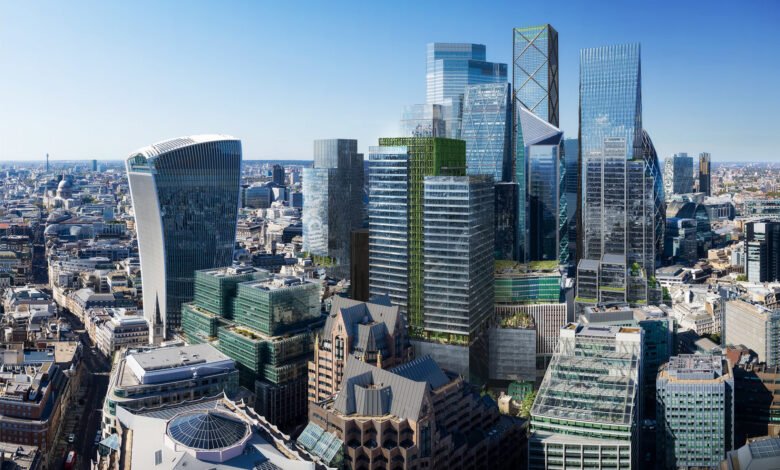
50 Fenchurch Street stands as one of London’s most ambitious redevelopment projects, blending history, modern architecture, and sustainability. Situated in the heart of the City of London, this skyscraper project uniquely preserves the 700-year-old All Hallows Staining church while introducing a contemporary office tower designed to meet net-zero environmental standards. The project demonstrates how heritage and innovation can coexist in a bustling urban environment.

The redevelopment of 50 Fenchurch Street has become a case study for architects and engineers, highlighting the challenges of combining historic preservation with modern construction. This project not only reshapes the London skyline but also sets new standards for sustainable urban development. With panoramic views, public spaces, and innovative design, it promises to enhance the city’s architectural landscape for generations.
History of 50 Fenchurch Street
The location of 50 Fenchurch Street has been historically significant for centuries. At the heart of the project is the All Hallows Staining church, a Grade I-listed building dating back to medieval London. The church’s preservation was central to the redevelopment plans, requiring meticulous engineering and careful planning to ensure it remained intact during construction. Its survival highlights the city’s commitment to heritage conservation.
Archaeological investigations at 50 Fenchurch Street revealed important historical artifacts and medieval foundations, providing valuable insight into London’s past. These discoveries added complexity to the project, as developers had to balance excavation, construction, and preservation. The integration of these findings into the new design underscores the importance of maintaining historical identity while pursuing modern architectural goals.
The 50 Fenchurch Street Development Project
The 50 Fenchurch Street development involves collaboration between multiple stakeholders, including Multiplex, AXA, and Eric Parry Architects. The project aims to create a sustainable, state-of-the-art office tower while retaining historic elements, demonstrating how urban regeneration can harmonise with heritage. Planning applications and approvals were complex due to the building’s listed structures and archaeological significance.
Demolition and groundwork for 50 Fenchurch Street were carried out with extreme caution. Older, less significant structures were carefully removed, while historical elements were reinforced. The redevelopment plan emphasises architectural excellence, sustainability, and public accessibility. By combining modern functionality with historic preservation, 50 Fenchurch Street serves as a model for future developments across London and beyond.
Architectural and Engineering Highlights
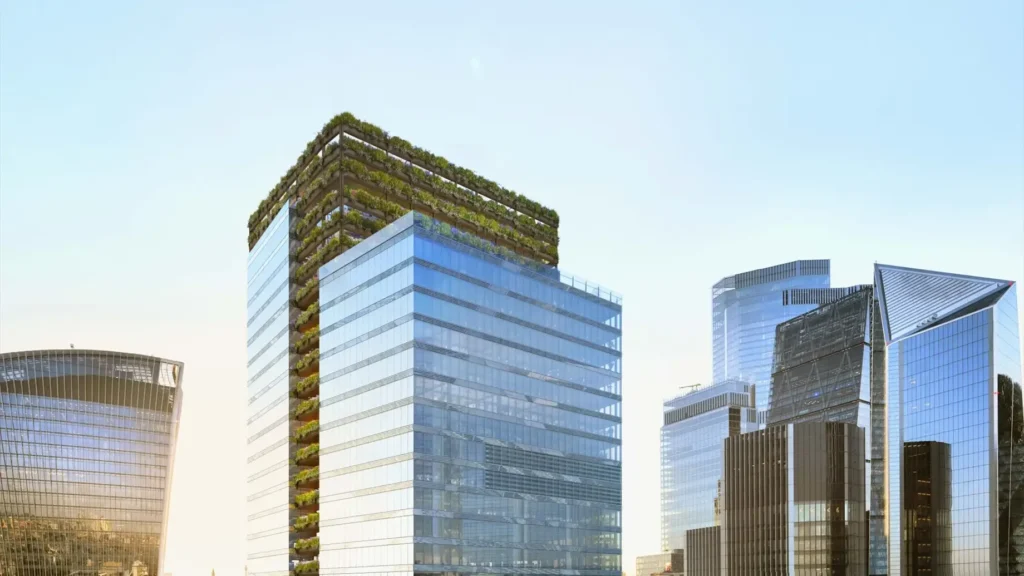
Eric Parry’s architectural vision for 50 Fenchurch Street prioritises sustainability, functionality, and aesthetic appeal. The tower incorporates energy-efficient systems, net-zero operational targets, and high-quality materials. Its design complements the surrounding City of London skyline while offering modern office spaces, public areas, and panoramic views of iconic landmarks, including the Tower of London and Tower Bridge.
One of the most striking engineering feats at 50 Fenchurch Street is the suspension of the 700-year-old church above the construction site. Using advanced support structures and precise engineering, the church was successfully preserved while building a modern skyscraper beneath it. This achievement demonstrates a harmonious integration of heritage and contemporary design, highlighting London’s innovation in urban engineering.
Construction Timeline and Key Milestones
The construction of 50 Fenchurch Street began with site preparation, careful demolition, and foundation work. Multiplex managed the main build, ensuring that both heritage and safety considerations were met throughout each phase. Key milestones included the successful suspension of the historic church and the progressive erection of the modern tower structure.
The expected completion date for 50 Fenchurch Street marks a significant achievement in London’s construction sector. The project faced challenges such as site constraints, heritage preservation, and sustainability targets. By overcoming these hurdles, 50 Fenchurch Street demonstrates how modern construction techniques can coexist with centuries-old historical structures, delivering an iconic building for London.
Public Spaces, Amenities, and City Impact
50 Fenchurch Street will feature extensive public areas, including rooftop gardens and accessible ground-level spaces. These areas enhance the city’s urban environment by offering panoramic views of the Thames, Tower of London, and Tower Bridge. The development encourages public engagement and contributes positively to London’s cultural and architectural identity.
The building’s sustainable design also benefits the local economy and environment. By incorporating energy-efficient systems and net-zero operational strategies, 50 Fenchurch Street reduces carbon emissions while attracting businesses and visitors. The project exemplifies how modern urban developments can provide economic, cultural, and environmental value simultaneously, enhancing the city for residents and tourists alike.
Comparisons and Significance in London’s Skyline
50 Fenchurch Street is a landmark project that stands out among London’s skyscrapers due to its integration of history and sustainability. Unlike conventional towers such as The Walkie-Talkie or 1 Undershaft, it preserves a 700-year-old church while providing a modern, net-zero office tower. Its presence enhances the cityscape without compromising historical identity.
The project also demonstrates London’s growing commitment to environmentally responsible architecture. By combining heritage, engineering ingenuity, and sustainable design, 50 Fenchurch Street sets a benchmark for future skyscrapers in the city. Its innovative approach is likely to influence both domestic and international developments in urban planning and conservation.
Conclusion
50 Fenchurch Street represents a unique blend of history, innovation, and sustainability. By preserving the All Hallows Staining church while constructing a modern, net-zero skyscraper, the project illustrates how heritage and modernity can coexist successfully. Its impact on London’s skyline, public engagement, and sustainable development makes it a model for future urban regeneration projects.
FAQs
What is the completion date for 50 Fenchurch Street?
The expected completion date aligns with phased construction milestones, balancing heritage preservation with modern design.
Who designed 50 Fenchurch Street?
Eric Parry Architects led the design, focusing on sustainable urban architecture and historical preservation.
Which historic church is preserved above 50 Fenchurch Street?
The All Hallows Staining church, a Grade I-listed structure, remains intact above the construction site.
Who are the main contractors for 50 Fenchurch Street?
Multiplex is the primary contractor, managing complex construction and engineering operations.
What makes 50 Fenchurch Street sustainable?
The tower features net-zero operational design, energy-efficient systems, and environmentally friendly materials.
How was the church suspended during construction?
Advanced engineering, including temporary support structures, ensured the medieval church remained secure.
What public spaces will 50 Fenchurch Street offer?
Rooftop gardens, accessible ground-level areas, and panoramic views provide significant public engagement.
How does 50 Fenchurch Street compare to other London skyscrapers?
It uniquely integrates historical preservation with modern skyscraper functionality, setting it apart in design and sustainability.
What were the key archaeological findings at 50 Fenchurch Street?
Excavations uncovered medieval foundations and historical artifacts, enriching the project’s heritage value.
Where can I find 50 Fenchurch Street project updates?
Updates are available from Eric Parry Architects, Multiplex, and London planning portals.