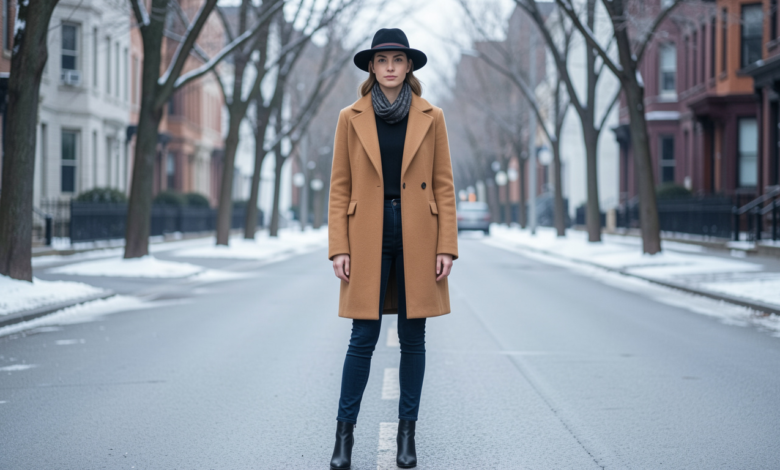
A felt trilby hat is one of the most practical hat choices for winter. The material handles cold, wind, and light rain better than straw or fabric alternatives, it’s structured enough to maintain its shape through regular wear, and the trilby’s proportions work across the coat-heavy, layered outfits that winter dressing requires. It provides more warmth and coverage than a sun hat and more style than a beanie, without requiring the level of outfit planning that a wide-brimmed wool hat can demand.

The question isn’t whether a felt trilby works in winter. It does. The question is which style, colour, and brim width to choose, and how to work it into the kinds of outfits most women actually wear between October and March. This guide answers both.
Why Felt Is the Right Trilby Material for Winter
Felt is produced by matting and compressing wool fibres under heat and pressure, which creates a dense, smooth fabric that holds its shape and resists moisture far better than woven fabrics. A felt trilby hat in wool felt will handle light rain without losing its shape, maintain its structure through extended cold-weather wear, and retain warmth around the head and ears in a way that straw or fabric trilby hats simply don’t.
The weight of a wool felt trilby also sits differently on the head than a lighter straw hat. In winter conditions, with a coat collar up and a scarf around the neck, the slight additional weight of a felt trilby helps it sit more securely and resist wind better than a lighter material would.
The full range of women’s trilby hats includes felt styles in a variety of crown heights, brim widths, and colours suited to winter dressing.
The Felt Trilby Styles Worth Knowing
Classic Black Felt Trilby
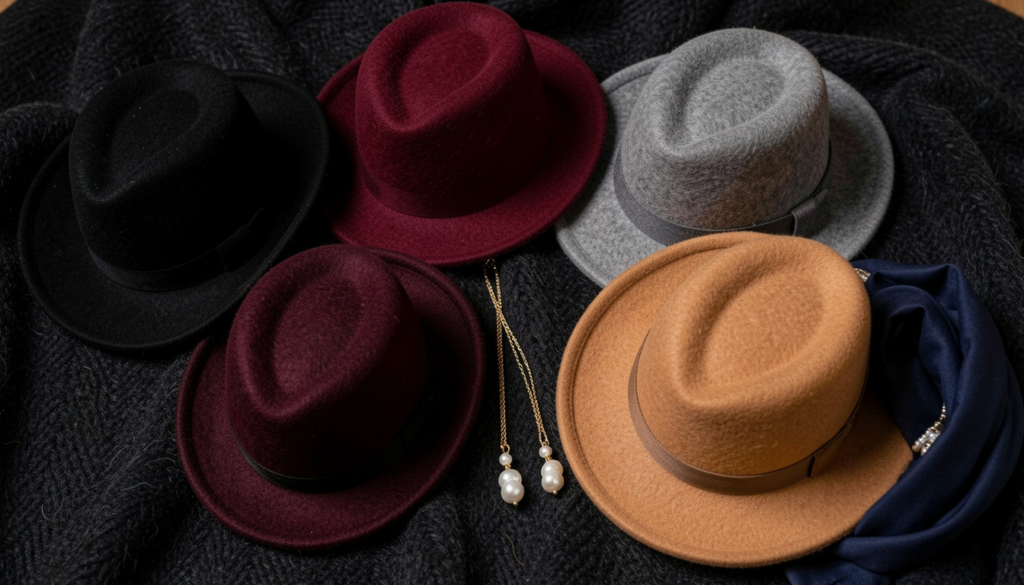
A black trilby hat in wool felt is the most versatile starting point in the category. Black works with virtually every winter outfit colour: camel, grey, navy, burgundy, cream, and forest green all sit naturally alongside a black felt trilby. The hat’s proportions keep it from reading as too heavy or too dark even in the lighter-toned outfits common in winter wardrobes.
If you’re buying a single felt trilby for winter and want it to work across the widest possible range of outfits, a black felt trilby is the lowest-risk choice and the most reliably useful one over multiple seasons.
Wide Brim Felt Trilby for Stronger Facial Framing
A wide brim trilby in wool felt provides more coverage than a standard brim, which adds extra weather protection in rain and wind while creating a stronger, more fashion-forward silhouette. The wider brim frames the face more dramatically and suits women who want the hat to read as a statement piece within the winter outfit rather than a functional accessory.
Wide brim felt trilbies work particularly well with oversized coats and long wool coats, where the scale of the hat matches the scale of the outerwear. With lighter layering, a standard brim tends to sit more proportionally.
Coloured Felt Trilbies for Winter Interest
Winter wardrobes tend toward dark and neutral tones, which makes a coloured felt trilby one of the most impactful single additions a woman can make. Burgundy, forest green, rust, and deep navy felt trilbies all work naturally within a winter palette while adding a colour emphasis that a black or grey hat can’t provide.
A coloured trilby works best when one other element of the outfit echoes the hat’s colour: a scarf in the same tone, a bag in a complementary shade, or a fine knit in a tonal relationship with the hat. This creates a coordinated look without appearing over-styled.
Embellished Felt Trilby with Band and Feather Detail
A felt trilby with a grosgrain band, feather pin, or contrast trim adds detail without changing the hat’s fundamental proportions. These embellishments work particularly well in winter because the richer, more textured aesthetic suits the heavier fabrics and layered outfits of the season. A feather trim on a black or charcoal trilby adds visual interest that reads more completely in autumn and winter contexts than in summer.
This is a good choice for women who want the practicality of a felt trilby with slightly more character than a plain crown and band provides. The detailing is subtle enough to remain versatile across multiple outfits.
How to Wear a Felt Trilby Hat in Winter
With a Wool Coat and Jeans
A felt trilby hat worn with a structured wool or cashmere overcoat and slim or straight-leg dark jeans is the most direct winter application of the style. The coat provides the warmth and formality, the hat adds a finishing layer of structure above it, and the jeans keep the overall look from becoming too stiff. This combination works for weekend wear, city errands, and casual social occasions throughout winter.
Colour coordination is straightforward here: a black trilby with a camel or grey coat, or a burgundy or forest green trilby with a dark navy or charcoal coat. Keep the scarf in a neutral tone that doesn’t compete with the hat for attention.
With Knitwear and Tailored Trousers
A chunky roll-neck or fine-knit jumper worn with slim tailored trousers and a trilby hat in black or charcoal felt is a clean smart-casual winter combination that works for work from home days, low-key meetings, and winter lunches where the dress code sits between casual and formal.
The hat elevates the knitwear-and-trousers combination beyond a purely functional winter outfit and gives it a cleaner, more considered quality. Keep footwear simple: ankle boots or loafers in leather or suede suit this combination well.
Smart Casual: Blazer, Roll-Neck, and Felt Trilby
A tailored blazer worn over a fine roll-neck jumper with slim trousers or dark jeans and a felt trilby hat creates a smart-casual winter look that sits well in a wide range of social and professional contexts. The trilby hat adds structure at the top of the outfit that balances the structure of the blazer and keeps the roll-neck from reading as too purely casual.
This is the combination that makes a women’s trilby hat feel like a genuine wardrobe investment rather than an occasional accessory. It works in enough different contexts, across enough different outfit combinations, that the cost per wear decreases quickly.
Choosing the Right Felt Trilby for Your Face Shape
Round Faces
A felt trilby with a slightly taller crown and a standard to wide brim suits round faces well. The height of the crown adds vertical length to the face’s silhouette, counterbalancing the horizontal width of a rounder face shape. A wider brim also helps by adding horizontal framing that draws the eye outward rather than emphasising the face’s roundness. Avoid very shallow crowns with narrow brims, which can accentuate width without adding compensating height.
Oval Faces
Oval faces suit almost every trilby style, brim width, and crown height. A classic black felt trilby or a winter trilby hat in any of the seasonal colours works naturally with an oval face shape. The main consideration is choosing proportions that suit the scale of the outerwear rather than the face shape specifically.
Long or Narrow Faces
A wider brim trilby suits long or narrow faces well by adding horizontal width that balances the face’s vertical emphasis. A wide brim felt trilby in a neutral or deep tone frames the face effectively and creates a more balanced proportion between hat and face. Avoid very tall crowns, which can add unwanted vertical length to an already long face shape.
Practical Reasons to Choose a Felt Trilby in Winter
Beyond the style considerations, there are straightforward practical reasons why a felt trilby is a sensible winter hat purchase.
- Moisture resistance: Wool felt repels light rain and moisture far better than woven fabric or straw. A felt trilby will handle the typical British winter conditions of drizzle, wind, and grey skies without losing its shape or requiring constant protection.
- Shape retention: Felt holds its structured shape through regular wear, packing, and general handling better than many fabric alternatives. A good-quality felt trilby looks as sharp at the end of a long day as it did at the start.
- Warmth: Felt provides genuine warmth around the head and ears. It’s not a replacement for a beanie in extreme cold, but for the moderate cold of a British autumn and early winter, a felt trilby provides real thermal benefit.
- Longevity: A well-made wool felt trilby will last multiple seasons with basic care. The cost per wear across three or four winters makes it a more economical hat choice than seasonal alternatives that need replacing annually.
- Versatility: A single black or charcoal felt trilby works across enough different outfit types, coat colours, and occasions to justify its place in a year-round accessories wardrobe, not just a winter-specific one.
FAQs About Felt Trilby Hats for Women in Winter
What is a felt trilby hat?
A felt trilby hat is a trilby-shaped hat made from wool felt rather than straw, fabric, or synthetic materials. The trilby has a narrow-to-medium brim and a low, indented crown that sits closer to the head than a fedora. Wool felt is produced by matting and compressing wool fibres under heat and pressure to create a dense, smooth material that holds its shape and resists moisture. A felt trilby hat is warmer, more structured, and more weather-resistant than other trilby materials, which makes it the most practical choice for autumn and winter wear.
Are felt trilby hats warm enough for winter?
A felt trilby hat provides meaningful warmth around the head and offers moderate ear coverage depending on how it’s worn. It suits the mild to moderate cold of a British autumn and winter well, particularly when worn with a coat collar up and a scarf. In very cold conditions, a beanie provides more coverage, but for most British winter days, a winter trilby hat in wool felt is a comfortable and practical choice.
What colour felt trilby hat is most versatile for winter?
Black is the most versatile colour for a felt trilby in winter. It works with camel, grey, navy, burgundy, forest green, and most other winter outfit colours without requiring precise coordination. Charcoal grey is a close second and reads slightly softer than black while remaining equally versatile. Burgundy and forest green are excellent choices for women who want the hat to add a colour element to an otherwise neutral winter wardrobe.
What face shapes suit a felt trilby hat?
Oval faces suit almost all trilby styles. Round faces benefit from a taller crown and a standard to wide brim that adds vertical length. Long or narrow faces suit a wider brim that adds horizontal framing. The range of trilby hats for women includes options in different brim widths and crown heights to suit different face shapes.
How do you care for a felt trilby hat in wet weather?
If a felt trilby gets wet, allow it to dry naturally away from direct heat sources. Reshape the crown and brim gently while the felt is still slightly damp if any distortion has occurred. Once dry, brush it lightly with a soft hat brush to restore the surface nap. Avoid wringing or pressing wet felt, and don’t use a hair dryer or radiator to speed up drying, as heat can cause wool felt to shrink and lose its shape.
Can you wear a felt trilby hat with a winter coat?
Yes. A felt trilby hat and a winter coat is one of the most natural hat-and-outerwear combinations available. The structured brim and crown of the trilby sit well above the collar of a wool or cashmere coat, and the felt material coordinates naturally with the heavier fabrics of winter outerwear. A black trilby hat in particular suits almost every coat colour and style, from a classic camel overcoat to a tailored navy peacoat.
A Felt Trilby Hat Earns Its Place in a Winter Wardrobe
A felt trilby works in winter because it solves the practical and stylistic problems that the season creates simultaneously. It adds warmth, handles light weather, holds its shape through regular wear, and suits the heavier, layered outfits that cold months require. For women who want a hat that functions as both a functional accessory and a considered style addition from October through to March, a felt trilby is one of the most reliable choices available.